2026 Digital Brand Governance: Implementation, Solutions & Advice

62% of brand managers say brand consistency has gotten harder to maintain over the last two years. This is a direct result of how modern marketing teams operate.
As companies expand into additional channels, teams need to create more content to keep up. And as content volume grows, it becomes harder to keep everything on-brand.
One of the best ways to solve this is through digital brand governance. It replaces manual reviews and static guidelines with locked templates and approval workflows that enforce your brand at the point of creation. So no matter how many teams are producing content across how many markets, nothing goes out off-brand.
This guide breaks down why governance fails at scale, what it costs when it does, and how to build a framework that holds up under pressure. We’ll also cover the metrics that matter, real examples, and how Marq makes it work.
The usual scenario inside teams: Why brand governance breaks at scale
Brand governance breaks down when the way teams create content outpaces the way the brand is managed. Outdated PDF guidelines, centralized design bottlenecks, and a growing number of non-designers producing assets all lead to the same outcome: teams send off-brand content to customers, partners, and prospects before the central team can step in.
Here’s where it typically falls apart.
1. Brand guidelines sit in a PDF nobody opens
Your design team spent weeks putting together a brand guide, packaged it into a PDF, and shared it with every department. At the time, the guide worked. But as the company expanded into new offices, regions, and partner networks, nobody updated it.
So a sales rep ends up copying last quarter’s one-pager and sends it to a prospect with an outdated logo. A franchise owner pulls an old flyer from Google Drive and prints 500 copies with the wrong disclaimer. All this, simply because they had no way to access the right assets when they needed them.
2. The design team becomes a bottleneck
When every piece of branded content has to go through one designer or a small creative team, requests pile up, timelines slip, and teams start creating their own materials without brand oversight.
This is especially true for larger enterprises with scattered teams across multiple offices and regions, where content needs come in from every direction at once. The design team simply can’t keep up.
Real estate shows how quickly this problem grows. Agent-led teams need listing flyers, social posts, brochures, and local marketing materials fast, but many brokerages still rely on a central creative team to produce them. In fact, at @properties, agents used to wait 4-6 weeks for templates, but with Marq, they got instant access to on-brand materials instead. It gave agents more speed without giving up brand control.
According to a study, 75% of content professionals say AI alone has increased their organization’s content volume. This, on top of the organic growth in content demand, means that the brand team either becomes the reason campaigns launch late or they lose visibility into what’s going out the door.
3. There’s no way to enforce the rules
Brand guidelines are just that: guidelines. They tell people what the brand should look like, but they don’t prevent anyone from doing the opposite.
A small marketing team in one office can catch most mistakes through manual review before anything goes live. But in a distributed organization with teams across multiple regions, you need locked templates, approval workflows, and role-based permissions built into the tools your team uses to create content.
4. The people creating the most content aren’t designers
The highest volume of branded content in most large organizations doesn’t come from the design department. It comes from sales reps building pitch decks, franchise owners making local flyers, financial advisors customizing co-branded materials, and HR teams drafting recruitment collateral.
These people know the business inside out. But what they don’t know is your font stack, your color codes, or where to find the latest version of the logo. And the tools they default to offer zero guardrails around brand compliance.
Every new content creator you add is another point where the brand can drift. Multiply that across dozens of offices or hundreds of franchise locations, and you start to understand why most brand teams feel like they’re playing whack-a-mole.
The real world cost of weak digital brand governance
Brand governance failures rarely stay contained to the marketing department. Here are some of the most common ways they show up across the business:
- Lost revenue from inconsistent branding. When your brand looks different depending on where someone encounters it, customers take note. If they see one version of your company on LinkedIn, then a completely different look on a sales deck, it comes across as unprofessional and chips away at brand trust. And when trust drops, so do close rates.
- Wasted creative hours on rework and review. If teams publish off-brand content, the brand team can spend hours tracking it down, flagging it, and fixing it. For organizations producing hundreds of assets per month, the rework hours alone can add up to thousands of dollars in labor spent producing nothing new.
- Compliance and legal exposure. In regulated industries like financial services, healthcare, and insurance, off-brand content can be much more than a branding problem. For example, a franchise owner publishes a flyer with an outdated disclaimer, or a regional office uses unapproved language in a client-facing document. These types of mistakes can trigger audits, fines, and legal reviews.
- Slower speed to market. If your brand governance depends on manual reviews, teams can spend days approving content that should have taken only a few hours to finalize. You end up missing important campaign launches, and by the time the asset is approved, the window to reach your audience has already closed.
How to build a scalable digital brand governance framework that works
A brand governance framework only works if it’s built into how your teams create content. Here’s a step-by-step process to get there.
Step 1: Audit your current brand assets and content sources
Before you build anything, you need to know what you’re working with. That means cataloging every brand asset your organization uses and identifying the gaps. Start by answering a few questions:
- Where do teams go to find logos, templates, and brand guidelines today?
- How many versions of your core assets exist?
- How many times have those assets been updated, and does everyone have access to the latest version?
- Which departments or regions are creating their own materials outside of the brand team’s visibility?
Most organizations realize their brand assets are scattered across more places than expected instead of living in one brand portal. You’ll find folders full of files named “v1,” “v2,” “final_v3,” “updated_FINAL_v4,” and other names that don’t tell anyone which version is current. It’s incredibly easy for a regional team to grab the wrong one and run with it.
The goal of this step is to build a single inventory of what exists, flag what’s outdated, and identify which teams are operating entirely outside the brand system. Those teams often produce the most off-brand content, and the longer they stay outside the system, the more rogue assets reach customers.
Step 2: Define governance roles and permissions
Once you’ve finished auditing your assets, it’s time to decide who can do what with them. This is the foundation of any governance framework, and where most of them either hold up or collapse.
At a minimum, you need to define three tiers:
- Brand owners. These are typically your brand or creative teams. They create and control master templates, approve high-level updates, and set the brand standards that everyone else follows.
- Content creators. These could be your marketing managers, regional leads, or partner teams. They can customize approved templates within set guardrails, choosing imagery, adjusting copy for their market, or selecting from pre-set layout options.
- End users. These are your sales reps, franchise owners, or field agents. They personalize pre-approved content with their own details (name, contact info, location) but can’t alter the core design or messaging.
The bigger and more distributed your organization is, the more important this structure becomes.
If you’re using Marq, you can set up permissions at the template level, so each role only sees and edits what they’re supposed to. The brand team keeps control, and everyone else gets access to what they need.
Step 3: Centralize templates with built-in brand controls
According to Adobe research, 58% of marketers say more than 40% of their time goes to managing reviews and approvals instead of creating content. The easiest fix is to build the brand directly into the templates your teams use, so most of that review work becomes unnecessary.
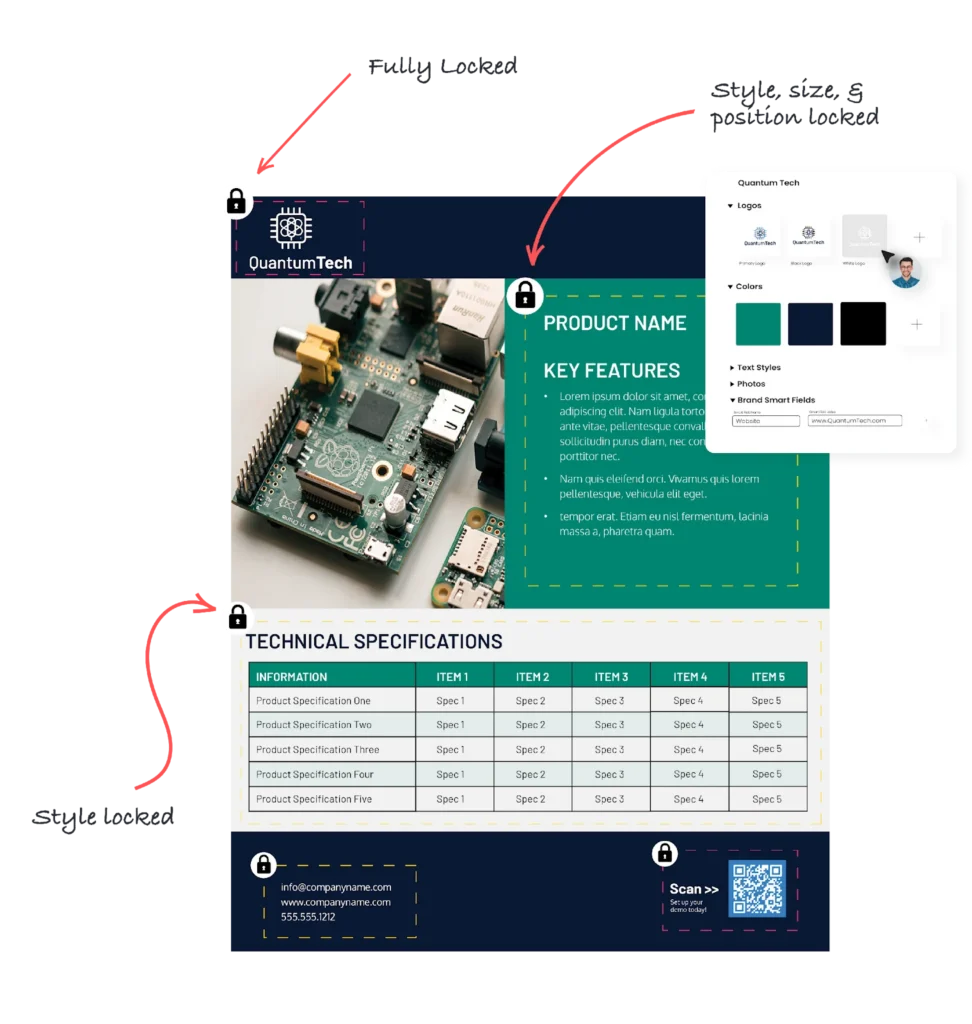
That means locking the elements that should never change (logos, fonts, color palettes, legal disclaimers) and leaving open only the fields that need customization (names, locations, contact details, product-specific copy).
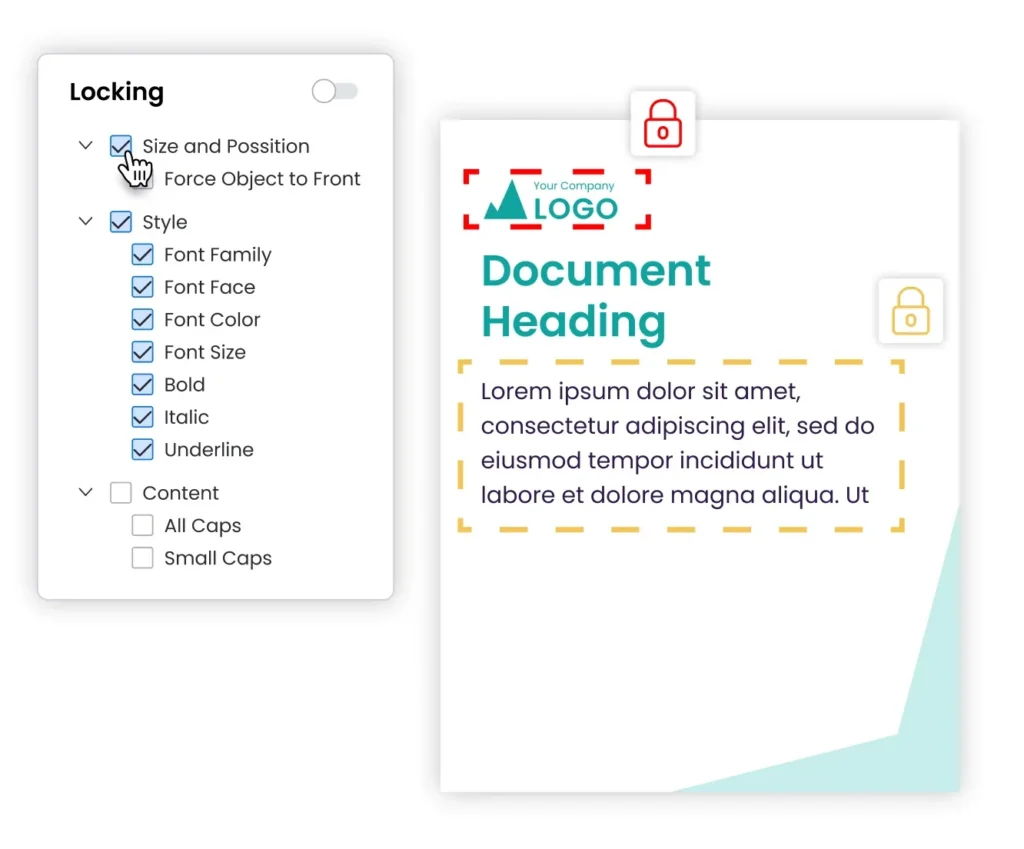
When templates are set up this way:
- Non-designers can create content without needing design support
- The brand team doesn’t have to review every single asset before it goes out
- Updates to the brand (a new logo, updated disclaimer, or refreshed color palette) propagate across all templates at once instead of requiring manual updates to hundreds of files
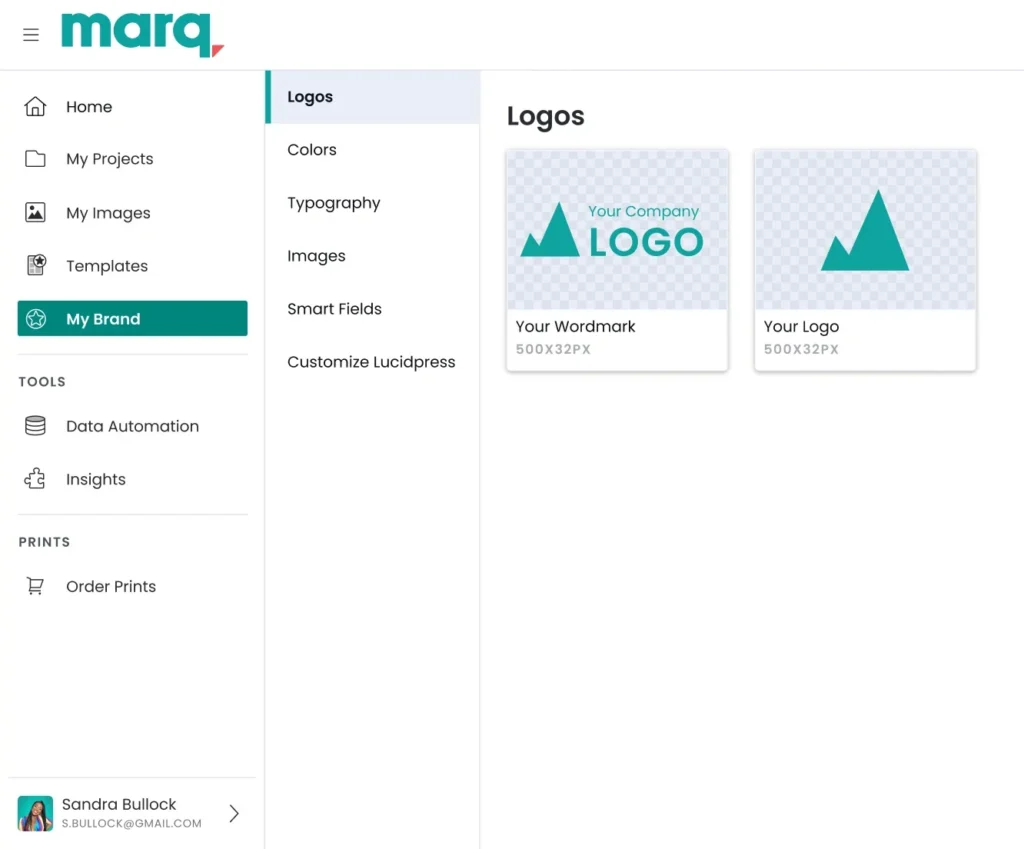
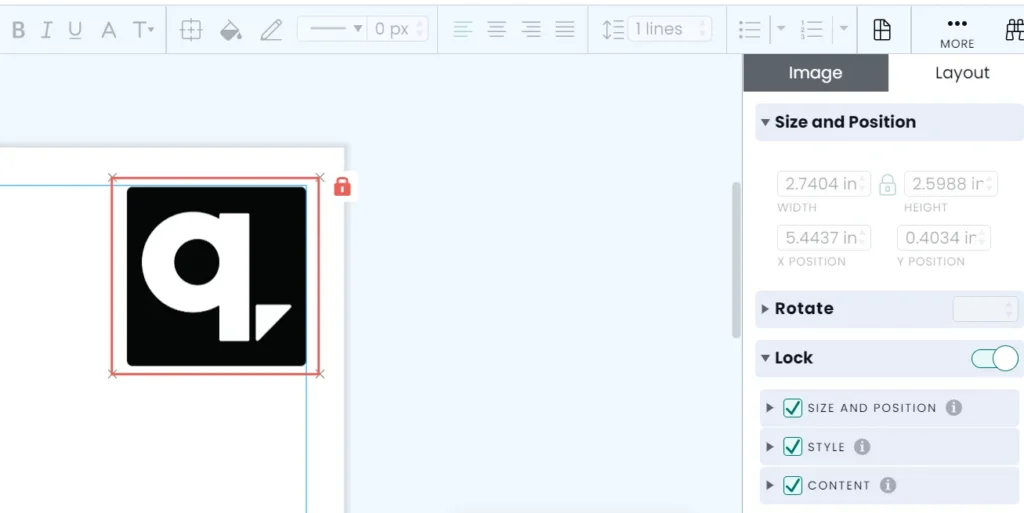
With Marq’s template governance layer, brand teams can lock styles, images, and copy at the object level. The design stays intact no matter who’s creating the content, and when something changes at the brand level, it updates everywhere at once.
Step 4: Set up approval workflows
Even with locked templates and clear permissions, some content still needs human review before it goes live. Compliance-sensitive materials in healthcare or financial services, for example, or high-visibility campaign assets that represent the brand at a national level.
The key is to build approval workflows that are proportional to the risk. A tiered approach works best:
- Low risk. These could be internal presentations or routine sales collateral that are auto-approved through locked templates.
- Medium risk. Think regional campaigns or partner co-branded content that needs a one-step approval from a brand manager or marketing lead before going out.
- High risk. Regulated materials, public-facing campaigns, or legal-sensitive content that requires multi-step approval with compliance, legal, and brand sign-off.
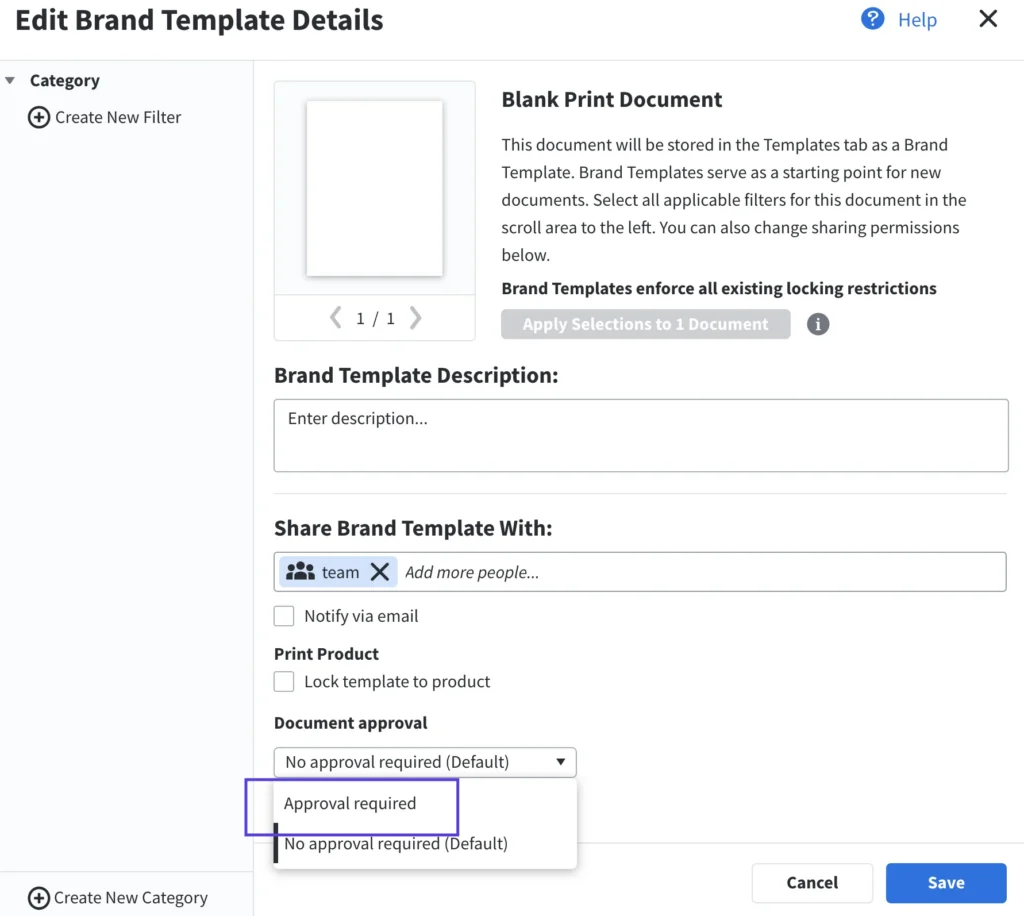
Marq supports multi-step marketing approval workflows that route content to the right reviewers based on the type of asset and the level of risk, so low-risk content moves fast and high-risk content gets the scrutiny it needs.
Flywire, for example, needed an approval flow before teams could use marketing materials, especially when regulated messaging was involved. With Marq, the team could build a structured review process that gave them visibility into final outputs, helping prevent legal issues, formatting mistakes, and off-brand materials without slowing everything down.
Step 5: Automate content personalization at scale
With the right setup, you can use content automation to take most of the manual work out of personalization entirely.
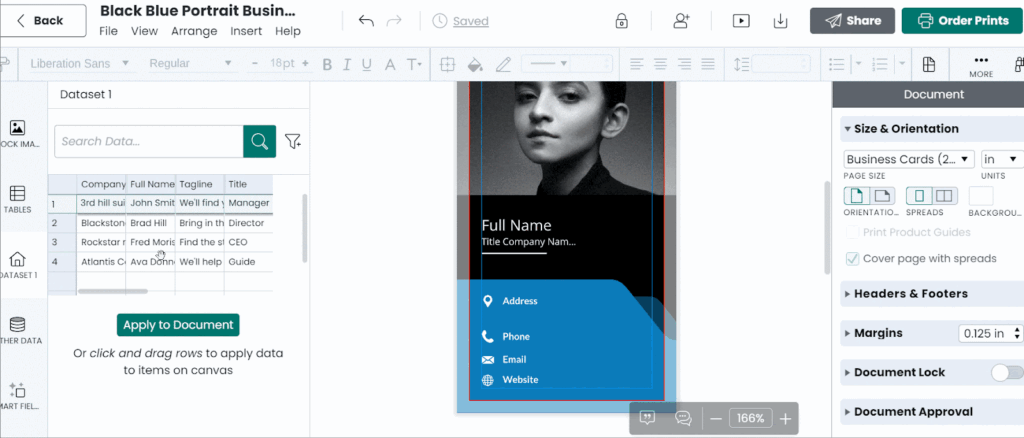
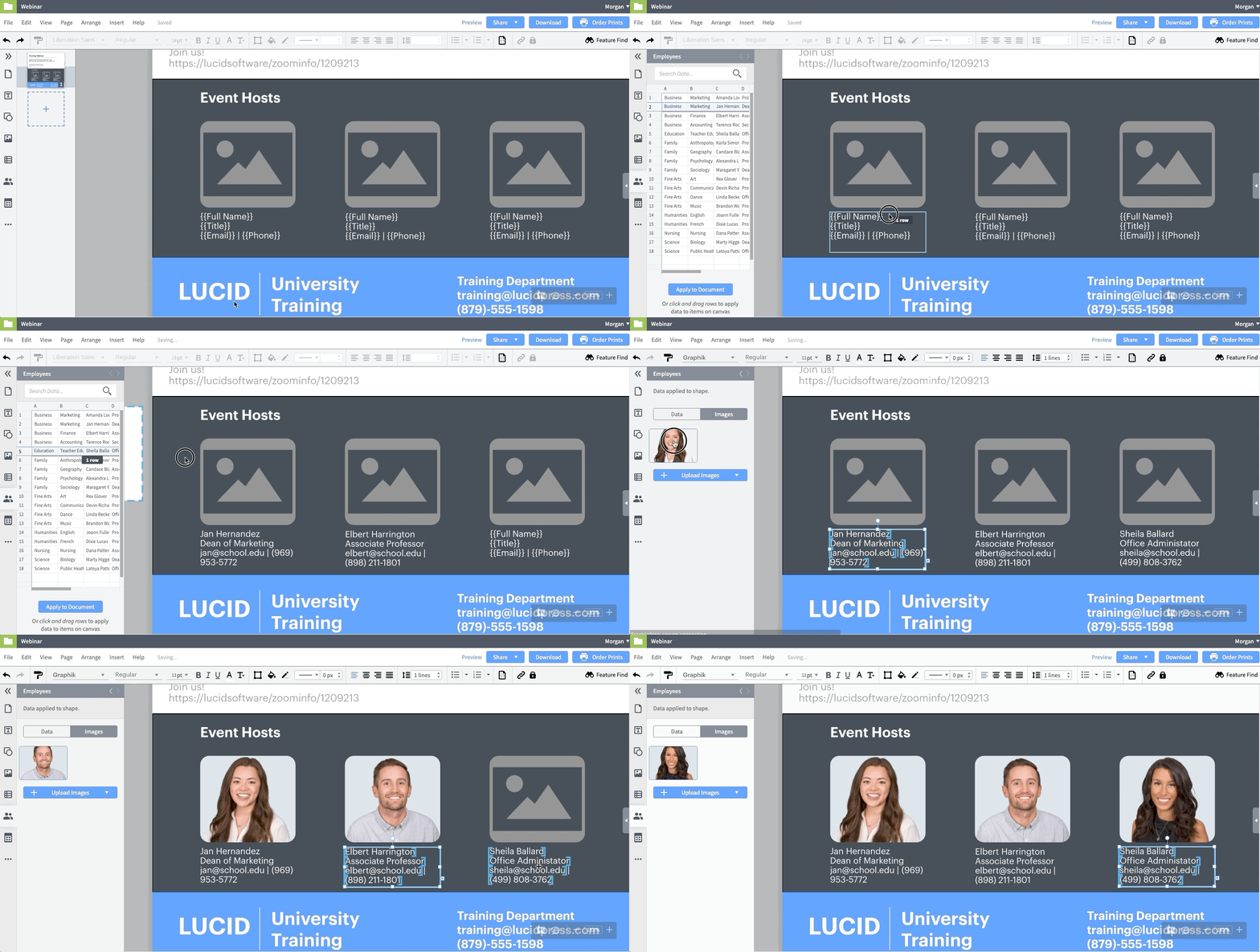
For example, you can set up smart fields to pull data directly from your CRM, spreadsheets, or other systems and populate templates with names, locations, pricing, contact details, and even localized imagery. Instead of a field marketer submitting a request and waiting days for a customized asset, the system handles it for them.
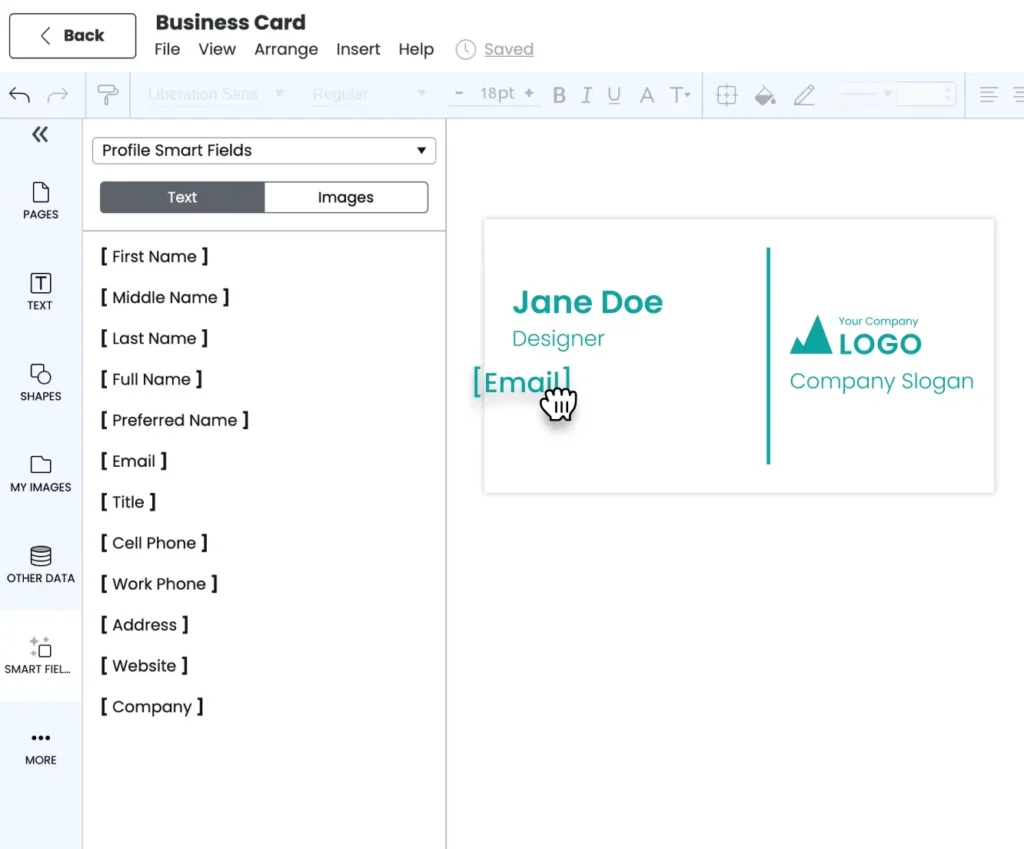
In insurance, this can be especially useful for materials that need state-specific legal language, product details, license numbers, and broker information.
AmeriLife, for instance, uses Salesforce drop-downs for state, plan, and product so the right details populate automatically instead of forcing agents to enter them by hand. This reduces manual errors, speeds up production, and helps teams keep compliant content consistent across a distributed sales force.
Regardless of how distributed your organization is, Marq’s creative automation can generate hundreds of personalized assets in a single run. Upload a spreadsheet with 400 rows of agent data, and each output will be correctly formatted and on-brand.
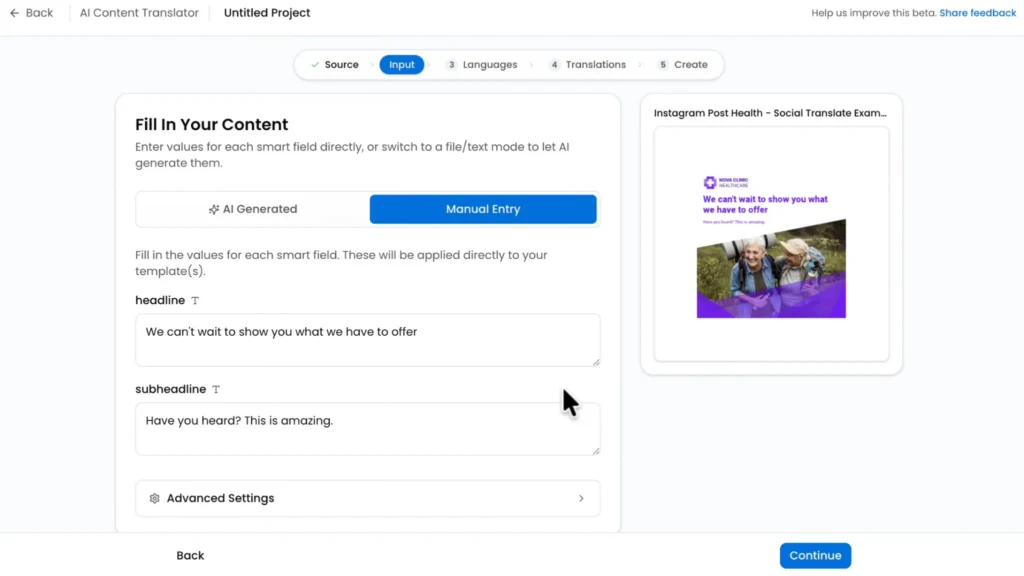
For global teams, Marq also supports automated translation workflows through its AI Content Translator and third-party integrations with Crowdin, Lokalise, and Blend. This makes it easier to execute a strong global branding strategy without recreating every asset from scratch.
See AI content personalization in action.
Step 6: Track, measure, and iterate
A digital brand governance framework takes time to mature. Your team needs to monitor and adjust it as the organization grows, adds new teams, enters new markets, or updates the brand.
Pay attention to how teams are adapting. Are people using the approved templates, or still creating content outside the system? Has content volume increased since rollout? Are there new bottlenecks forming in the approval process that didn’t exist before? Are brand compliance rates improving or staying flat?
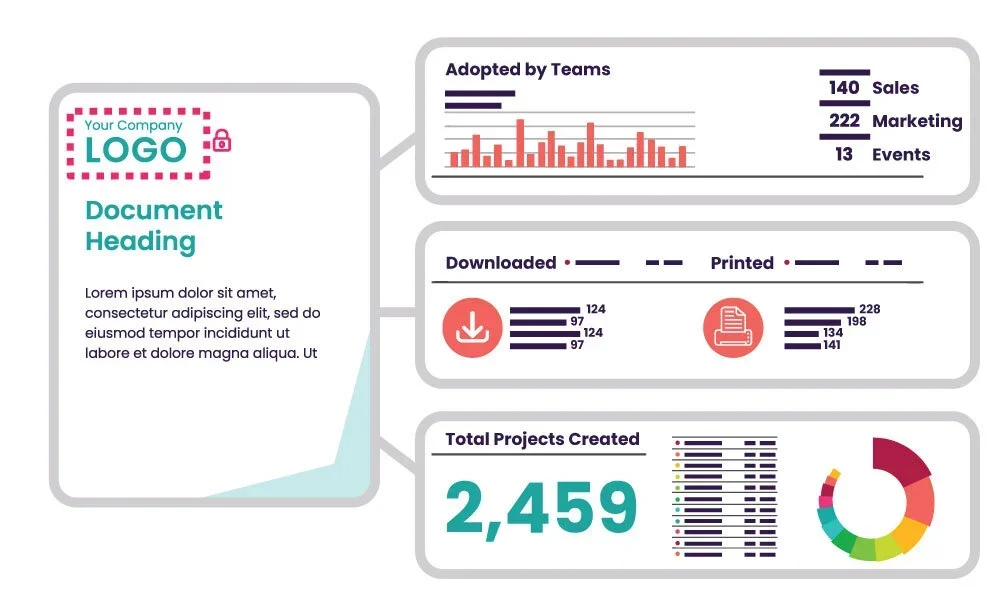
Marq’s analytics dashboard tracks template usage and adoption across teams, so you can see where things are working and where gaps are forming before they become bigger problems.
Pro Tip: Review your governance metrics quarterly. What works for a 25-person marketing org won’t hold when you scale to 250. Build the review cycle into your operations from day one.
The impact of strong digital brand governance for businesses
Here’s how digital brand governance changes the day-to-day across key areas of your business:
| Area | Without Governance | With Digital Brand Governance | Business Impact |
| Brand Consistency | Varies by team, region, and whoever created the asset last | Locked templates and centralized brand controls enforce consistency at the point of creation | Stronger brand recognition and trust across every customer touchpoint |
| Content Production Speed | Bottlenecked by design team availability and manual review cycles | Non-designers create on-brand content independently using approved templates | Faster time-to-market for campaigns, sales materials, and regional content |
| Approval Turnaround | Manual, email-based review that delays launches and creates version confusion | Tiered, automated approval workflows based on content risk level | Content moves from creation to publication in hours instead of weeks |
| Compliance Risk | Off-brand or non-compliant content goes live without review | Role-based permissions and approval catches issues before publication | Reduced exposure to regulatory fines, legal action, and brand damage |
| Creative Team Workload | Designers spend their time on one-off requests, rework, and manual asset updates | Creative automation handles repetitive personalization at scale | Design resources freed up for high-value strategic work |
| Cross-Team Scalability | Governance breaks as new teams, regions, or partners are added | Permission structures and team management tools scale with the organization | New teams onboard into a working system instead of starting from scratch |
Metrics & KPIs that matter to marketing leaders
Once your governance framework is in place, these are the numbers worth tracking:
| KPI | Why It Matters | Impact |
| Template adoption rate | Shows whether teams are using the system or working around it | Low adoption signals a training or accessibility gap that leads to off-brand content |
| Approval turnaround time | Measures how long content sits in review before going live | Longer turnaround means slower campaigns and teams bypassing the process |
| Brand compliance rate | Tracks the percentage of published content that meets brand standards | Directly tied to brand trust, customer perception, and regulatory risk |
| Content volume per team | Reveals which departments are producing the most and whether output is growing | Helps allocate resources and identify teams that may need additional templates or support |
| Rework rate | Measures how often content needs to be corrected after publication | High rework means governance gaps are costing your team time and money |
| Time-to-market | Tracks how long it takes from content request to published asset | The faster content reaches the market, the more revenue opportunities your team can capture |
More about Marq: The brand governance solution for enterprise teams
Marq is a brand enablement platform that has template governance and creative automation at its core. It gives marketing and creative teams the tools to centralize control over branded collateral, so non-designers across the organization can create on-brand content on their own.
Key features
- Locked templates with multi-level, role-based access. Lock logos, fonts, colors, layouts, and copy at the object level. Define editable zones for end users, and set permissions so each team only sees and accesses what they need. When brand elements change, updates propagate across all templates at once.
- Automated personalization with smart fields. Pull data from CRMs, spreadsheets, or other systems to auto-generate hundreds of personalized assets in a single run. Support multi-language campaigns through automated translation workflows with Crowdin, Lokalise, and Blend.
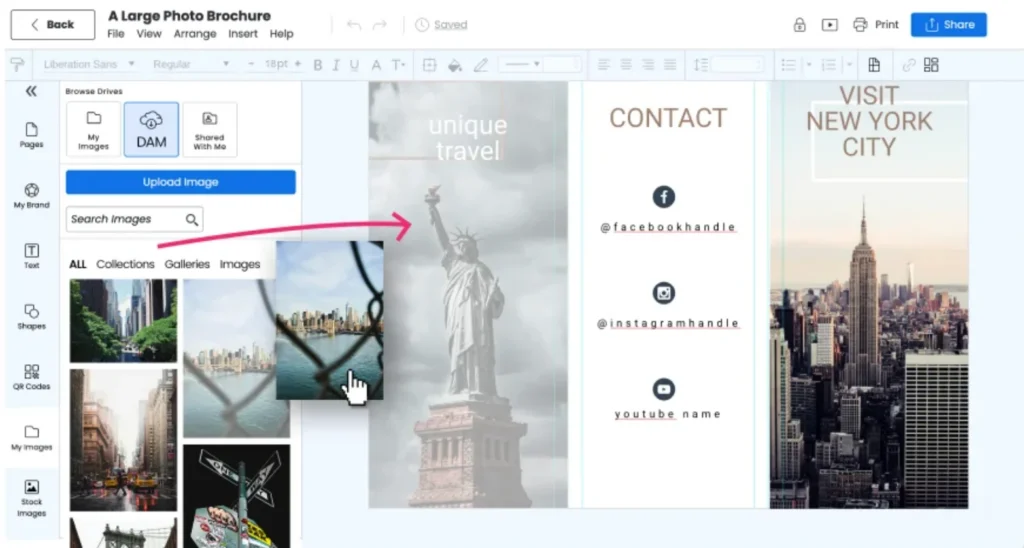
- Digital Asset Management (DAM) integrations for approved asset access. Connect directly to MediaValet, Bynder, Brandfolder, and other DAM integrations so teams pull approved logos, images, and videos into templates without downloading files or switching tools. Marq also offers native asset storage and content management for teams that don’t use a standalone DAM.
- Content distribution and usage analytics. Track which templates are being used, by whom, and how often. Monitor adoption rates across teams and identify where governance gaps are forming before they become problems.
What Marq customers are saying
“Now, when our sales team needs something, they don’t have to wait. They can open a template, drop in the details, and get it out the door the same day,” shares Malia Hostetler, Senior Manager of Creative Solutions, PT Solutions.
“We’re able to quickly customize assets by market and audience, leading to more powerful marketing. Our designer is able to maintain our brand standards by locking elements. In particular, it’s really great that we can lock the entire template, the style, the size, or all of the above,” says Morgan Turner, Orchard Real Estate.
Marq’s impact in practice
Reinhart Realtors is a 46-year-old real estate company with dozens of agents across the greater Ann Arbor area. They struggled with agents using Publisher, PowerPoint, and InDesign to create materials with distorted logos, incorrect colors, and inconsistent visuals.
After implementing Marq’s lockable templates, 160 admins and agents now work from a single system. The result: 320 hours of work saved per week, and the marketing director no longer has to act as brand police. See more Marq case studies here.
Schedule a demo to see how Marq can scale brand governance across your organization.
Best practices for digital brand governance
Getting the framework in place is one thing. Keeping it running is another. Follow these best practices to make sure your governance system stays effective as your organization grows:
- Treat brand guidelines as a living system. Brand guidelines that sit untouched for months can slowly become artifacts. Review and update them on a regular cadence, at minimum twice a year, to keep things fresh. And once you do update, make sure those changes reach every team across every region.
- Give regional teams flexibility within guardrails. In many organizations, regional teams need the ability to modify content depending on their use case, whether that’s localizing messaging, swapping imagery, or adjusting copy for a specific audience. Give them the flexibility to do that, but clearly define what they can and cannot change in a project.
- Conduct regular content audits. Schedule quarterly audits that look at what teams are producing, not just what’s stored in the system. Check for outdated materials still in circulation, unapproved templates being used outside the platform, and compliance gaps in regulated content.
- Tie governance metrics to business outcomes. The reports you create around governance need to speak the language of leadership. Frame them around revenue impact, risk reduction, and efficiency gains. That’s what gets governance a seat at the executive table and keeps budget flowing toward the systems that support it.
Examples of brand governance in practice
Here’s how three organizations in different industries used Marq to solve brand governance challenges at scale.
1. PT Solutions
As PT Solutions grew from 300 to 550+ clinics, the creative team was buried under 300+ monthly requests, most of them repeatable. Outdated collateral with stretched logos and inconsistent messaging circulated across clinics.
Solution: PT Solutions implemented Marq alongside MediaValet to build a self-serve system where field teams and sales reps could create collateral from locked, brand-approved templates.
Results:
- 93% faster turnaround on collateral (from 2-4 weeks to same-day)
- 300+ projects self-served monthly by regional and clinic teams
- Creative team freed up to focus on high-impact campaigns instead of routine production
2. Yext
Yext’s in-house creative team of seven designers was responsible for the brand collateral of 1,200+ employees across 18 locations in 10 countries. When a company-wide messaging initiative required 100+ sell sheets in multiple languages, the production workload was unmanageable.
Solution: Yext built master templates in Marq with locked brand elements and editable zones for language. International team members could access templates and translate content for their market without waiting on the creative team.
Results:
- 7 designers now support 1,200+ employees across 10 countries
- 100+ localized sell sheets produced from a single template
- Local teams create and translate content independently without bottlenecking the creative queue
3. First Team Real Estate
First Team Real Estate grew from one office in Huntington Beach to 38 locations across Southern California with 2,200+ associates. As the company scaled, managing brand consistency across all agents and sub-brands became increasingly difficult.
Solution: First Team used Marq to consolidate all branded content under one platform. Agents could adjust templates to cater to different market segments while the marketing team maintained control over core brand elements.
Results:
- Brand consistency maintained across 38 offices and 2,200+ associates
- Agents create collateral independently without bottlenecking the marketing department
- Templates flexible enough to cater to a wider market range than previous collateral allowed
Scale digital brand governance across different teams and locations with Marq
As you add more teams, regions, and content creators, brand governance becomes exponentially harder. You’re managing more assets, more approvals, and more people who need to create content.
Marq is a brand enablement platform that helps you overcome these challenges by centralizing control over your branded collateral while giving distributed teams the freedom to create on their own.
It gives marketing and brand leaders the team management tools, analytics, and creative automation they need to scale brand consistency without scaling headcount.
Book a demo today to see how Marq works for your organization.
FAQs
Digital brand governance is the system of rules, tools, and workflows that keeps branded content consistent, approved, and compliant across teams.
Digital brand governance is important because it helps teams scale content creation without losing brand consistency, slowing production, or increasing compliance and legal risk.
Brand, creative, or marketing teams are usually responsible for brand governance. But other departments also play a role by using approved templates and following set rules.