What Is a Brand Portal and Why Your Business Needs One

As organizations grow, brand challenges become operational.
More teams, regions, partners, and vendors need to create branded materials. Messaging, legal language, campaigns, and visual standards change frequently. And still, central marketing teams are responsible for consistency, speed, and compliance across all of it.
Without a system built for this level of coordination, the same problems show up every time: approved assets are hard to find, outdated materials get reused, designers are pulled into constant “quick edits,” and brand or legal issues are discovered after content is already in the market.
A brand portal exists to solve these problems at the system level.
Brand Portals give teams and partners a governed place to access approved assets, customize only what they’re allowed to change, and produce on-brand materials without waiting on designers or brand managers.
What Is a Brand Portal?
A brand portal is a centralized, governed workspace where teams and partners can access, customize, and distribute brand assets. Brand portals typically house core brand elements (logos, fonts, colors) and organized marketing materials.
While a brand portal helps centralize marketing materials and control access to and versions of branded materials, it’s not just a static library or asset repository. Many organizations use it alongside dedicated brand asset management software to ensure that both creative files and guidelines remain perfectly synced. Brand portals should give non-designers a way to self-service assets, apply brand standards to templates, and publish or distribute content directly from the workspace, creating a self-service marketing experience that keeps every asset on brand.
In sum, brand portals are a scalable way to keep your brand consistent and your teams aligned, no matter how distributed your org is.
Common Uses for Brand Portals
The term brand portal means different things depending on organizational need. Misalignment between what teams expect and what a portal actually delivers is one of the most common reasons implementations fail to create value.
Brand portals are typically used to:
1. Enable Controlled Self-Service
The primary use case. Brand portals let non-designers access templates, customize approved elements (text, images, data), and produce materials independently (without breaking brand rules or requiring designer intervention). This reduces bottlenecks, speeds up execution, and protects brand integrity at scale.
2. Establish a Single Source of Truth
Brand portals centralize brand standards: logos, fonts, colors, messaging guidelines, and approved templates. This eliminates confusion about which assets are current and ensures teams always work from the latest, approved materials. This is especially important in regulated industries or distributed organizations. Tools like Marq’s Brand Kit make this possible by allowing you to define and lock brand elements (like approved fonts) across a brand or subbrand’s template library.
3. Organize and Activate Brand Assets
Some brand portals integrate with Digital Asset Management (DAM) systems to make stored assets immediately usable. For example, Marq’s DAM integration lets you use approved assets directly within editable templates. Instead of just housing files or standards, the portal layers governance, permissions, and editing capabilities on top of the asset library, turning storage into activation.
Why Brand Portals Matter to Modern Brand Enablement
Organizations that maintain strong brand consistency see revenue lifts up to 33% (Marq State of Brand Consistency Report). Brand portals make this possible by solving four operational problems:
1. Eliminate Bottlenecks
Brand portals help non-designers to create materials independently using templates with built-in brand rules. Anyone with access can find assets, customize locked templates, and share materials without flooding your creative teams with requests.
2.Faster Time to Market
McKinsey found that knowledge workers spend 20% of their week searching for information. A brand portal reduces search time. It gives your teams immediate access to current assets with templates with brand elements built in.
3. Less Rework and Fewer Approval Loops
A brand portal enforces guidelines with minimal oversight using controlled edit zones, template restrictions, and approval workflows. These systems catch brand mistakes before materials go live, reducing the revision cycles that consume marketing and compliance time.
4. Risk Reduction Through Built-In Governance
Permissions, template constraints, and approval workflows prevent outdated claims, incorrect legal language, and non-compliant materials from reaching market.
Key Features of a Brand Portal To Simplify Modern Brand Enablement
The features below turn a brand portal from a file library into a system that reduces bottlenecks, speeds execution, and protects brand integrity.
Let’s look at the key features every brand portal needs and why they matter for distributed teams.
#1. Self-Serve Portal Experience
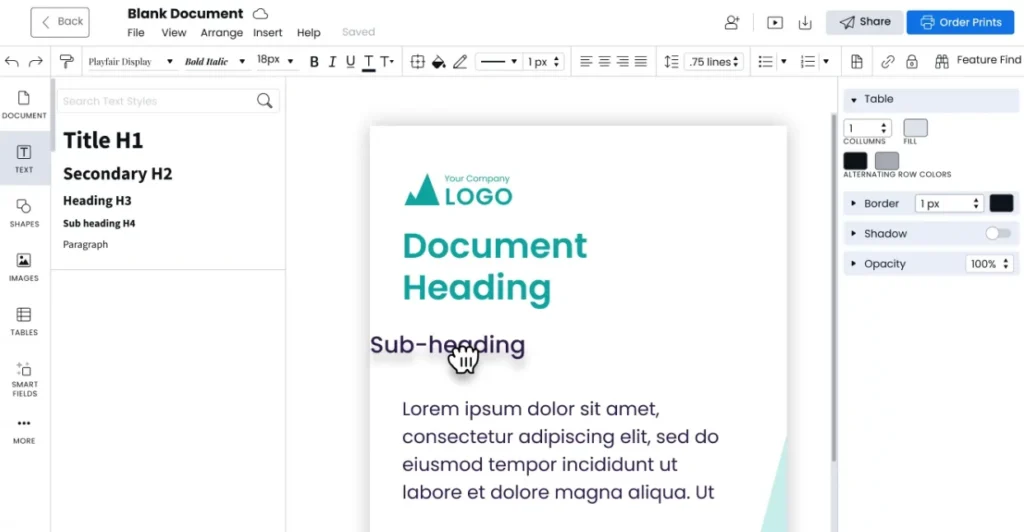
A self-service portal acts as a workspace where teams can find and create approved assets within guardrails, without waiting on the brand team for every edit.
Marq’s portal builder lets brand ops set up role-based permissions, with access to features relevant to them. For example, when sales reps log in, they see ready-to-use pitch decks and one-pagers, while clients can only leave comments and approve projects.
#2. Approved Asset Library With Versioning
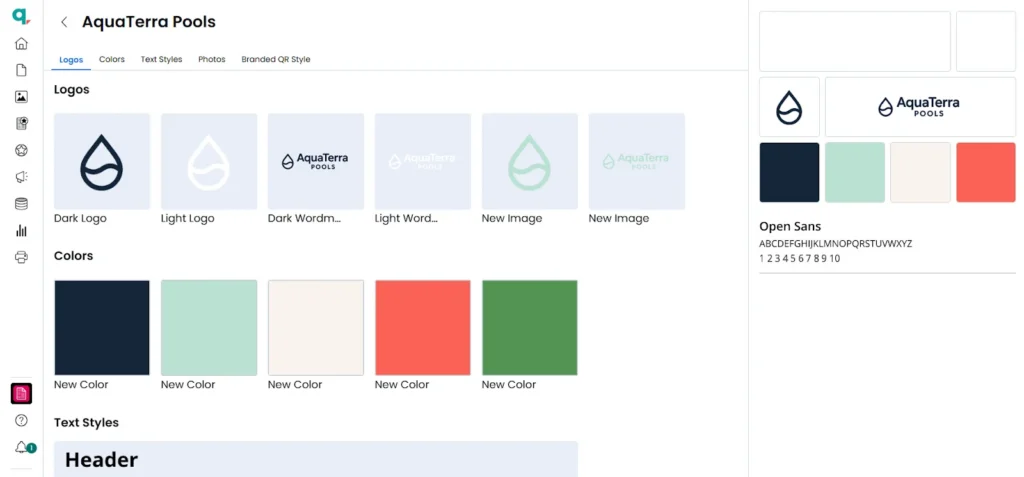
This is a centralized source of truth for your brand files. It hosts logo files, photo library, icon sets, approved fonts, and color values.
The information is stored in the Brand Kit with usage rules attached. Real-time updates push changes system-wide: when you rebrand, the new logo propagates across all templates instantly. Teams can’t accidentally use old files because the system only surfaces the current version.
#3. Brand Rules Built Into Templates
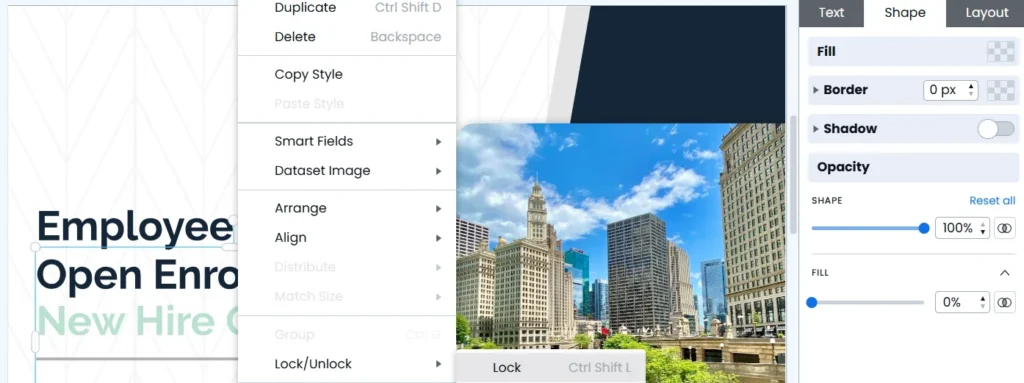
This is a key differentiator between a brand portal and a DAM. A DAM lets teams download assets; a brand portal lets them create new materials with tools to ensure brand guidelines are followed.
Marq makes this possible with open controlled edit zones. Users can swap images, update copy, and localize content, while being constrained to brand guidelines with preset layouts, fonts, or move locked elements.
#4. Ready-to-Use Content and Data Building Blocks
Building blocks are pre-approved content modules your teams can reuse, like messaging pillars, product descriptions, CTAs, pricing disclaimers, and legal language. Marq lets you store these as reusable elements within templates.
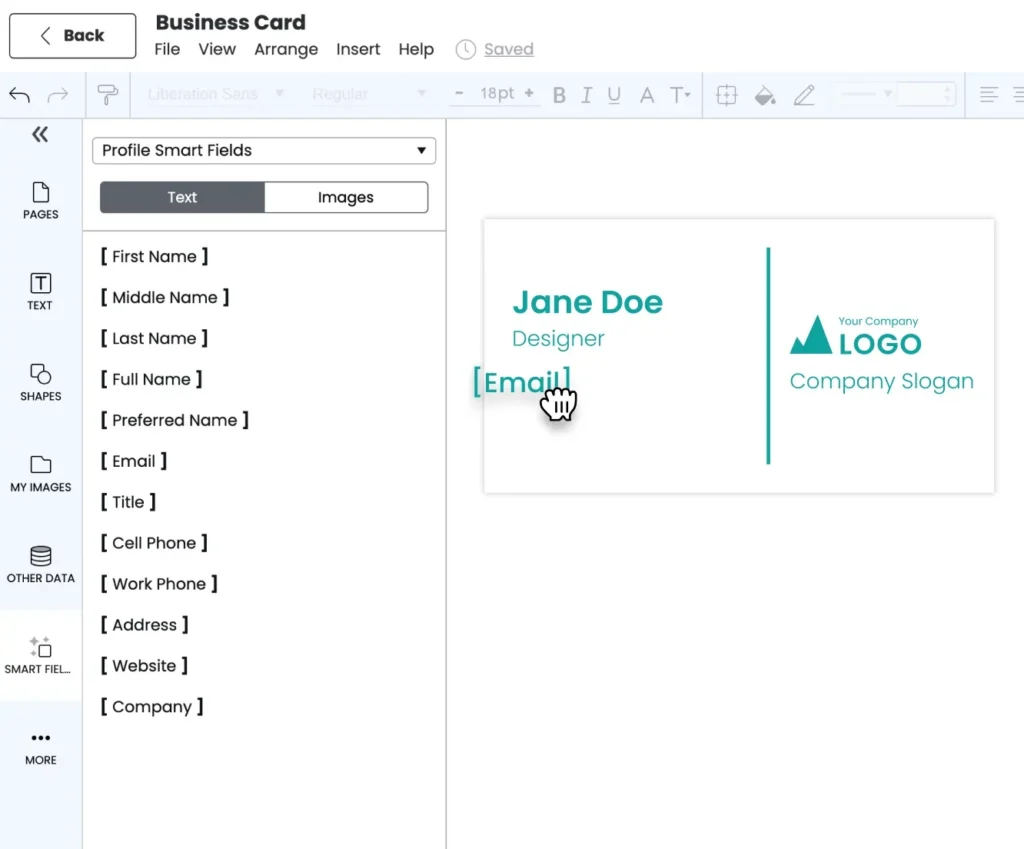
Marq also supports smart fields and data automation, which connect templates to external data sources like Google Sheets, CRMs, or MLS feeds. This means content like employee directories, property listings, or product catalogs can auto-populate into templates – eliminating manual data entry and ensuring information stays current across all materials.
This reduces rework, speeds up production, and keeps messaging and data consistent across regions and channels.
#5. Approvals and Real-time Collaboration for Risk Control
Brand portals use approval workflows to control how teams publish materials and ensure high-risk content—like regulated claims, partner co-branding, and legal language—meets brand standards before it goes live.
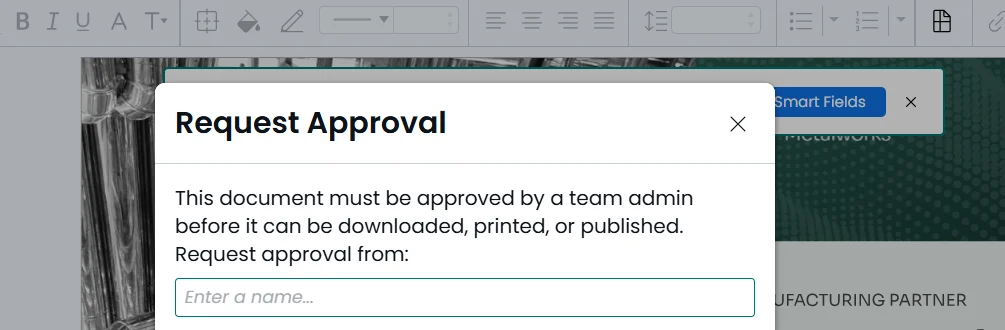
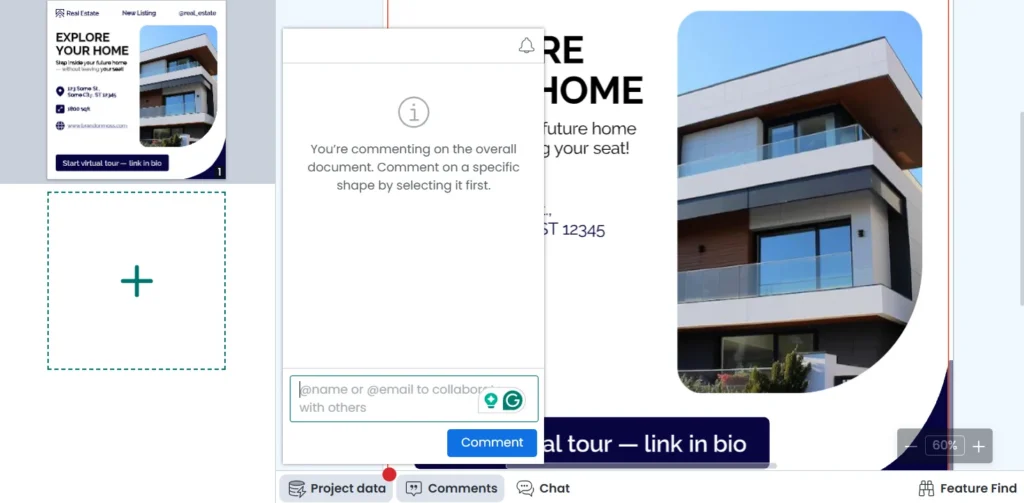
Marq integrates approval workflows with task management systems like Asana, Wrike, or Monday.com, so requests don’t disrupt existing processes. Teams can leave comments, give feedback, and track iteration status directly in the portal, ensuring everyone works from the latest version with clear ownership and fewer handoffs.
#6. Multi-Channel Distribution
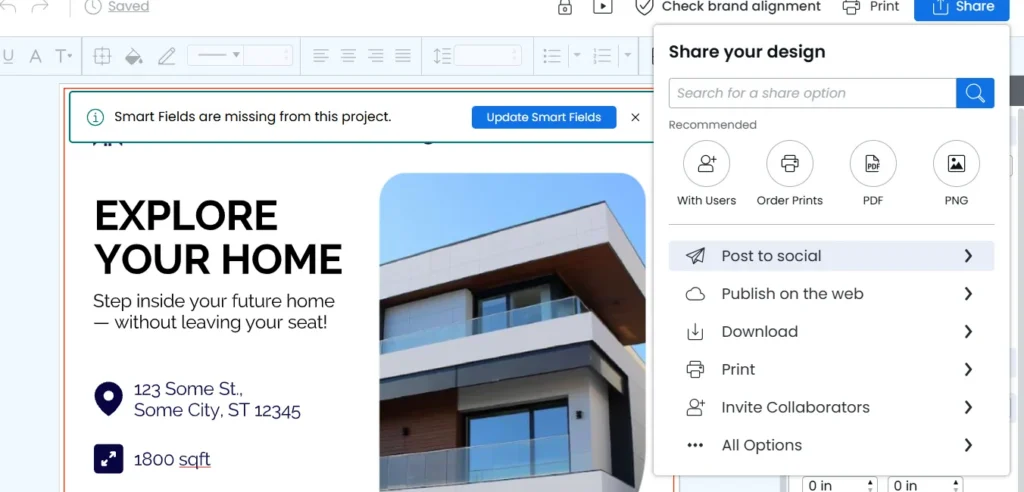
In brand portals, multi-channel distribution allows users to personalize assets for various channels and use cases from the platform.
Marq’s Campaigns feature lets you integrate your asset library with paid ads platforms to create ads using on-brand templates. It even uses AI-assisted capabilities to create and deliver assets using form data directly. This approach helps scale content production while maintaining brand consistency across channels.
#7. Analytics and Reporting
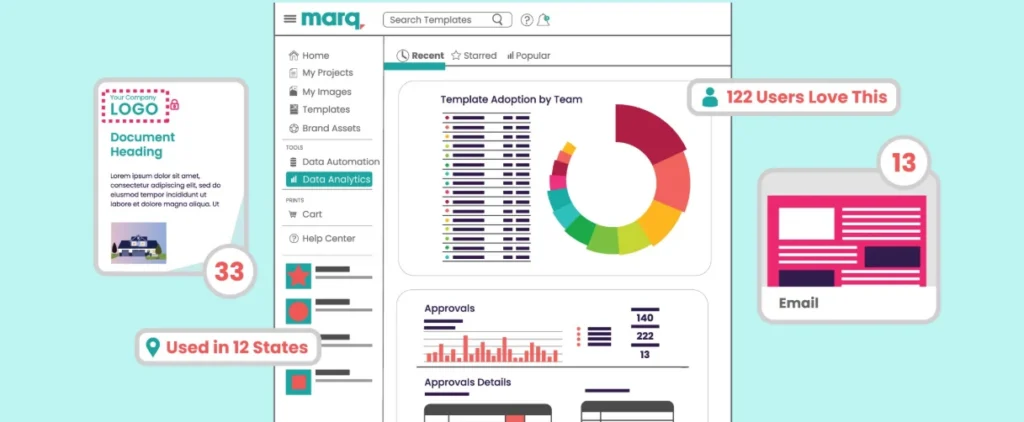
Marq’s analytics shows you which assets get used, which templates drive output, and where teams still struggle. This matters because brand teams can now have evidence to prioritize improvements.
In practice, brand ops often use analytics to retire unused items and promote high-performing kits.
👉 If approvals and version chaos slow your teams down, schedule a demo and see how Marq enforces brand rules inside templates.
Seven Common Use Cases of Brand Portals
See below for some real-world use cases of how Marq’s templating, combined with a DAM via MediaValet integration, helps marketing teams improve brand consistency at scale.
Brand asset hub
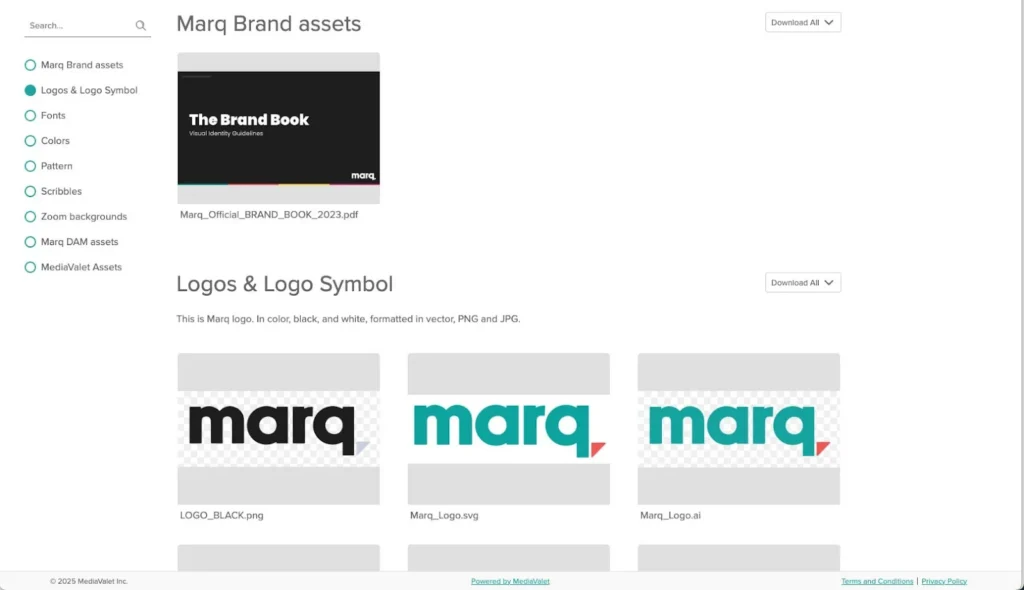
At Marq, we use a brand portal for our own branded assets. The portal includes our visual identity guidelines, logos (in png, svg, colour, black, white, and with or without transparent backgrounds), our fonts, hex codes for brand colours, zoom backgrounds, one-page explainers, case studies, videos for product launches, compliance documents, and more!
Our Brand Asset Hub is both for internal teams and partners, and saves our marketing teams countless hours of lost productivity.
Design approval
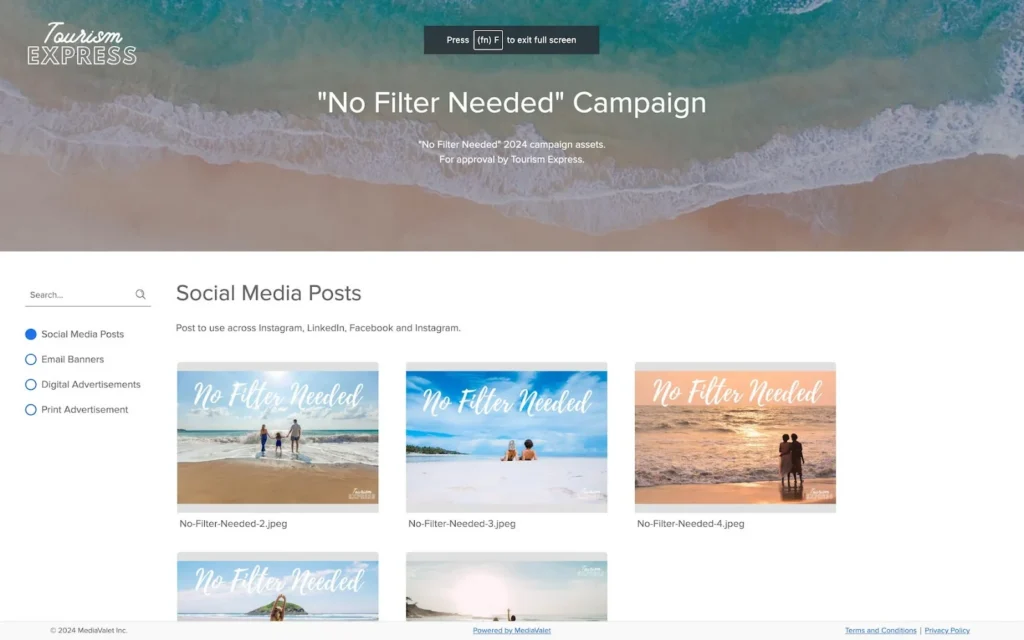
Digital Agency, BEAR, uses a brand portal to manage social media campaigns for clients.
When Art Director, Monica, needed to submit the final assets for approval to a client’s marketing team, she created a password-protected brand portal for the client to view the assets for the upcoming campaign.
Event branding
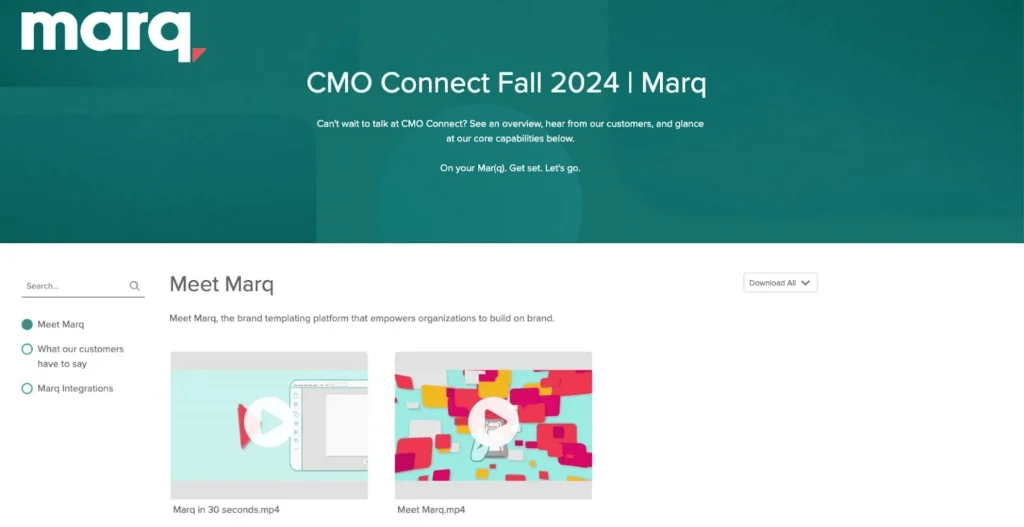
During the run up to a recent marketing event, the Marq team used a brand portal to house branding materials, video explainers and background information about us.
This is a popular use case, and we find many clients use a brand portal for one-off events to house brand and partner logos, templated flyers for printing, branded booth backdrops, and more. These assets empower event attendees to prepare for the event without waiting for marketing teams to deliver any assets manually.
Post-event asset sharing
Hill University used a brand portal to host photography from their graduation ceremonies.
The university was able to share a single portal for each graduating class. The relevant degree program name is added to its section, allowing students to locate photos from their graduating class.
Each section is synced with a category inside the digital asset management system (DAM), so if a photographer adds more photos, the portal is updated.

Campaign launch
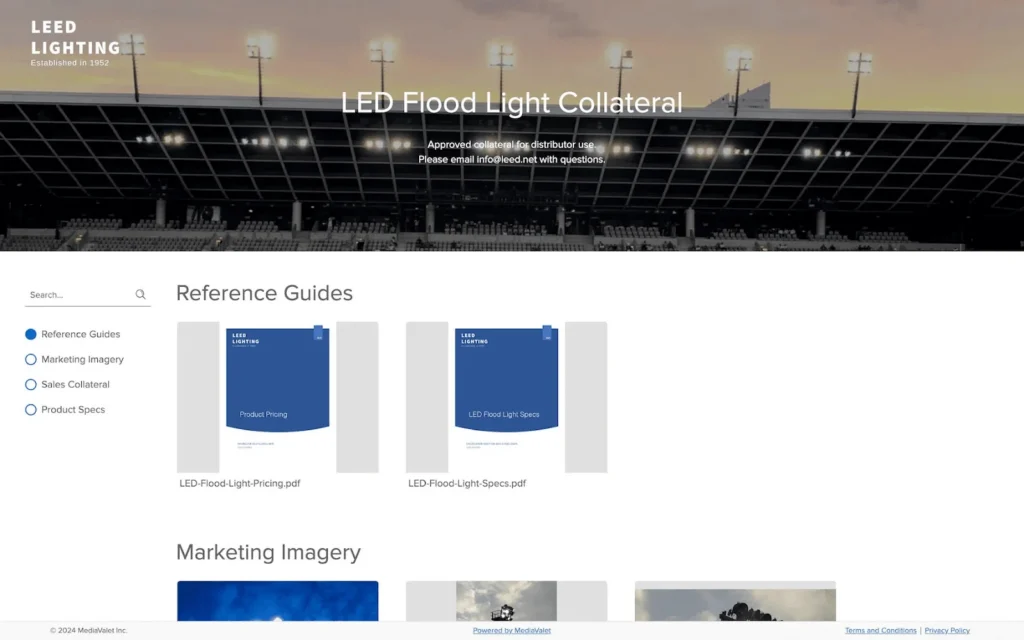
Leed Lighting, one of North America’s largest lighting manufacturers, used a brand portal to coordinate visual assets during a product launch.
The Leed team wanted to ensure distributors had all the necessary product collateral, such as product images, specification sheets, pamphlets, etc.
Leed’s Marketing Manager created a branded portal and organized it into several sections, so distributors could quickly find and download what they needed.
Self-service marketing portal
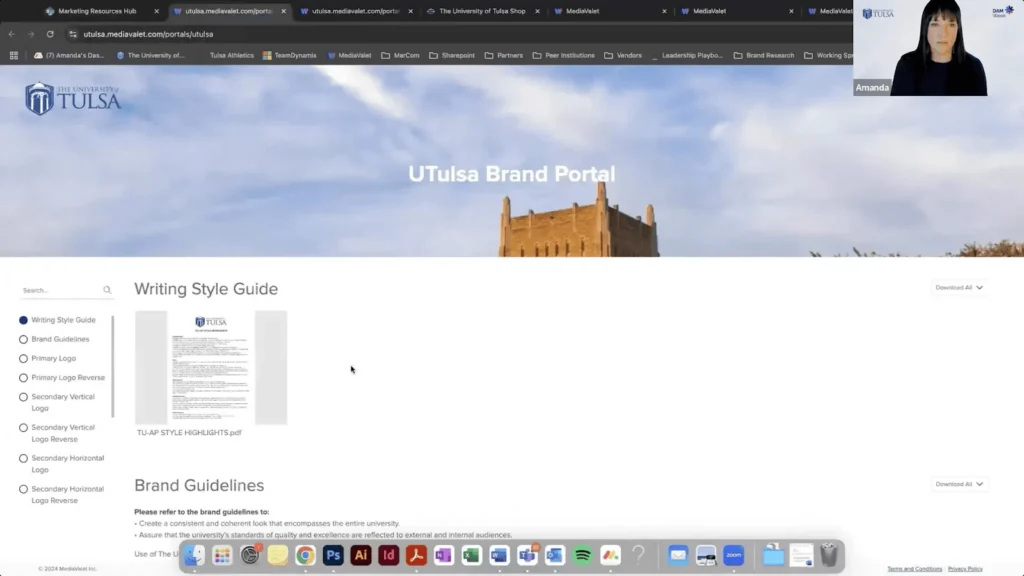
Amanda Hodges, Creative Director at The University of Tulsa, joined the Marq team on a webinar to explain how her team used a brand portal to reduce design-related support tickets.
Last year, Amanda opened up a ticketing system for design and marketing requests. Within a few weeks, their team received 2,500 tickets. Most of the tickets were repetitive requests for templated flyers, visual templates to promote events on digital screens, and designs for business cards and stationery.
Amanda’s team used a brand portal with Marq’s templating and MediaValet digital asset management solutions to house writing guides, brand guidelines, logos, flyer templates, digital screen templates, promotional photos, and even a portal for ordering branded stationery.
The self-serve marketing portal reduced the number of tickets while empowering students to create branded solutions by themselves.
Assets for referral partners/ resellers
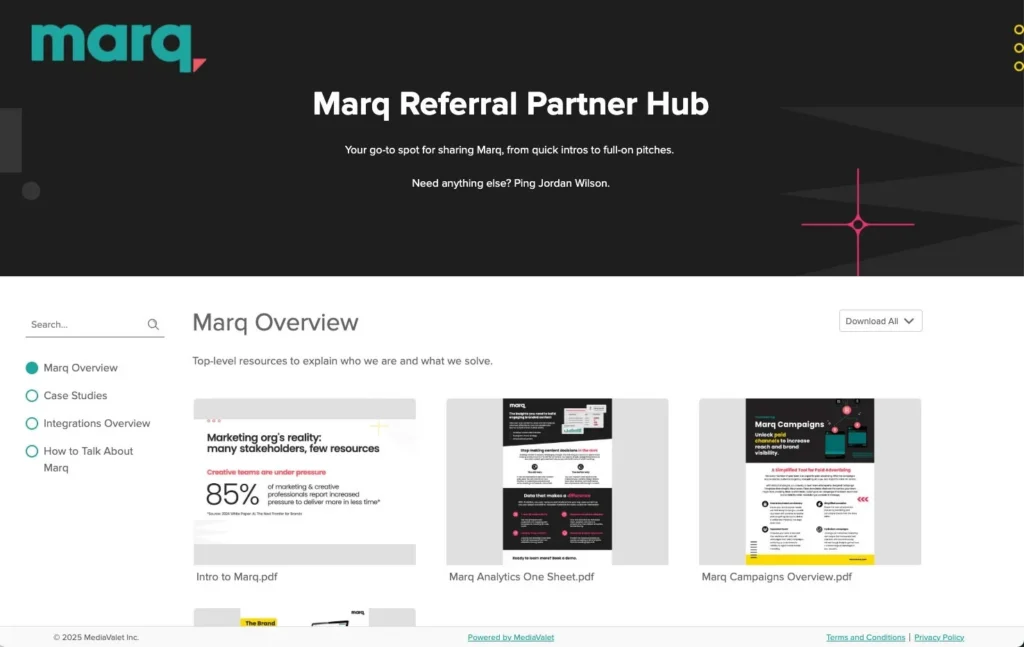
Marq also uses a brand portal to manage branded assets for referral partners.
We hear from teams implementing Marq that sales teams constantly ask for logos, branded flyers, case studies, and one-sheet explainers. That’s why our Referral Partner Hub includes assets like a document explaining what Marq is, infographics showcasing our impact, one-sheet explainers about product features, branded case studies, integrations, and value props to help partners talk about Marq in an on-brand way.
Measuring the ROI of Your Brand Portal
Measuring brand enablement ROI can be tricky.
Much of its impact shows up in qualitative ways: less busywork for marketing teams, faster turnaround times for sales content, better asset reuse across campaigns, and fewer off-brand mistakes.
Still, several metrics can help you track the before-and-after of implementing a brand portal:
1. Brand Consistency Rate
This metric looks at how often your brand messaging, visuals, and voice follow the brand guidelines across channels. It provides a numerical value to the quality and consistency of brand identity assets used in your projects. Track this through periodic audits or spot-checks of published materials.
2. Content Velocity
This metric measures how quickly assets move from creation to publication. Higher velocity means teams can produce and distribute materials faster without waiting for approvals or designer handoffs.
3. Asset Reuse
It measures how often teams repurpose existing assets instead of creating new ones. Marq Analytics tracks which assets or templates get used most often and by whom. It’s a tangible way to demonstrate efficiency gains.
4. Content Request Volume
The number of support requests to marketing and design teams. A reduction indicates the portal is successfully removing bottlenecks and improving self-service access to content.
5. Revenue Proxy (Time and Cost Savings)
Calculate cost savings from reduced designer hours, faster production cycles, fewer compliance or design corrections, and so on. This tells a tangible ROI story that ties your brand portal to operational efficiency.
Improve Your Brand Identity with Brand Portal
The best marketing tools shouldn’t stay locked in the marketing department.
Brand portals let you share templates, assets, and brand standards across sales, regional teams, partners, and agencies without losing brand control. Teams get the autonomy to create what they need, when they need it, while the brand stays protected through built-in guardrails.
Marq makes this possible by embedding brand rules into the creation process. Controlled templates, role-based permissions, and real-time collaboration features let distributed teams produce on-brand content independently, so marketing teams don’t have to be a bottleneck.
👉 Book a demo to see how Marq helps your teams build on-brand.