5 Best Marketing Asset Management Tools & Software in 2026

Do distributed teams really need a marketing asset management software or does a Google Drive folder do the job?
For a team of three sharing a handful of files, a Drive folder works fine. But the moment your company opens a regional office or starts running campaigns across multiple locations, that setup starts to break down.
Someone grabs the wrong file. Someone edits a template they were not supposed to touch. Someone sends the client an outdated marketing asset. At this moment, the Drive folder becomes less of a system and more of a liability.
Marketing asset management software helps teams stay organized and brand compliant as they grow. This article goes through five platforms in detail, what they offer, their pros and cons, and what real users think about them.
How we tested and ranked these marketing asset management platforms
We tested each marketing asset management platform against the problems teams at mid-size and enterprise organizations run into.
Here is what we looked at:
- Asset storage and organization: How well the platform stores, tags, and structures a marketing asset library.
- Search and discoverability: Whether the search function locates the right asset quickly.
- Version control and asset governance: Whether the platform tracks asset versions, flags outdated content, and prevents teams from using retired files.
- Access controls and permissions: Whether central teams can control who sees which assets and who can download them.
- Integrations: How well the platform connects to Customer Relationship Management (CRM) systems, design tools, and rest of the marketing stack.
- Ease of use: Whether non-designers can find, use, and distribute approved assets without help from the creative team.
- Customer reviews: What real users say about their day-to-day experience with their asset management tool of choice.
Best 5 marketing asset management software compared
| Platform | Best For… | Key Features | G2 Rating |
| MediaValet | Enterprise asset storage and governance | Advanced search, experience portals, CDN-linking | 4.5 |
| Bynder | Global brands with large asset libraries | Taxonomy, 155+ integrations, brand portals | 4.5 |
| Canto | Mid-market teams needing a reliable platform | AI visual search, approval hub | 4.4 |
| Marq | Distributed teams that need content storage and creation | Brand portal, approval workflow, locked templates, DAM and CRM integrations | 4.5 |
| Air | Creative teams managing high-volume visual content libraries | Conversational search, creative intelligence, Canvas | 4.6 |
Marq stores approved assets, governs how teams use them, and turns them into on-brand marketing materials. Book a demo to see it in action!
1. MediaValet: Best for enterprise asset storage and governance
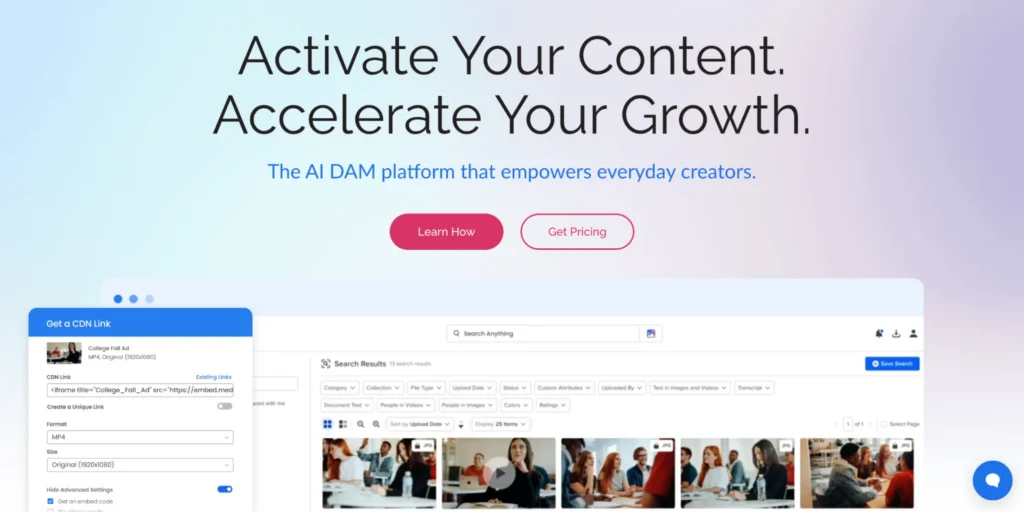
MediaValet is an enterprise Digital Asset Management (DAM) platform built for companies that need secure, scalable storage for large volumes of marketing content.
Companies in healthcare, financial services, manufacturing, and higher education use MediaValet to maintain a single source of truth for brand materials.
Key features
- Advanced search: MediaValet’s search uses metadata, keyword tagging, and filtering to locate assets quickly across large libraries.
- Experience portals: Companies can share curated asset librares with internal teams, agencies, and external partners to ensure people see the content relevant to them.
- CDN linking: MediaValet creates a single shareable link for every asset, which teams can place on their website, Content Management System (CMS), or email campaigns. When the asset changes in MediaValet, every channel updates automatically.
- Approval and proofing: Reviewers can annotate and approve creative assets directly in the platform using built-in proofing tools.
Pricing
MediaValet has custom pricing. You can contact their sales team for a personalized quote.
Where MediaValet shines
- Enterprise-grade security: MediaValet holds SOC 2 Type II and ISO 27001 certifications and complies with GDPR, HIPAA, CCPA, and PIPEDA. Marketing teams in regulated industries can store and share sensitive assets on the platform without compliance risk.
- Unlimited users: MediaValet does not charge per seat. Marketing teams can add regional managers, agency partners, and field teams to the platform without increasing licensing costs.
- Brand-safe content creation: MediaValet integrates Marq’s templating capabilities, allowing teams to transform approved brand assets into localized marketing materials without leaving the platform.
Where MediaValet falls short
- Learning curve: MediaValet takes time to learn, especially for advanced features and admin controls. New users often need training, which delays platform adoption.
Customer reviews
Steven C. says, “It’s really given our Marketing team a valid and secure base to store our media material. We’re able to label each item – and groups of items – together. And when we need to find certain material, that process is equally as seamless and easy.”
Albert H. shares, “I encountered a learning curve with MediaValet that required some training, which could be smoother for new users.”
Who MediaValet is best for
- Enterprise creative and marketing teams that manage a large volume of assets across multiple teams or markets.
- Organizations in regulated industries, like healthcare, financial services, and manufacturing, where security and access control are key priorities.
2. Bynder: Best for global brands managing large asset libraries
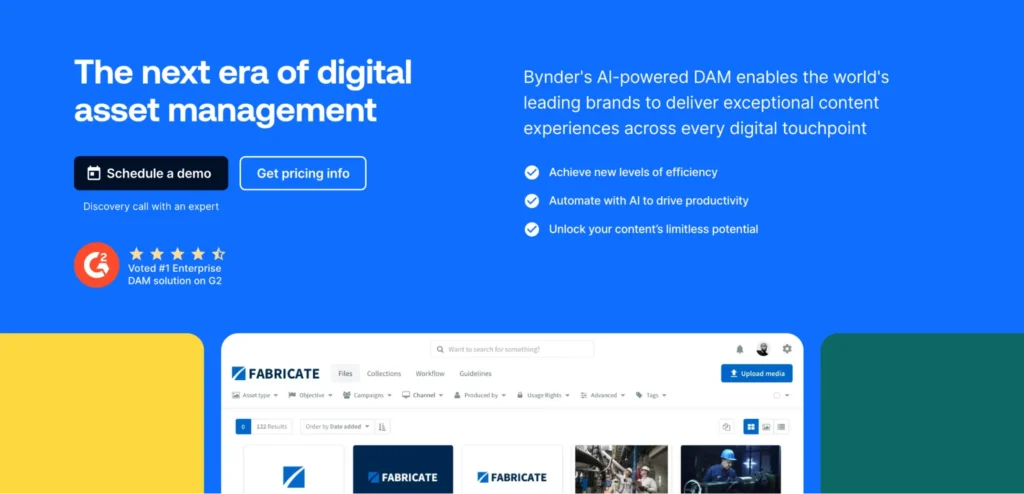
Bynder is an enterprise DAM platform built for global brands that manage complex, high-volume asset libraries across multiple markets and teams.
The platform provides configurable taxonomy, granular permissions, and 155+ integrations with marketing, creative, and e-commerce tools.
Key features
- Brand portals: Customizable portals give different audiences a tailored experience with access only to the assets relevant to them.
- Configurable taxonomy: Bynder lets comapnies structure their asset library around their business language, product lines, and campaign types.
- 155+ integrations: Bynder connects to Marq, Salesforce, Adobe, WordPress, Wrike, and dozens of other platforms, making it the content hub for a broader marketing technology stack.
- Dynamic asset transformation: Bynder can automatically resize, reformat, and optimize assets for different channels, which reduces the manual work of creating channel-specific versions.
Pricing
Bynder doesn’t disclose its pricing publicly. You can reach out to their team for a quote.
Where Bynder shines
- Global asset management: Bynder handles the complexity of multi-market, multi-language asset libraries with configurable taxonomy that scales.
- Integration depth: 155+ pre-built integrations make Bynder a strong fit for companies with extensive marketing technology stacks.
Where Bynder falls short
- Limited content creation: Bynder stores and distributes assets but does not give distributed teams the ability to create personalized, on-brand content at scale.
- Upload issues: Bynder’s bulk upload process does not always perform as advertised. Teams migrating large asset libraries report that uploading, tagging, and adding metadata to assets is a manual and time-consuming process.
Customer reviews
Fedor I. shares, “Bynder has become the backbone of our global brand hub. Search is fast, metadata adapts well to our complex brand and market structures, and permissioning is highly granular.”
Jord C. says, “Video upload is very slow and unreliable. Videos don’t register as uploaded until they’re completely converted, and even a brief internet outage will cancel the entire upload to fail.”
Who Bynder is best for
- Global enterprise marketing teams that manage assets across multiple markets, brands, and languages and need strong taxonomy and easy discoverability.
3. Canto: Best for mid-market teams needing approachable digital asset management
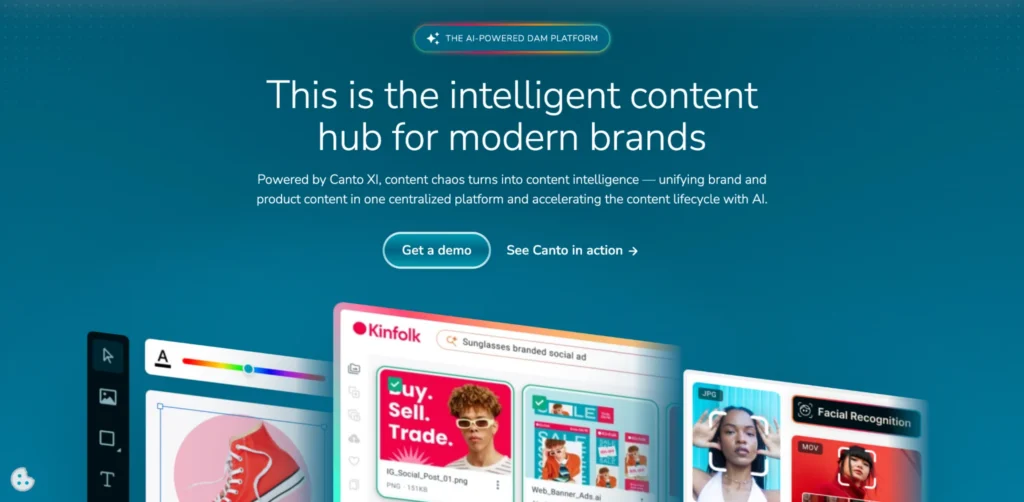
Canto is a marketing asset management system built for mid-sized businesses that want flexible pricing. It offers a centralized content hub, AI-powered search, and an approval hub, along with other features designed to scale with the organization.
Key features
- Centralized content library: Canto brings all your team’s assets, logos, brand guidelines, templates, and campaign files into a single source of truth.
- AI visual search: Canto’s search identifies images based on content, not just file names or tags. A team member looking for photos of a specific product can describe the image rather than guessing what someone titled the file two years ago.
- Approval hub: Brand admins use built-in proofing and approval workflows to annotate, comment on, and approve content before distribution.
- Media publisher: Canto lets teams publish content directly to websites and social channels, which removes the need to export and upload content to multiple destinations manually.
Pricing
Canto offers four plans, DAM, DAM PLUS, DAM for Products, and DAM PRO, with custom pricing available for each.
Where Canto shines
- Approachable for less technical teams: Canto’s interface and onboarding make it easier for organizations with limited experience in asset management systems to get up and running quickly.
- Search and discoverability: AI visual search reduces the time teams spend locating assets in large libraries.
Where Canto falls short
- Enterprise security controls: Organizations with strict enterprise security requirements may find Canto’s standards less robust than other platforms on this list.
- Image management limitations: Users report that updated images do not always appear immediately across connected channels. Low-quality previews make it harder for teams to review content accurately before they publish it.
Customer reviews
Tyler R. says, “The search feature on its own has saved us days’ worth of productivity, making it much easier to find what we need without wasting time digging through folders.”
Beth W. shares, “We have been having some glitches where updated versions are not pulling through to our site, and we still see the old imagery.”
Who Canto is best for
- Mid-market marketing and brand teams that need a well-rounded asset management platform with solid search, approval workflows, and template capabilities.
4. Marq: Best for distributed teams looking to store and create content at scale
Marq is a brand enablement platform that sits at the intersection of asset management and content creation. It connects approved brand assets directly to locked templates that distributed teams can use without design team’s support.
Marq integrates with DAM tools like Bynder, MediaValet, Canto, Brandfolder, and more, so teams can pull approved assets directly into brand-safe templates without downloading or re-uploading files.
Key features
Brand portal
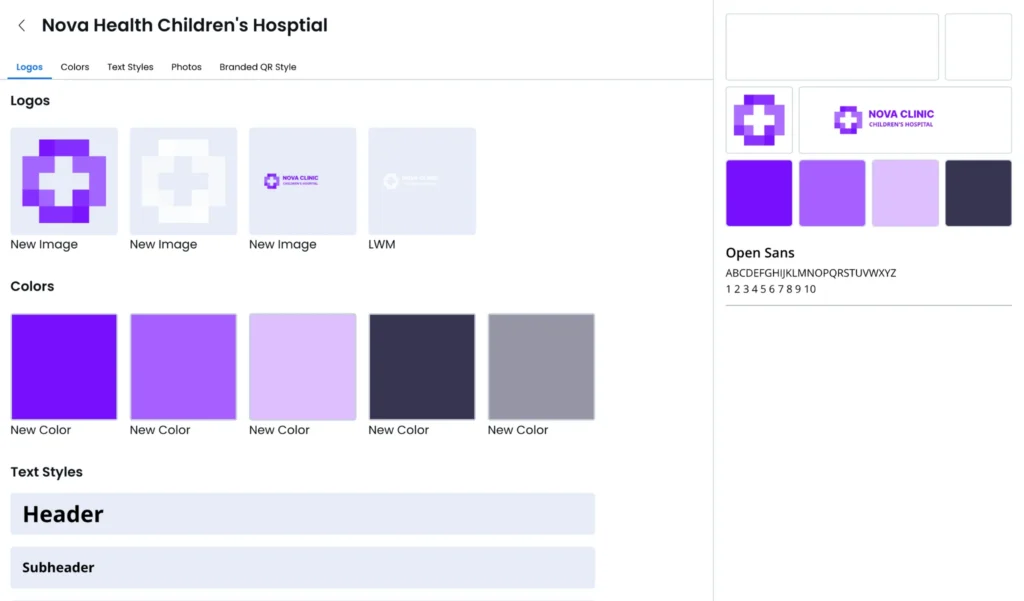
Marq’s brand portal keeps every approved asset, like logos, fonts, colors, and templates, in one central location that approved team members can access. When teams update an asset, the changes automatically reflect across the template library.
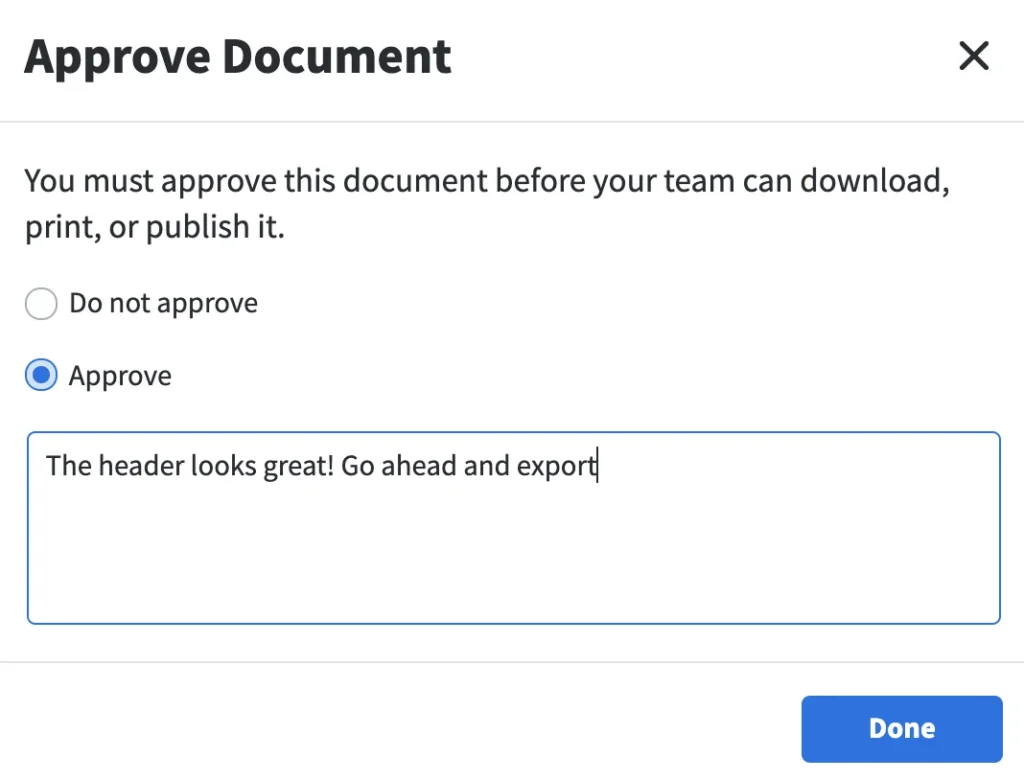
Approval workflows
Marq lets teams approve content before anyone downloads, prints, or publishes it. Admins can review and approve projects directly in the platform, while users request approvals with clear status tracking to ensure only approved content moves forward.
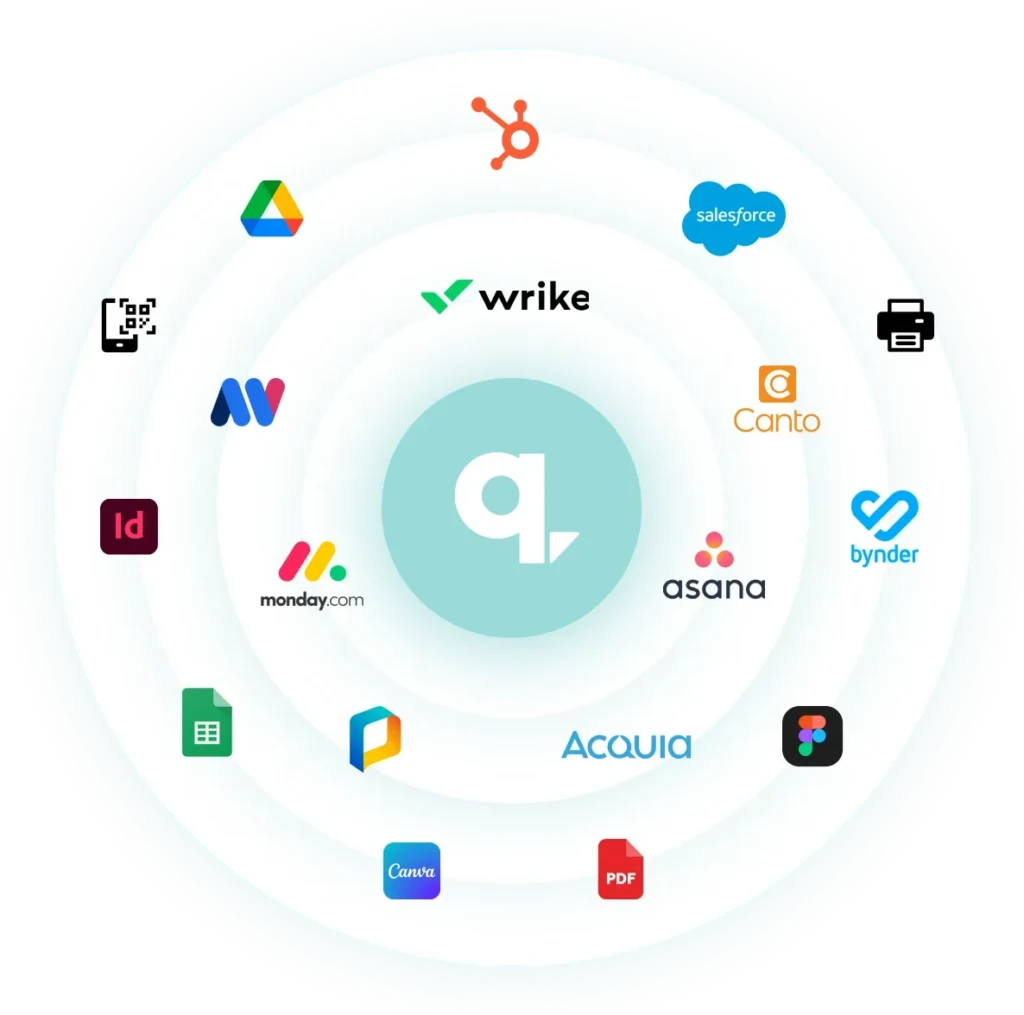
DAM and CRM integrations
Marq connects to leading DAM platforms, so teams can pull approved assets directly into Marq templates without downloading and re-uploading files. It also integrates with top CRMs, like Salesforce and HubSpot, so teams can use CRM data to automatically personalize marketing content with customer details.
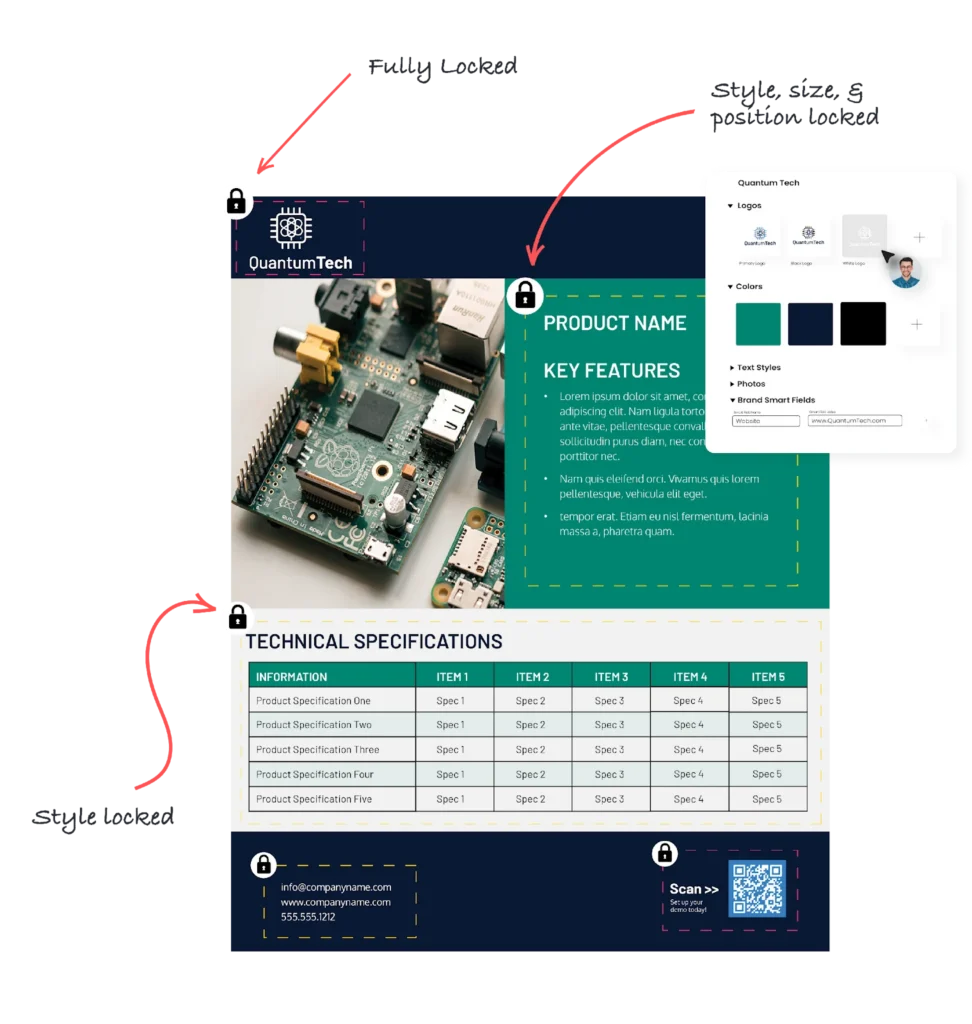
Locked brand templates with granular permissions
What sets Marq apart is that it doesn’t just store assets, it activates them. Designers create on-brand templates and lock key elements to keep critical content unchanged, while leaving editable areas for non-designers to customize easily.
Pricing
You can contact Marq’s sales team for a personalized quote.
Where Marq shines
- Brand asset storage and activation in one platform: Most platforms separate storage from content creation, while Marq combines both. Teams access approved brand assets directly in the same editor where they create and distribute content.
- Enterprise-grade security: Marq protects brand assets with encrypted connections, encryption at rest, and a secure cloud infrastructure. It backs up data hourly and offers a 99.9% uptime guarantee, making it a strong fit for industries where asset security is critical.
Where Marq falls short
- Not a primary asset storage solution: Marq focuses on activating content through templates rather than serving as a core storage system. Teams that only need asset storage will find Marq does more than they need. Teams with large asset libraries often pair Marq with a dedicated DAM, which integrates easily with the platform.
Customer reviews
Mary Kox from Reinhart Realtors says, “Some agents didn’t feel it was necessary to include the Reinhart logo on their content. But now that we can lock down our brand assets on the templates, agents and brokers can’t accidentally mess things up somehow.”
Doug Garcia from Colorado State University shares, “When we found Marq, we were sucked in by the ability to create branded templates, upload our colors and logos, allow campus partners to customize their designs… and still have complete control over our brand.”
Who Marq is best for
- Distributed marketing teams that need to store approved assets, govern its usage, and turn them into on-brand content from one platform.
5. Air: Best for creative teams managing high-volume visual content libraries
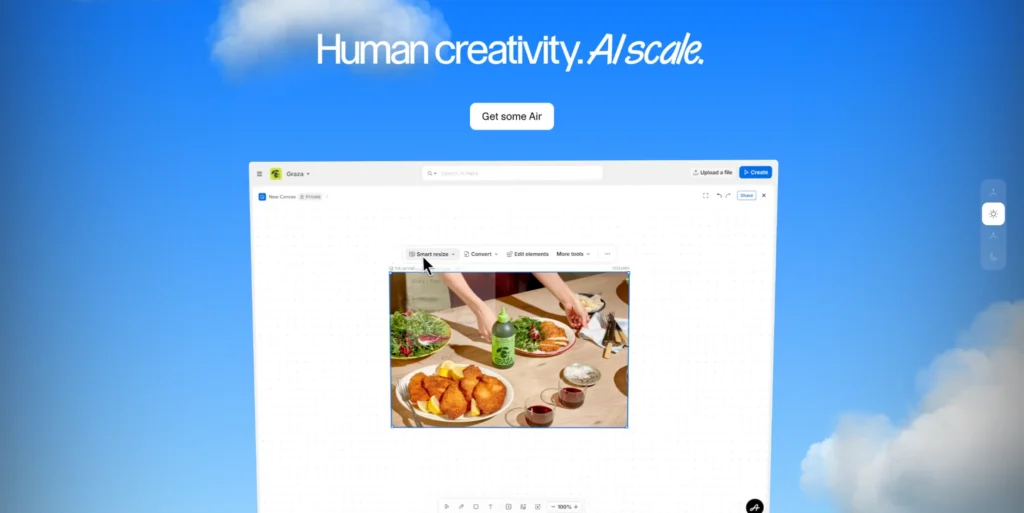
Air supports creative teams that produce and manage large volumes of visual content. The platform combines asset storage, conversational search, review and approval workflows, and a built-in editing tool (Canvas) that lets teams resize and adapt approved assets across channels.
Key features
- Scalable storage: Air stores your creative library in one place, with up to 5TB of storage on business plan and custom storage options for enterprise teams.
- Conversational search: Air lets users search the library in plain language and instantly finds matching assets.
- Creative intelligence: Air automatically tags and enriches every asset as soon as it enters the library, including images, videos, and documents.
- Access-controlled libraries: Adminis organize assets into libraries by brand, campaign, or team, with access controls that ensure each team sees only what is relevant to them.
- Canvas: Teams adapt approved assets for multiple channels directly in Air. They resize, reformat, and create variations within the platform, then distribute content without leaving Air.
Pricing
| Plan Name | Plan Pricing |
| Free | $0 |
| Starter | $25/month |
| Business | $900/month |
| Enterprise | Custom |
Where Air shines
- Search and asset discoverability: Conversational search and automatic tagging help teams find what they need without knowing exact names or locations. For teams managing thousands of images and videos, this cuts down time spent searching before deadlines.
- Transparent pricing: Air publishes its pricing plans publicly, so marketing teams can evaluate cost against their budget and compare options without booking a sales call first.
Where Air falls short
- Limited brand governance for distributed teams: Air does not offer the kind of locked template controls that prevent non-designers from going off-brand.
- Limited AI functionality: Air’s AI tagging does not always generate accurate or relevant tags, which means teams managing large asset libraries still spend time manually reviewing and correcting tags.
Customer reviews
Ella F. says, “I use Air for managing images for our small hotel, and I really prefer it over Google Drive for this purpose. It’s specifically catered to photo and video storage and organization, making it much easier to use. I like the ability to create folders and subfolders, which keeps everything super organized.”
Sam P. shares, “I wish the AI tagging was a bit smarter and more intuitive at the start. It’s tricky to go through thousands of assets and manually tag them, trying to make the AI learn and auto-tag new things.”
Who Air is best for
- Creative teams producing high volumes of visual content that need large storage capacity, fast search, and quick adaptation across channels.
How to choose the right marketing asset management system
The right platform depends on what your team actually needs to do with its assets; storage, activation, or both.
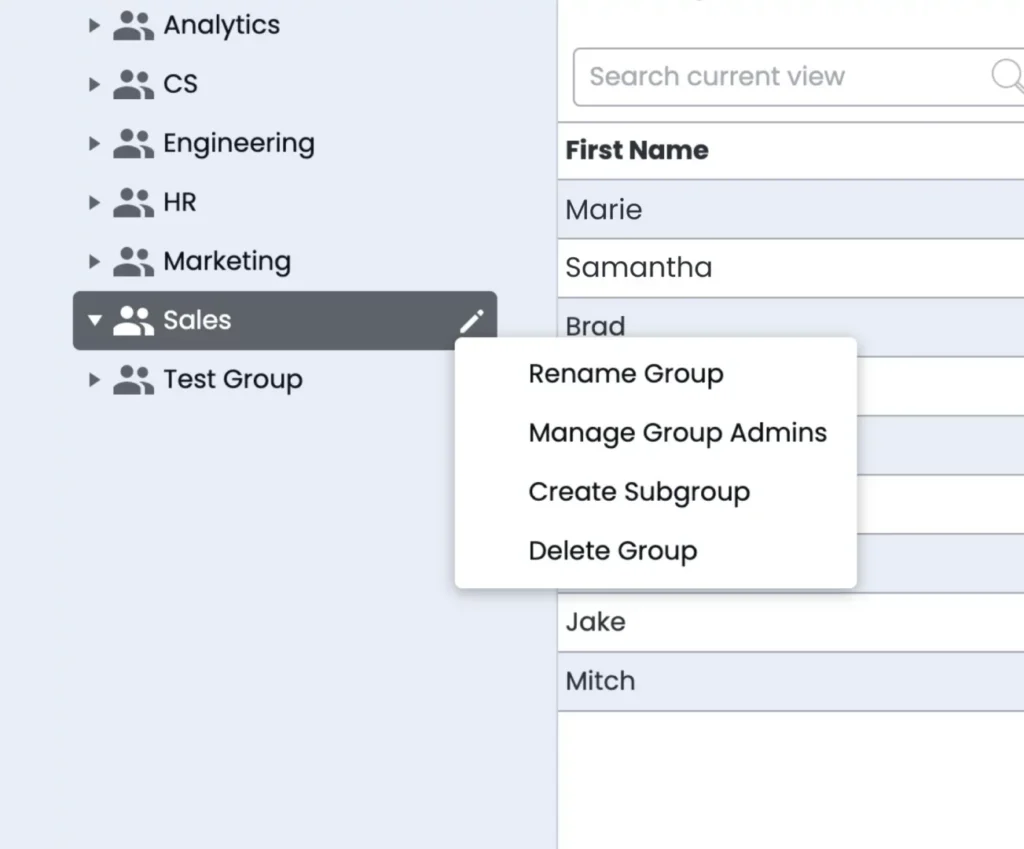
Can you control access to assets across a distributed organization?
As companies grow, manually managing access to assets becomes unworkable. When teams don’t control access, the wrong teams use the wrong assets and off-brand content reaches customers.
Look for platforms that let brand admins assign assets, templates, and folders to the right groups. Users see only what applies to their role, region, or department the moment they log in.
Marq lets admins create custom groups and subgroups that reflect the organization’s structure. They assign users to multiple groups, share templates and folders at group or subgroup level, and give every user a tailored experience without managing access manually.
Does the platform tell you which assets and templates your team actually uses?
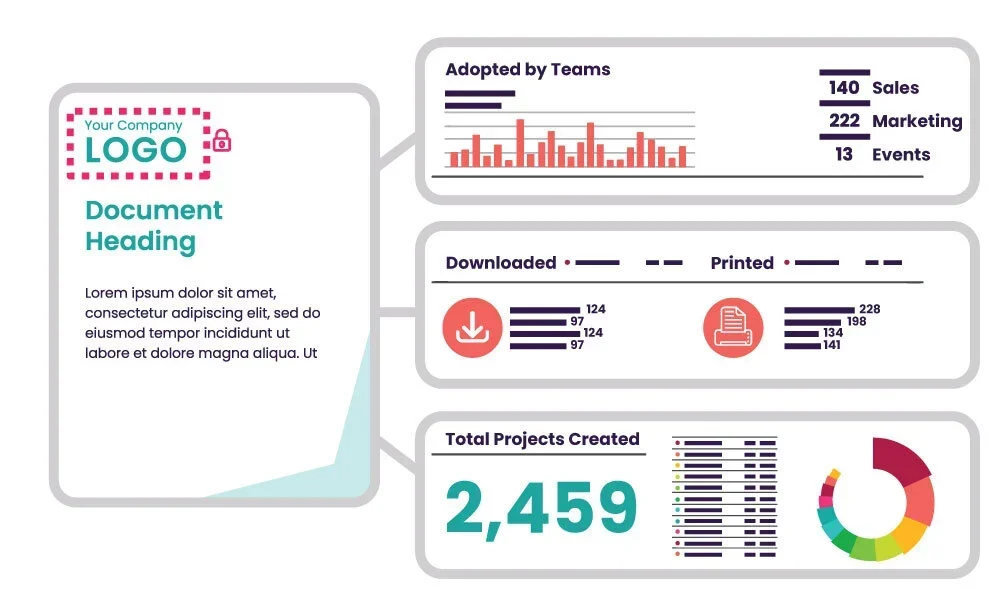
Without usage data, teams lose visibility into asset usage. When three templates drive 80% of content creation, that signals something important. When teams don’t use an asset built for a key campaign, that also signals a gap.
Look for platforms that share template adoption, asset usage, and distribution data in one place so marketing directors can make informed decisions on content investment.
Marq’s analytics gives teams this visibility. It shows which templates teams use most, how content moves through approval workflows, and which assets drive the highest engagement.
If you want to automate content creation and brand compliance, a web-to-print platform offers a much simpler approach.
Does the platform activate your stored assets or just organize them?
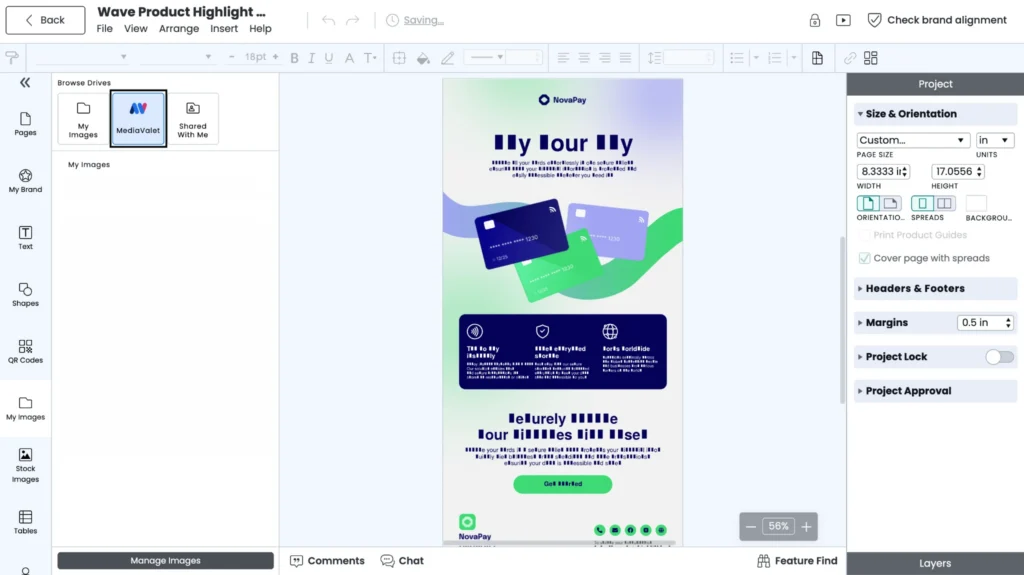
A library of approved assets only creates value when teams use them in the content they produce. When teams store assets in one place but don’t consistently use the approved versions, brand consistency breaks.
Look for platforms that let approved assets flow directly into templates without downloading files, re-uploading them, or searching for the latest version.
Marq centralizes assets within its platform and also integrates with leading DAM platforms so teams can pull approved logos, imagery, and brand elements directly into templates.
Final word on Marq
Storing approved assets in a central library is only useful if the teams who need them can actually use those assets to create on-brand content quickly, without submitting repetitive requests to the central design team.
With Marq, teams store approved assets, lock them into governed templates, and enable distributed teams to create on-brand content – all without switching tools and losing control over content distribution. Book a demo today!