Your organization has more “creators” than ever – not just on the marketing team, but across the entire business.
Sales reps. Franchisees. Advisors. Faculty. Regional teams. Partners.
And they all need content.
At the same time, AI has raised the expectation for output: more versions, channels, more personalization, faster turnaround. But you can’t centralize content creation and still meet the demand.
So what happens next is predictable:
- Requests pile up (and deadlines don’t wait)
- End users create rogue content
- Brand drift creeps in
- Compliance issues show up at the worst possible time
- Reputation risk increases as your content output scales
Here’s the conflict: manual control can’t scale; but “self-serve without guardrails” destroys brands.
Marketing leaders are now accountable to revenue outcomes – not just brand consistency – so they can’t afford to block personalization with slow approval queues. But they also can’t let reps and partners freestyle content, because losing control creates brand and compliance risk.
That’s exactly the gap Marq 2.0 is built to close.
Marq 2.0 helps you turn sales-driven content requests into on-brand assets in minutes – without overloading design teams.
In this article, you’ll learn
- Five ways Marq 2.0 helps you scale on-brand content
- How AI and CRM integrations supercharge our templating platform
- Why Marq 2.0 is the control plane for distributed brand creation
1. Make Pre-Approved Templates Easy to Find with Template Collections
Templates are the foundation of scalable brand output.
Marq templates let non-designers create assets that don’t look bad – because brand-critical elements like fonts, colors, logos, layouts, and disclaimers are locked. End users can personalize the parts they need, while template admins retain control over what must stay consistent.
That means teams can self-serve content within guardrails:
- Output stays consistent across teams and markets
- Assets stay current (no more “which logo is right?”)
- Central teams offload repetitive busywork (resize, swap text, local variations)
But templates only work if people can actually find them. Every minute an end user spends searching increases the chances of lost productivity, rogue content and brand drift.
Make pre-approved templates easier to discover with Template Collections + Quicklinks
Marq has long been built around governed templates – Marq 2.0 makes them easier to find and distribute with Template Collections and Quicklinks.
Template Collections are customizable folders that template admins use to create intuitive collections. Let’s take an example. Say an end user needs a pitch deck, the current flow on templating platforms is often:
- Finds a folder called “presentations”
- Hesitates over if they need “slides” or “infographics” or “posters”
- Clicks on one infographic template – but the style isn’t professional enough
- Tries a “slides” template – but it’s for the wrong niche
- And on and on…
Template Collections also give marketing leaders a simple lever to shape what gets used in-market. By curating the “default” folders teams pull from, they can steer reps toward the right messages, formats, and campaigns – without adding friction.
For example, a template admin can create a folder called “Pitch Decks” which houses the latest approved designs. The end user only needs to populate a few unlocked text elements.
So, instead of hunting, users see exactly what they need:
- Sales pitch decks
- Demo follow-up kits
- Social media designs
- Event or campaign materials
- Partner co-marketing assets
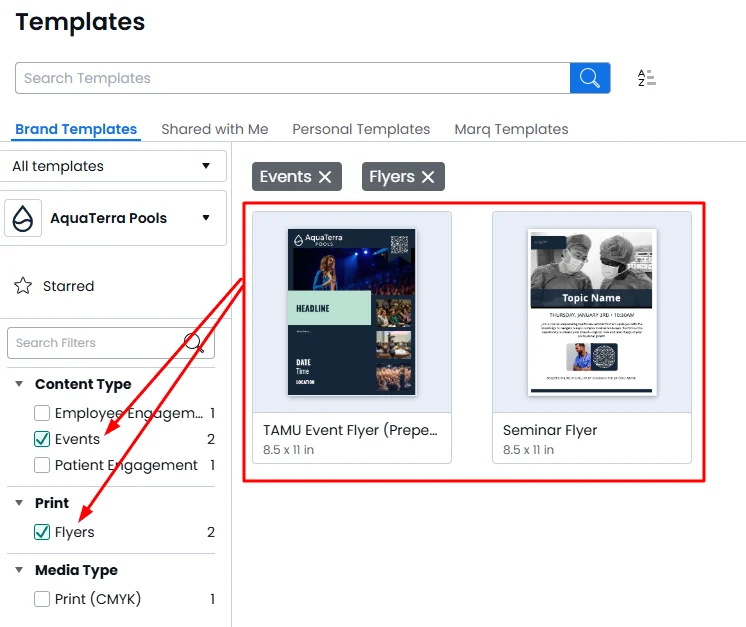
CAPTION: Here’s an example of three Template Collections curated for real estate advisors, ensuring rapid access to pre-approved designs for social media, postcards and digital content such as online brochures.
So, how will end users find a curated Template Collection?
With Marq 2.0, Template Collections are displayed at the top of an end user’s Home screen inside the Marq editor. You can’t miss them.
Marq expands this with Quicklinks. These help template admins share template collections via external channels – think Slack, project management tools, onboarding flows, email, and so on.
The combination means end users can access the exact templates they need instantly, without scavenger hunts or guesswork.
2. Keep Sales Decks On-Brand — and Usable Offline
Sales teams don’t always work online.
Reps are traveling, presenting on-site, operating in secure client environments, or sharing decks as email attachments. When content only works inside a design platform, speed and usability break down.
There’s nothing worse than a sales presentation that failed due to unreliable Wi-Fi.
To get past this issue, sales reps start rebuilding slides manually – and off-brand output creeps in.
The Marq 2.0 solution: PowerPoint export
Marq has long supported presentations for real-world sales workflows. In Marq 2.0, users can export presentations directly to PowerPoint (.PPTX) while preserving images, text, and design fidelity. This means:
- Presentations stay on-brand even outside the platform
- Decks work offline, anywhere
- Reps don’t “recreate” slides just to make them usable
PowerPoint export bridges the gap between pre-approved, templated sales decks – and your reps actually delivering them where they’re needed.
The workflow is simple:
Finalize your presentation in the Marq editor. Then…
Share (top right) → Download → Choose PPTX → Select pages → Download.
The result is brand-consistent decks that fit real-world sales workflows.
3. Generate Personalized Content Directly from CRM Activity
Marq Templates solve the major bottleneck in scaling content: allowing non-designers to produce content themselves, without straying off-brand.
But for marketing leaders, the pressure doesn’t stop at “use the templates.” They’re accountable to revenue and brand, which means they can’t just say no to personalization – especially when reps need heavy customization like names, logos, pricing tables, SKUs, deal data, and quotes. That’s usually where bandwidth breaks and marketing becomes the bottleneck.
Even with approved templates in place, the day-to-day rep workflow still creates friction:
- Searching for the right collateral
- Manually updating decks
- Inputting unique information (name, location, etc.) on a customer-by-customer basis
And when it’s too slow, reps revert to DIY workflows – putting brand consistency and compliance at risk. The real need is personalization embedded inside the workflow reps already live in, with guardrails that marketing controls.
The Marq 2.0 solution: Native CRM apps for HubSpot and Salesforce
Marq integrates with HubSpot and Salesforce so reps can personalize on-brand content directly from the CRM. In Marq 2.0, these native CRM apps are part of the packaged experience, using CRM auto-population to generate customer-specific assets without copy-paste or manual rework.
The key benefits are:
- Faster follow-up after key deal moments
- Less copy-paste from CRM into slides or docs
- Higher consistency across reps and regions
- Increased chances of sales reps using marketing collateral
- Increased deal velocity with built-in brand guardrails
Marq can also surface relevant templates based on opportunity context – helping reps pick the right asset faster and keeping in-market content aligned with what marketing intended.
4. Batch-Create Complete Sales Packages Automatically
AI has increased the expectations for content output and personalization. Sales reps no longer want to:
- Manually create the same assets for every deal
- Have disconnected sales workflows (i.e. constantly switch between platforms)
- Wait for design teams to turn around their content requests
Content delays erode deal momentum and – at worst – push reps back into rogue workflows.
But even with Marq Templates and CRM integration, many teams still hit a wall:
Manual deck-by-deck creation can break at scale.
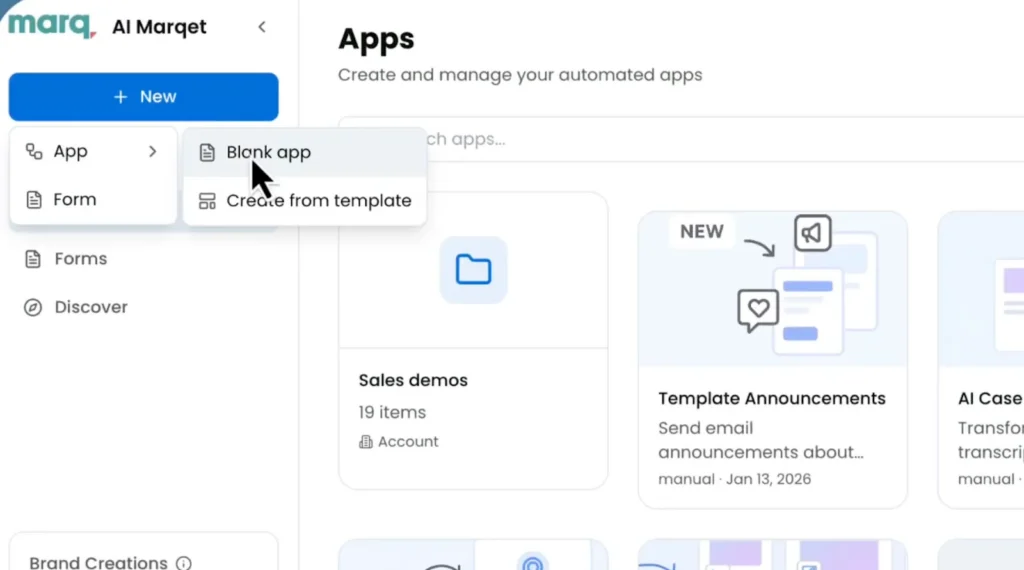
The Marq 2.0 solution: Playbooks (AI Marqet)

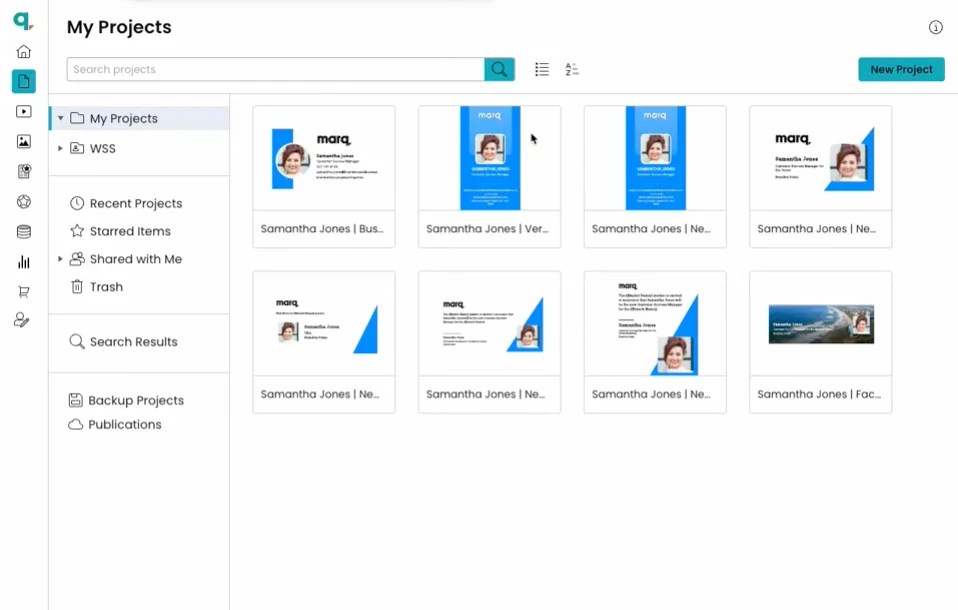
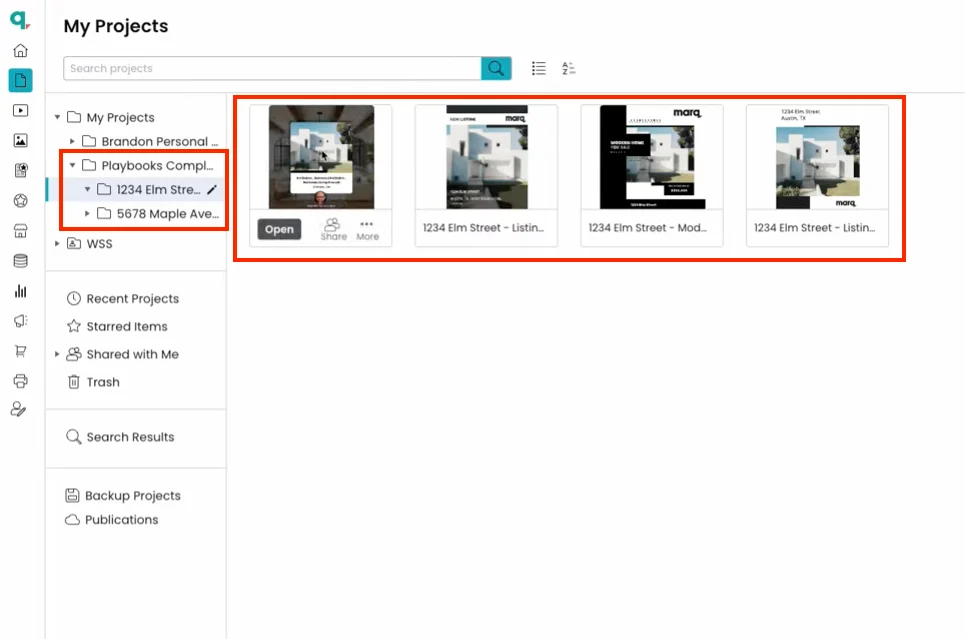
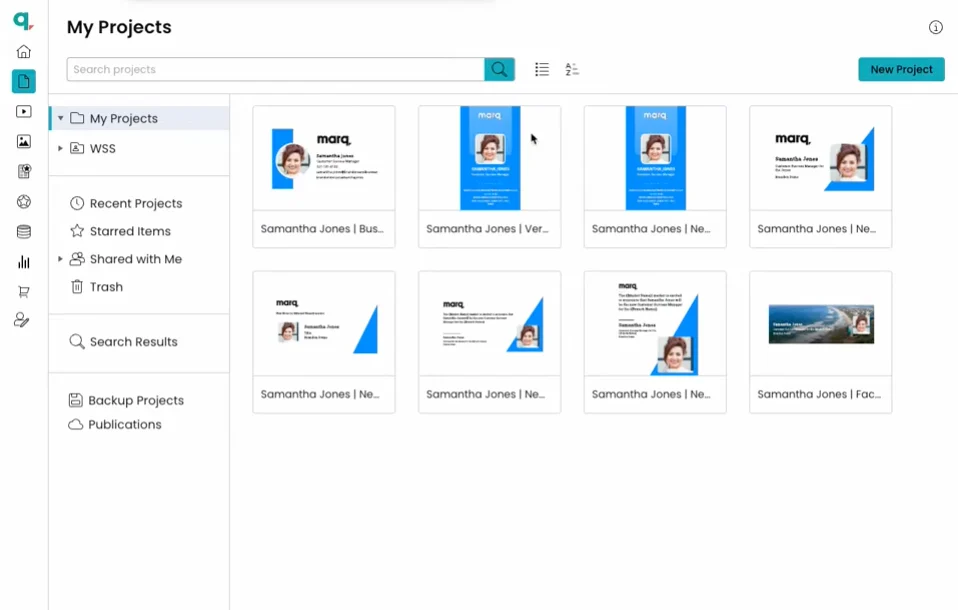
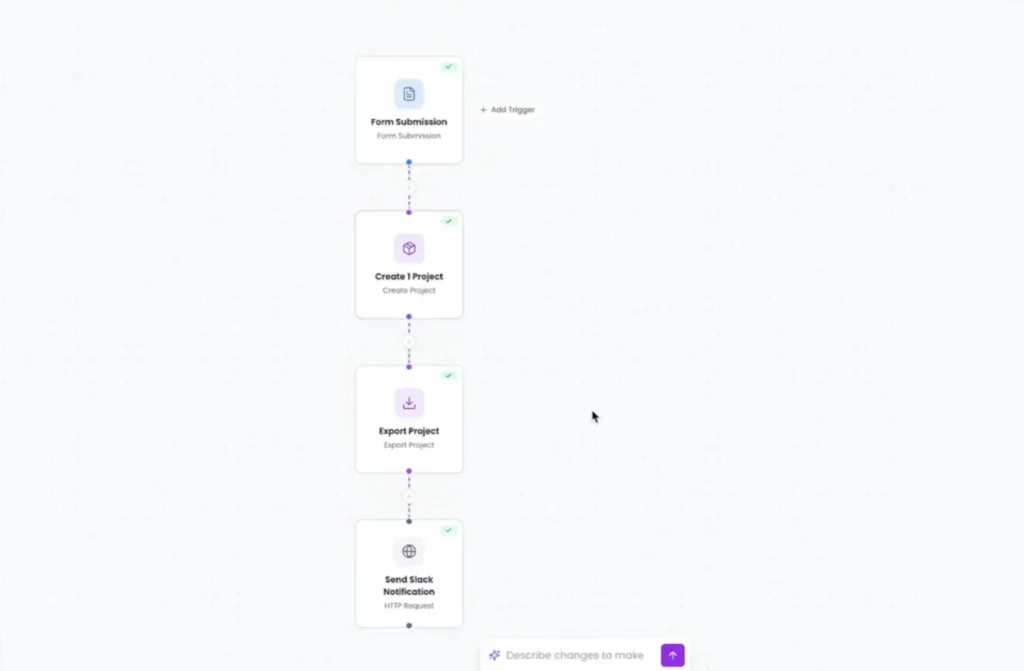
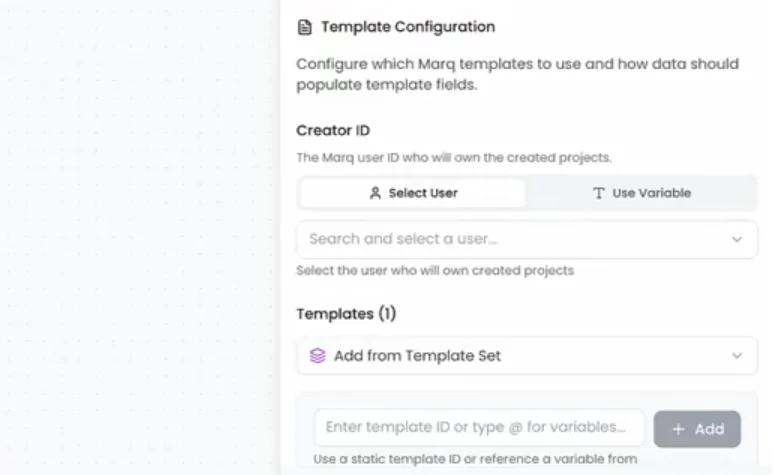
Playbooks are an automated workflow system where admins define a set of templates that can be triggered to batch-create multiple assets using shared smart-field data.
Instead of creating one asset at a time, Marq 2.0 can generate a full package in seconds.
Playbooks via the Marq 2.0 AI Marqet eliminate template-by-template work, while also avoiding inconsistency in what gets sent at each stage of the deal. It’s all the benefits of Marq’s templating platform scaled up by AI and automation.
5. Scale Personalization with Smart Fields and Creative Automation
Imagine your day as a marketing leader if workflows like these were possible:
Example Flow 1: “Demo Completed”
- Admin builds a playbook (deck + one-pager + follow-up graphic)
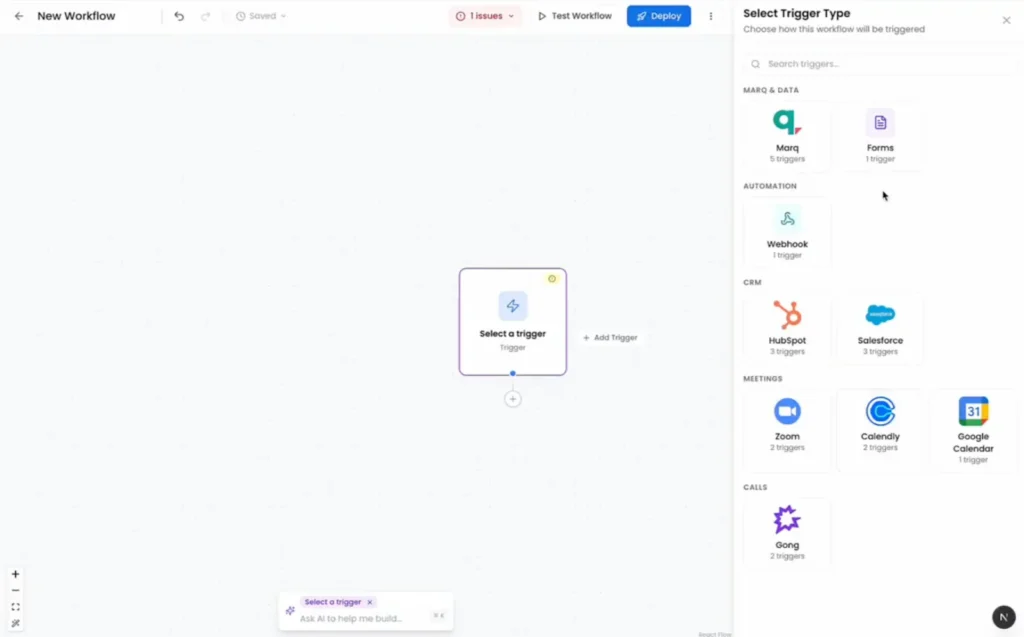
- CRM event “Demo Completed” triggers the playbook
- Playbook content auto-populates with account and rep data via smart fields
- Assets generated instantly
- Rep receives an email/notification with links to assets
- Rep downloads, shares or presents immediately – zero manual work or design requests
Example Flow 2: “Closed Won”
- Admin builds a playbook (deck + checklist + handoff docs + custom headers)
- Rep closes a deal
- CRM event “Closed Won” triggers the playbook
- Playbook generates onboarding materials
- Rep receives an email/notification with links to assets – welcome deck, checklist, internal handoff docs, customer email header
- Rep has onboarding collateral to hand within seconds
Marq 2.0 makes workflows like this possible by combining CRM integrations, smart fields in templates, and creative automation.
Now pair that with Playbooks, and a single trigger can generate an entire follow-up kit automatically. This is how teams scale throughput beyond human limits – without adding headcount or sacrificing brand control.
It’s a game-changing upgrade to Marq smart fields to help businesses create personalized content at an even greater scale.
Workflow automations directly triggered by real-world events also eliminate a common disconnect in many organizations where sales data lives in the CRM, but content creation lives somewhere else. Some of the bottlenecks that Marq 2.0 put an end to include:
- Reps and marketers wasting time copy-pasting CRM data into decks and brochures
- Follow-ups slowing down while teams wait for “one last edit”
- More tools and higher output expectations meaning more busywork, not throughput

Final Thoughts: Governed Speed Wins
Distributed revenue teams need high-volume, high-velocity content. But the old model – centralized design queues and manual edits – can’t keep up without brand drift.
Marq 2.0 changes that by turning sales-driven content requests into branded assets in minutes. In some workflows, with no human intervention at all.
To recap, Marq 2.0 enables:
- Easy self-serve access to pre-approved templates
- On-brand sales decks that work offline
- Content triggered directly from CRM activity
- Automated batch creation of full content packages
- Scalable personalization through smart fields and automation
The result is simple and powerful:
- Scale personalized, on-brand content across teams and regions
- Marketing increased revenue impact while reducing reactive work
- Maintain governance without slowing people down
- Increase output without adding headcount
- Reduce rogue content and accelerate follow-up at every deal stage
Marq 2.0 turns distributed content creation into a governed, automated system – so revenue teams can move faster, stay on-brand, and win more deals.