Franchise branding: Guidelines, tools, and how to ensure consistency

As franchise brands add locations, more local teams begin creating content themselves. Most are not trained designers, but they still need to adapt marketing materials to their regions. At the same time, central design teams need to control how the brand shows up across locations.
Meeting both demands requires the right systems: which templates each location can use, what local teams can customize, who can access certain assets, and which materials need approval before they get published. As the network grows, managing those decisions manually stops scaling.
This article shows how franchise brands can maintain consistency at scale, which metrics reveal whether their system is working, and how Marq helps every location create on-brand content without routing every asset through the central marketing team.
This article does not cover the broader areas of franchise branding, such as brand strategy, naming, visual identity, signage, store experience, or franchisee training. Its scope is one specific part of franchise branding: keeping marketing content and visual assets consistent across local teams as the network grows.
Why franchise branding becomes difficult as you expand
As franchise networks grow, it becomes harder for corporate teams to manage local execution.
These three challenges put pressure on central brand leaders.
1. Franchisees create their own assets
Franchisees rarely set out to create off-brand content. They usually have a deadline and need a quick way to create what they need, so they build it themselves or hire a local designer who is unfamiliar with your brand guidelines.
Over time, small changes add up: fonts shift, colors vary, and logos get used incorrectly. Each inconsistent piece of content makes it harder for customers to recognize your brand and creates confusion across locations.
2. The central team becomes a bottleneck
When corporate owns every design request, the central design team turns into a service desk. One franchisee needs a flyer, another needs a sales deck, a third needs an event poster – the queue never stops.
This is expensive in two ways:
- First, your highest-value people are stuck doing low-value work, so the strategic projects that grow a brand (rebrands, limited-time campaigns, new market launches) keep getting delayed because nobody has time to start them.
- Second, as the network grows, request volume grows with it, and the only way to keep up is to hire more people to handle the same repetitive work. You end up scaling headcount just to keep the service desk running.
3. Brand updates become harder to roll out across locations
A brand change is easy to make at the corporate level. The challenge starts when every location needs to adopt it. A new logo, tagline, or compliance update means hundreds of teams need to replace the files they use every day.
Rollouts are rarely clean. Some locations update their assets as soon as they receive the update, some miss the announcement, and some keep using last year’s files. Months after a refresh, customers can still see a mix of old and new branding, which hurts the company in the long run.
Without a central way to manage updates, corporate teams cannot easily see which locations have updated their materials and which ones are still using older versions. Every refresh becomes a manual process of tracking files, following up with teams, and fixing brand inconsistencies, which pulls the central brand team away from strategic work.
What it takes to maintain strong franchise branding as you scale
Strong franchise brands stop relying on franchisees to remember and apply brand guidelines correctly and start building systems that make the on-brand choice the easiest one. The goal is simple: give local owners a fast, self-service way to create content while the central team keeps control of the brand.
That balance rests on a few building blocks:
| Building block | What it does | Problem it solves |
| Brand guidelines | Sets the written standard for logos, colors, fonts, and other elements | No shared definition of what it means for content to be on-brand |
| Templates with lockable elements | Locks critical brand elements while letting franchisees edit approved fields | Franchisees creating off-brand assets |
| Role-based access | Gives each location only the templates and assets it needs | Franchisees struggling to find the right template |
| Approved asset library | Keeps current, on-brand assets and templates in one place | Outdated files staying in circulation |
| Approval workflow | Routes new content through review before publishing | Off-brand or non-compliant assets going out |
| Usage analytics | Shows which templates each location uses | No visibility into template usage |
6 practices strong franchise brands use to maintain brand consistency
Managing a growing franchise network requires more than a brand guidelines document. The six strategies below help teams create a repeatable process for producing local on-brand content.
Before diving into the practices, it’s useful to understand who handles each part of the process:
- Brand leader: Defines which brand elements are fixed, which local teams can edit, and what content requires approval.
- Central designer: Builds and maintains templates, applies locks to protected elements, and updates them as the brand evolves.
- Group admin: Manages role-based access, deciding which locations can access specific templates and assets.
- Approval admin: Reviews high-risk content and approves or rejects it before publication.
- Local team: Creates content from approved templates and publishes it using the fields available to them.
| Practice | Objective | Outcome |
| Document the brand | Define non-negotiables and flexible zones | A clear, usable brand guide |
| Build templates with lockable elements | Lock critical brand elements and give franchisees flexibility over the rest | Self-service content creation for franchisees |
| Centralize approved assets | One source for current logos, images, and other assets | Fewer outdated or unapproved files in circulation |
| Set role-based access | Franchisees see the templates relevant to them | Less clutter and fewer opportunities for error |
| Add approval workflows | Review high-risk content before franchisees publish it | On-brand content and less dependence on the central team |
| Track adoption | Shows whether teams are using approved templates | Usage data for improving templates and access |
1. Document the brand, then mark what franchisees can change
The brand leader starts by creating a brand guidelines document that defines which elements are fixed and which local teams can adapt, so every location knows exactly what it can and cannot change.
Make two lists: one for fixed elements and one for elements that can change by location.
Fixed elements that stay the same at every location:
- Logo and its spacing
- Brand colors
- Fonts
- Required legal text or disclaimers
- Tagline and brand voice
Flexible elements that can change by location:
- Headlines and body copy
- Local photos
- Event dates, times, and addresses
- Offers and promotions
- The franchisee’s name and contact details
Keep the guide practical and easy to reference. A long, complicated document makes it harder for local teams to find the information they need.
That said, guidelines alone do not prevent mistakes. Successful franchise brands build these rules directly into the templates local teams use, so approved elements stay consistent while local teams make the updates they need.
2. Build templates that control what franchisees can change
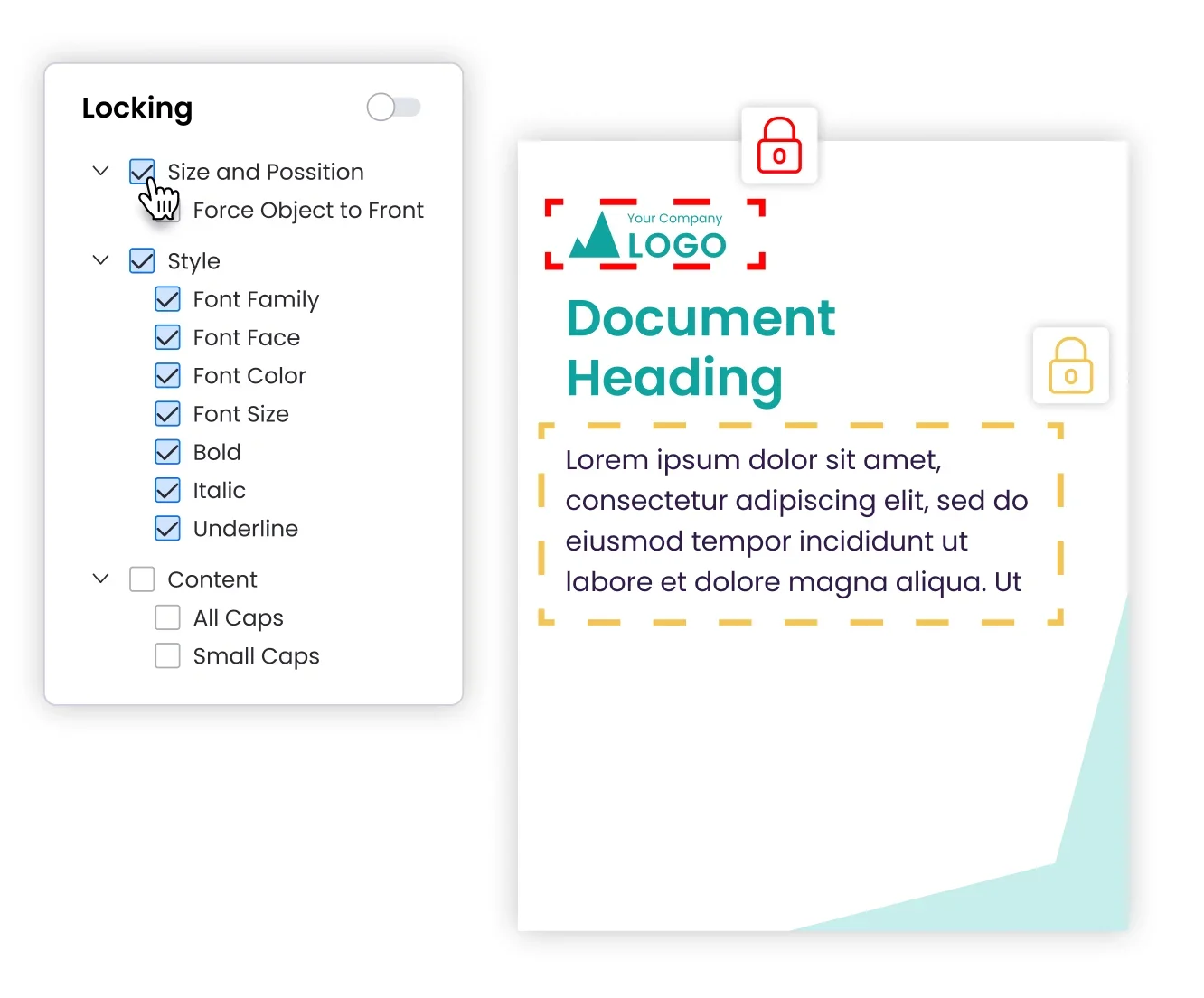
Templates are where brand guidelines become actionable. The central designer builds the template once, locks the core elements, and leaves open only the areas a franchisee should update. The local team can then localize details such as the date, address, and offer, while the logo, colors, and layout stay consistent.
This is the foundation of franchise brand management, and it is what Marq is built to support. Marq lets central designers apply locks at the content level. For each element, they can independently lock its:
- Style for preventing changes to colors, fonts, and borders
- Size and position to prevent resizing or moving an object
- Content for keeping text unchanged
In practice, the central designer can leave a headline open for a local promotion while keeping its font and color locked.
3. Centralize approved assets and templates in one place
When brand assets and templates are scattered across drives, folders, and email threads, local teams often use whatever they can find first.
That means outdated files stay in circulation and old versions continue showing up in new campaigns. A central, approved library solves this by giving every location access to the same up-to-date assets, so teams always start from the latest version.
Centralizing assets is only the first step, though. The central designer or group admin organizes files by type, location, campaign, and use case so local teams can quickly find what they need without creating their own versions.
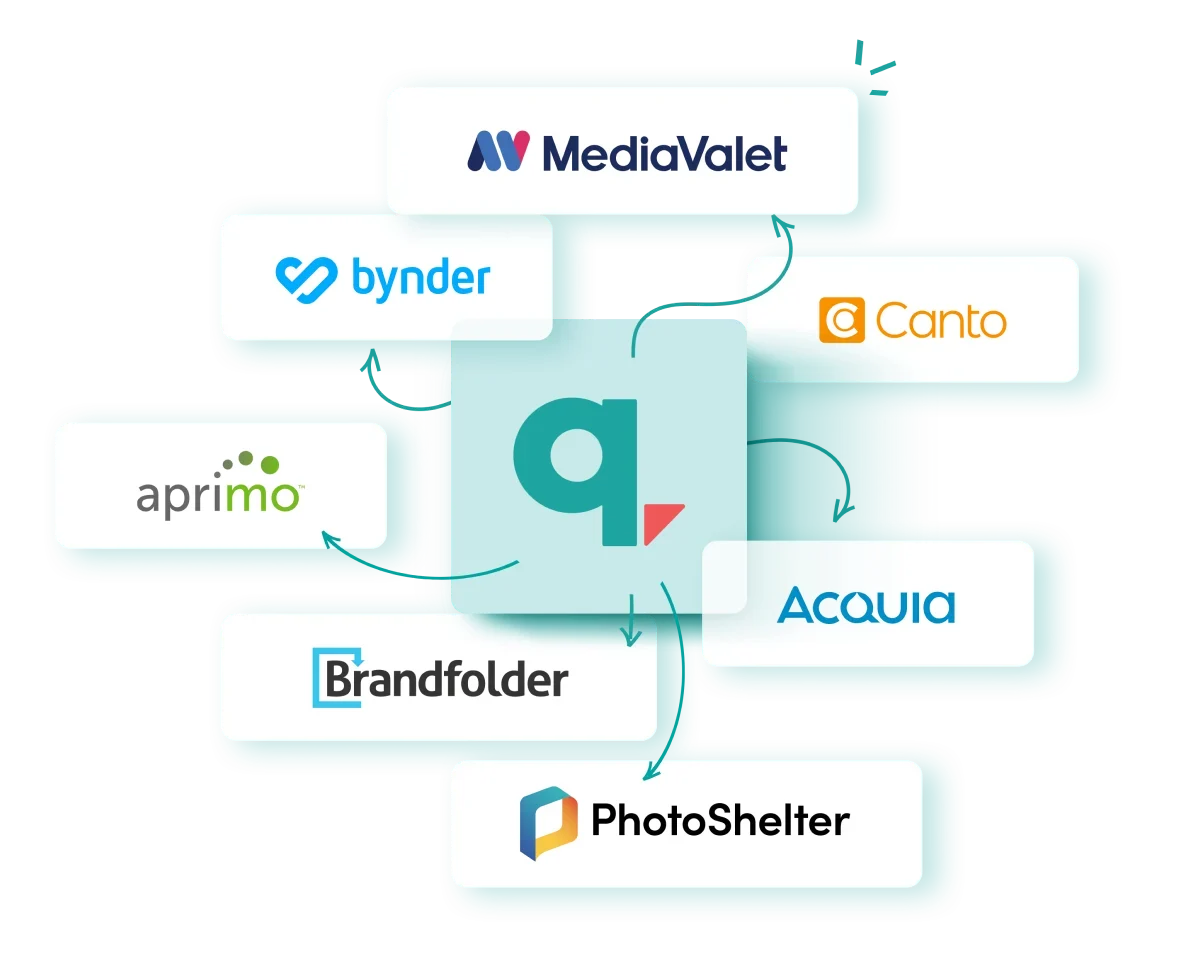
Teams can centralize assets directly in Marq or connect their existing Digital Asset Management (DAM) platform to keep approved files all in one place.
4. Set role-based access by location and role
Even with a central, searchable library, local teams can still struggle to find the right template when they’re faced with hundreds of options. The more content a library holds, the easier it becomes to choose the wrong asset or spend time searching instead of creating.
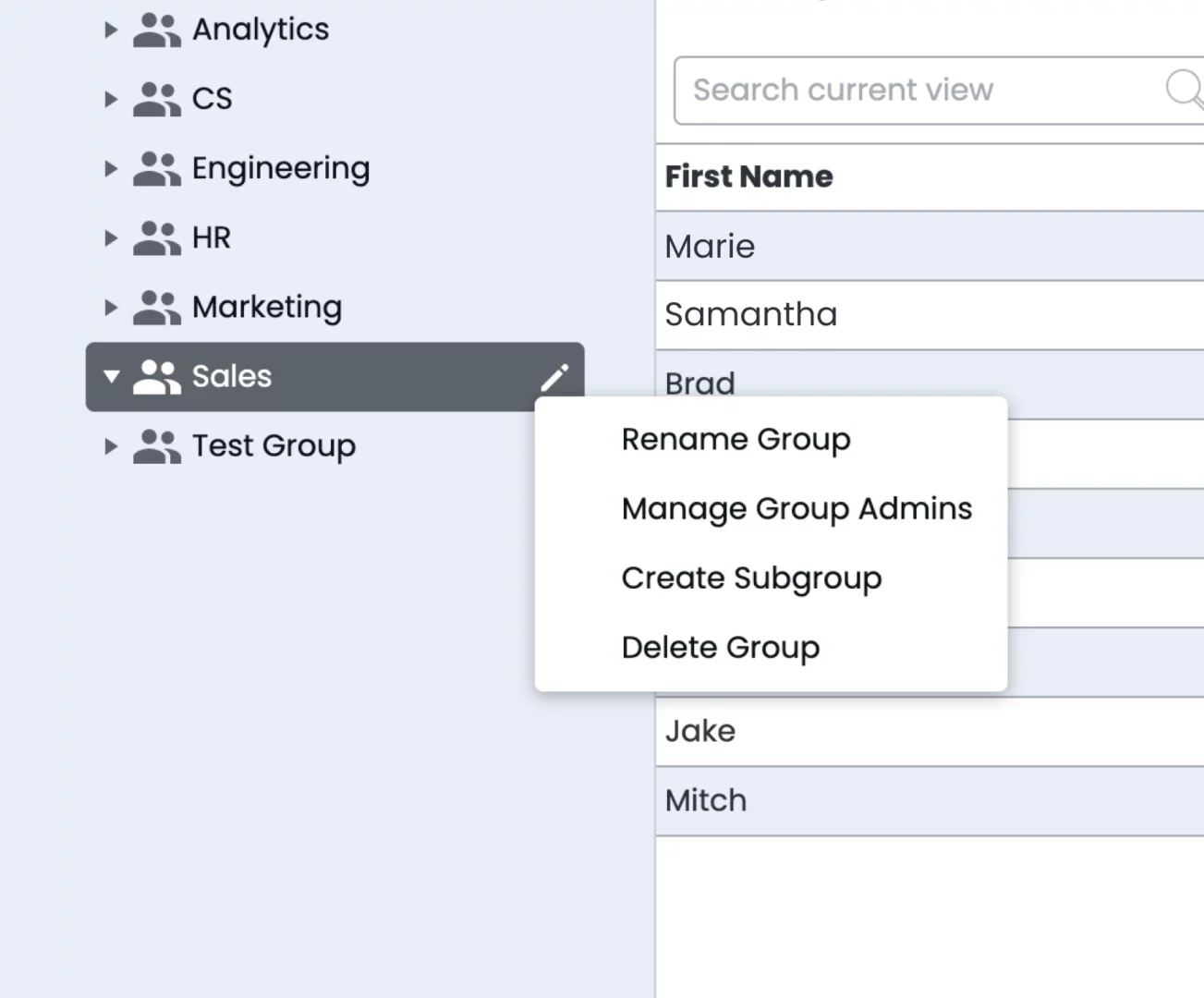
Role-based access solves this by showing each team only the templates they need. A franchisee should not have to sort through materials intended for corporate marketing or another region.
The group admin sets this up in Marq through role-based brand portals that give each business group access to its own approved templates and assets.
5. Add approval workflows for high-risk content
Not every franchise asset needs approval. A local event poster or a social post announcing new store hours can usually go straight to publication. A pricing change or a campaign with legal disclaimers needs an extra review before customers see it.
The brand leader decides which content requires central oversight and which content publishes without it. Approval admins review high-risk assets, and group admins approve routine local marketing, which keeps local teams moving without overwhelming the central marketing team.
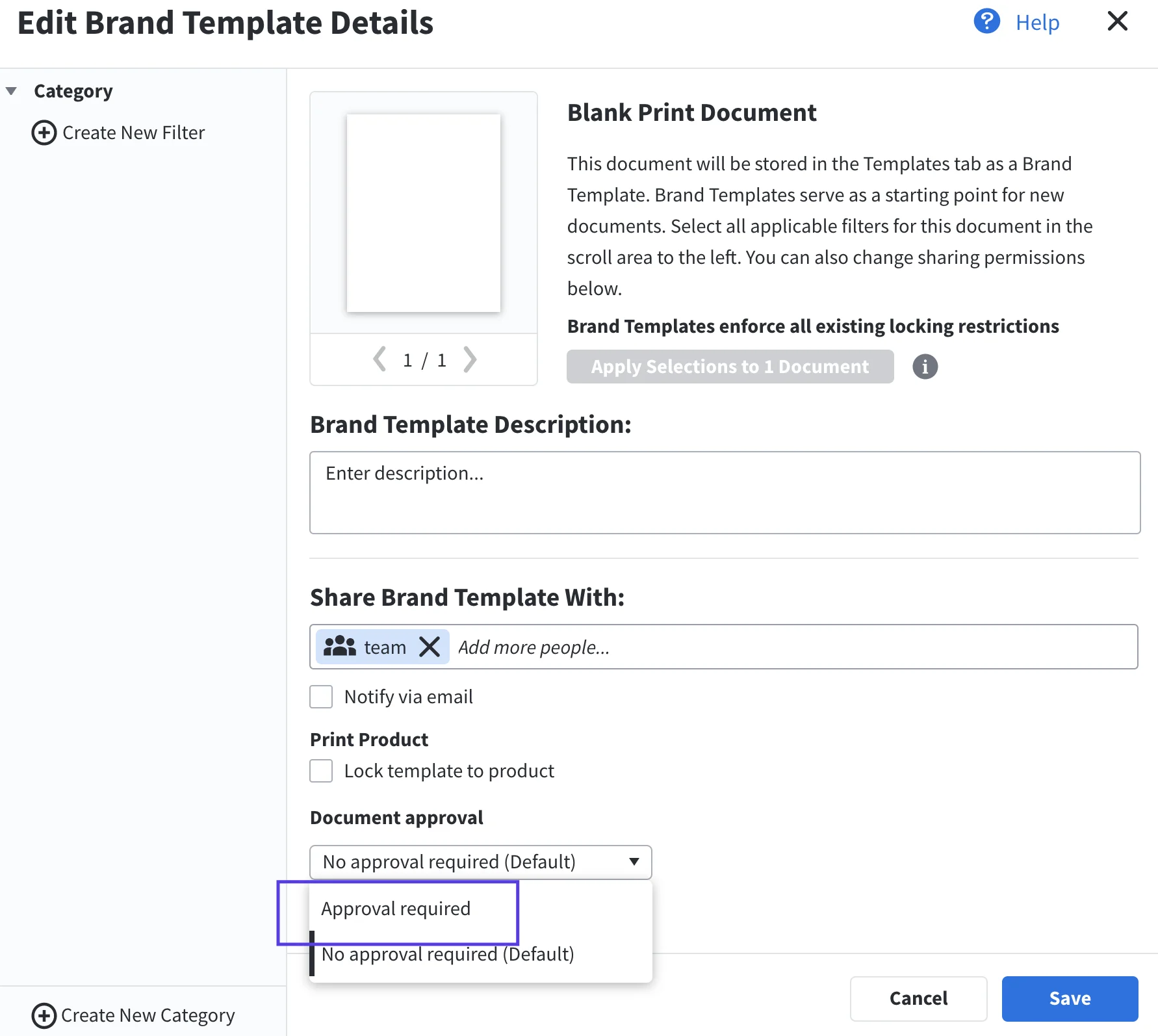
Marq builds approvals into the template workflow. The brand leader sets which templates require approval and designates the approval admins who review them. A local team that creates content from one of those templates submits it for review before exporting, printing, or publishing, and an approval admin approves or rejects the request in Marq.
For teams that use project management software, Marq connects approvals directly to Monday.com and ClickUp. When a local team submits content for review, Marq pushes the request into the connected tool with the project name, requester, and assigned approver. The approver then opens the request from that tool and approves or rejects it in Marq.
6. Track usage and adoption
Strong franchise brands keep improving their libraries based on how local teams use them.
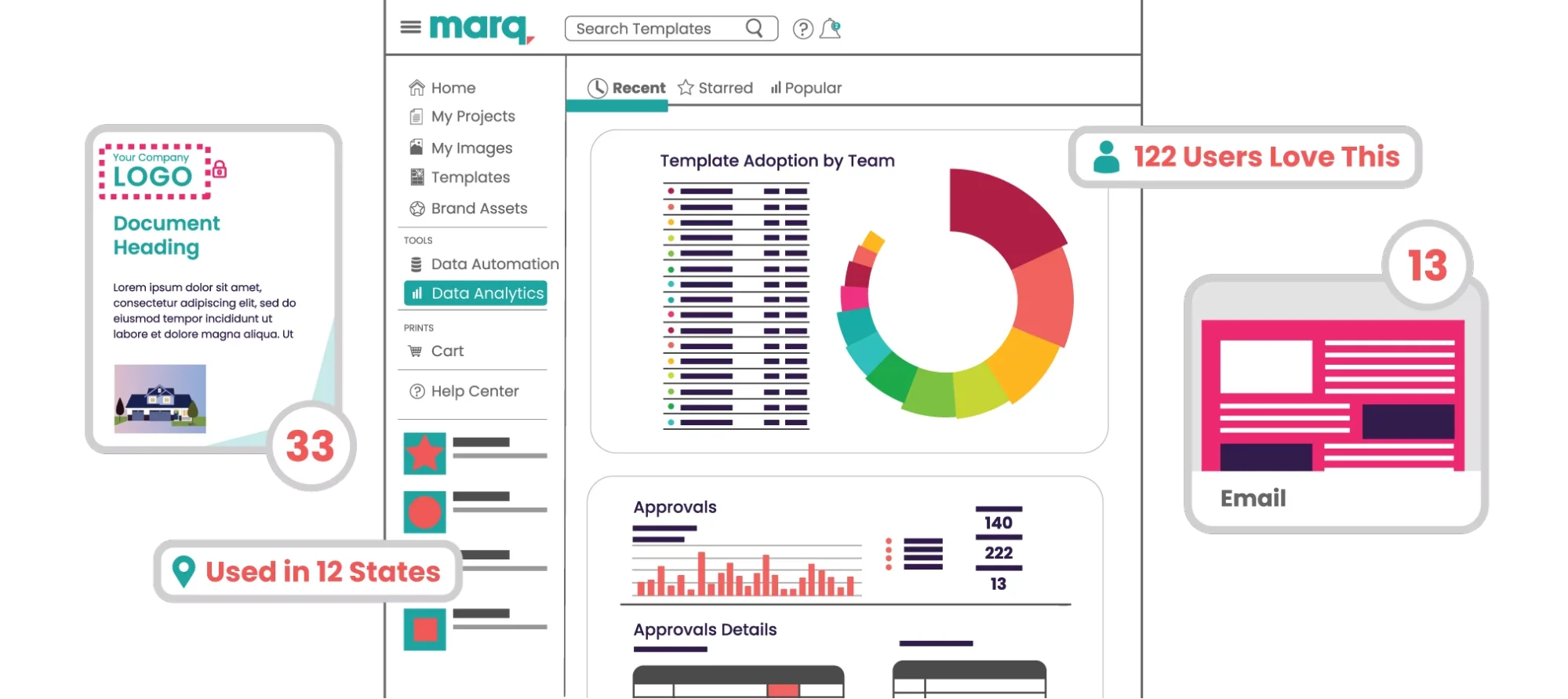
Usage analytics show which templates local teams use, which ones they ignore, and where adoption falls.
Marq reports on template usage across locations, helping the brand leader and central designer identify templates that need updating, simplifying, or better organization. When a local team misses a template, the central designer investigates whether they can find it quickly and whether it meets their needs.
Key metrics for measuring franchise branding success
A franchise branding system only works if locations actually use it and customers see a consistent experience across every touchpoint.
The following metrics help marketing leaders track adoption, find gaps, and improve the system over time.
- Template adoption rate: Measures the percentage of content created from approved templates across franchise locations. Low adoption often signals that templates are difficult to find, too restrictive, or do not meet franchisees’ needs.
- Brand compliance rate: Tracks how many content assets follow approved guidelines, including logo usage, colors, fonts, and required messaging. A fall in this metric signals that teams may need better templates, additional training, or stronger approval controls.
. - Content turnaround time: Measures how long it takes a franchisee to create and publish an on-brand content piece. Faster turnaround shows that local teams can safely create content without waiting on the central marketing team for every request.
- Design team hours saved: Tracks how much time designers no longer spend on routine production work as franchisees create approved content themselves.
- Off-brand content rate: Monitors how often outdated or incorrect materials appear across locations. A rising number points to gaps in your template and asset library, permissions, or approval process.
Marq: The multi-location branding platform built for franchise control
Marq helps franchise brands maintain consistency across every location by giving franchisees the features to create local marketing materials while staying within approved brand standards.
- Enable self-service content creation for franchisees
Marq turns approved designs into templates that franchisees can update themselves. Designers lock critical elements, such as logos, fonts, colors, and layouts, while leaving approved fields, such as headlines, contact details, locations, and promotions, open for local editing.
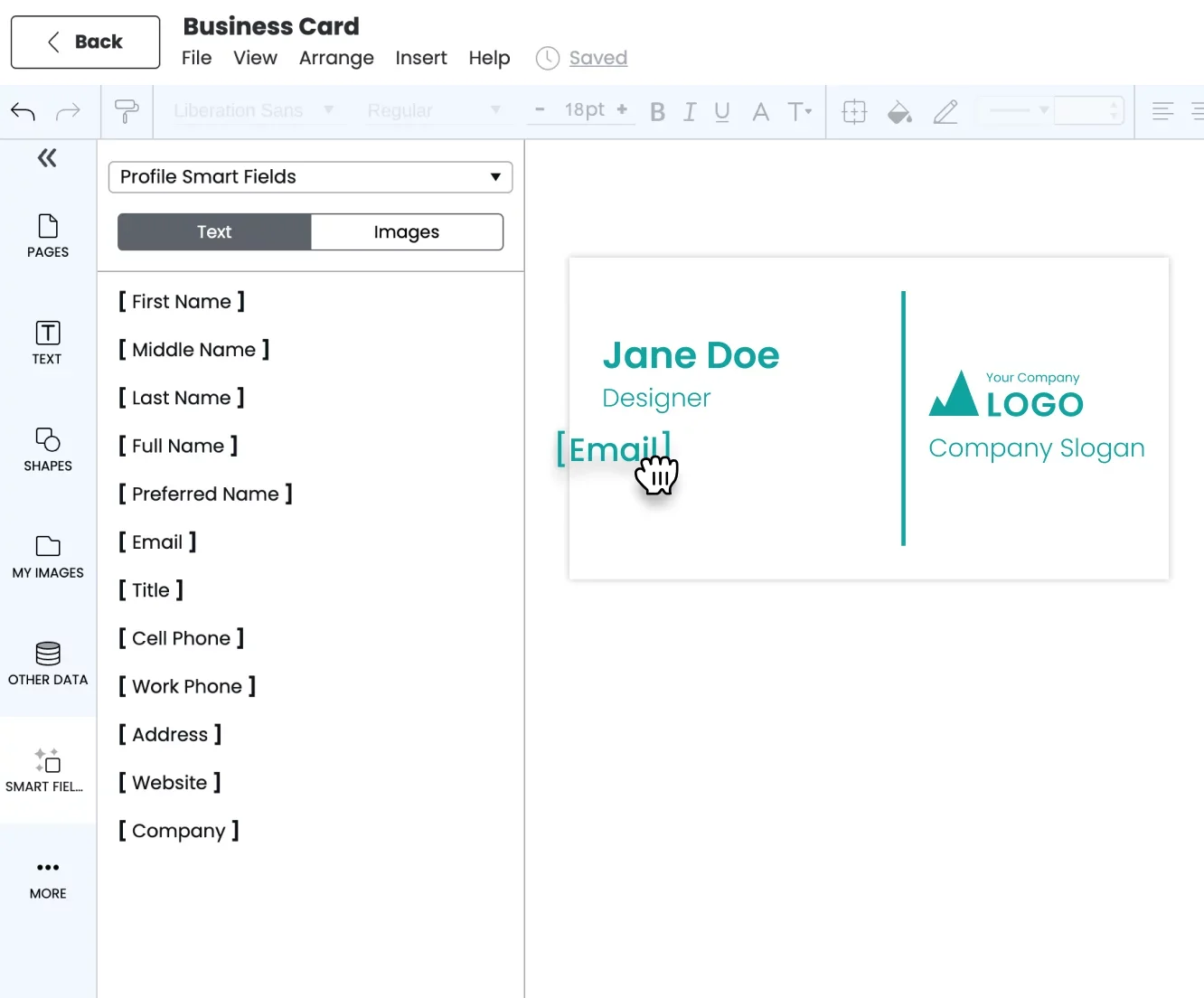
Smart Fields also pull information directly from connected data sources, so franchisees spend less time entering information manually and more time publishing content.
- Control what each location sees with groups and permissions
Marq can use groups and permissions so each region or franchise location sees only the templates and assets shared with it in their portal. Instead of searching through shared drives, outdated folders, or bloated libraries, franchisees always start with approved, up-to-date materials, while central teams manage templates and brand updates from one place.
- Connect to the platforms your business already uses
Marq connects with the platforms franchise brands already rely on, so teams can create content without rebuilding existing workflows.
Designers can import packaged Adobe InDesign files into Marq, convert the designs into brand templates, and add locks for franchise use. Teams can also connect DAM platforms like Bynder, Aprimo, MediaValet, and PhotoShelter to pull approved assets into their projects.
Customer Relationship Management (CRM) integrations take personalization further. Smart Fields can pull information from platforms like Salesforce and HubSpot directly into templates, automatically populating details such as location information, contact details, or customer data.
Case studies and examples of franchise brands
Two Marq customers show how franchise and multi-location brands can create more consistent content operations at scale.
1. D1 Training
D1 Training is a boutique fitness franchise founded by former pro athlete Will Bartholomew, with more than 25 locations nationwide. As the franchise grew, local teams started creating their own flyers, posters, and marketing materials.
Many franchisees did not have design experience, while outside designers they hired often lacked familiarity with the brand. Over time, inconsistencies appeared across locations, from fonts and colors to logo usage.
D1 Training adopted Marq as its brand enablement platform. The team created a library of approved templates, locked key brand elements, and gave franchisees the flexibility to update the details that mattered locally.
With Marq, D1 Training maintained control over critical brand elements and gave franchisees the ability to create the materials they needed independently.
Mike Abramson, President of D1, says “I love that you can lock a form or an image — whether you lock content, location, font size, etc. — so that franchisees still have the freedom to play without straying outside the brand guidelines.”
2. Engel & Völkers Gestalt Group
Engel & Völkers Gestalt Group is an affiliate of the Engel & Völkers real estate franchise, with more than 750 advisors across 50 offices in seven states.
As the group expanded across the U.S., the marketing team needed a way to help advisors create local content while keeping every asset aligned with the wider brand.
The group rolled out Marq’s template locking feature to its marketing team and advisor network. Templates gave advisors the flexibility to customize local details while keeping key brand elements, such as logos, colors, and layouts, consistent across every office.
This way, the team increased marketing output and strengthened brand consistency across all 50 offices. Advisors can also request an asset one day and receive it the next, helping them respond quickly in a changing real estate market.
Rick Rybarczyk, Director of Marketing at Engel & Völkers Gestalt Group, says “The time and money we save with Marq is definitely one of its biggest benefits to the company as a whole.”
Scale franchise branding without losing control with Marq
Franchise branding often breaks down at the local level when teams need to create content quickly and turn to whatever file or platform is easiest to access.
More guidelines do not solve that problem. A stronger system gives franchisees templates with controlled editing, approved assets, role-based access, and self-service workflows.
That is what Marq gives franchise marketing leaders: the features to support local content creation while maintaining brand consistency across every location. Book a demo to see how Marq helps franchise brands scale without losing control.
FAQs
What is franchise branding?
Franchise branding is the process of maintaining a consistent brand identity across all franchise locations while giving local teams the flexibility to create marketing materials that fit their market.
How do you keep franchise branding consistent across locations?
Document your brand, build templates that lock core brand elements, centralize approved assets, give role-based access, set approval workflows, and track usage and adoption of branded assets.