Best 7 franchise marketing software solutions to scale multi-location brands

Franchise marketing typically requires split responsibility between corporate teams and local operators. Corporate sets brand and campaign standards, while franchise owners and location managers adapt marketing for their communities and respond to customers.
Specifically, Corporate teams need systems for controlling brand content, managing local visibility, coordinating franchise operations, publishing through local channels, and retaining customers.
The right stack gives each role the access, information, and guardrails it needs. This guide compares seven franchise marketing platforms across the major jobs in that stack and explains which type of franchise each one fits.
How we evaluated these franchise marketing tools
Franchise marketing software is not a single product category. It is a stack of tools that helps a corporate team set standards, supports franchise brand management, gives local operators the tools to market their locations, and connects each location to customers. The recommendations in this guide are category-specific; these products are not interchangeable or competing head-to-head.
We reviewed each vendor’s current product and pricing pages, documented franchise or multi-location capabilities, named customer evidence, and third-party user feedback. Because these platforms perform different jobs, we did not assign one overall score. We evaluated each tool within its category using the criteria below. “Best for” describes the platform’s strongest use case, not a head-to-head ranking across all seven categories.
- Corporate control and local freedom: This is the core franchise tension. Can headquarters set guardrails while franchisees still act locally? It looks different in each tool: approval fields in Yext listings, opt-in rules in Voxie, post approvals in Sendible, or locked design elements in Marq.
- Scale across locations: Whether the platform stays usable and affordable at 25, 250, or 2,500 locations instead of slowing down or getting expensive.
- Ease of use for franchisees: Most franchisees are not marketers, so we looked at how fast a location owner can actually use the platform without training.
- Compliance and permissions: Role-based access, approvals, and audit trails that protect the brand, from SMS opt-in requirements to controls over listing data.
- Integrations with the existing stack: Whether it connects to the DAM, CRM, POS, and social accounts a franchise already runs.
- Proven franchise results: Named franchise customers and outcomes, not just feature lists.
See how a franchise marketing strategy comes together across the right channels and workflows.
Best 7 franchise marketing software in 2026: at a glance
The table below sums up all seven platforms and who each one serves. Deeper breakdowns follow.
| Platform | Category | Top Features | G2 Rating |
| Marq | Template-based brand enablement | Locked templates, brand portals, approval workflows, data merge, translation | 4.5 |
| Yext | Digital presence and local listings | Listings across 200+ directories, location pages, reviews, role-based access | 4.4 |
| FranConnect | Franchise operations and management | Development, operations, field visits, marketing modules, royalty tracking | 4.2 |
| Brandfolder | Digital asset management (DAM) | Central asset library, brand portals, templating, usage analytics | 4.4 |
| Sendible | Social media management | Multi-profile scheduling, approval workflows, unified inbox, reporting | 4.5 |
| Voxie | SMS marketing | Franchise Hub, localized numbers, opt-in compliance, corporate guardrails | 4.8 |
| Boomerang | Customer loyalty and retention | Digital wallet cards, multi-location dashboards, referrals, push offers | 4.6 |
1. Marq: Best for maintaining brand consistency across franchise locations
Marq is a brand templating and design automation platform built for distributed teams. It helps a brand stay consistent when many people, across many locations, create their own content.
D1 Training, a national fitness training franchise with more than 25 locations, shows the payoff. Its franchisees had been making content with whatever platform they could find, and some hired outside designers who did not know the brand, which led to off-brand content.
After moving to Marq, D1 restored consistency across locations. The launch webinar drew the highest attendance in company history, and franchisees now create their own local content without waiting on the corporate design team.
Key features
- Locked templates with editable zones
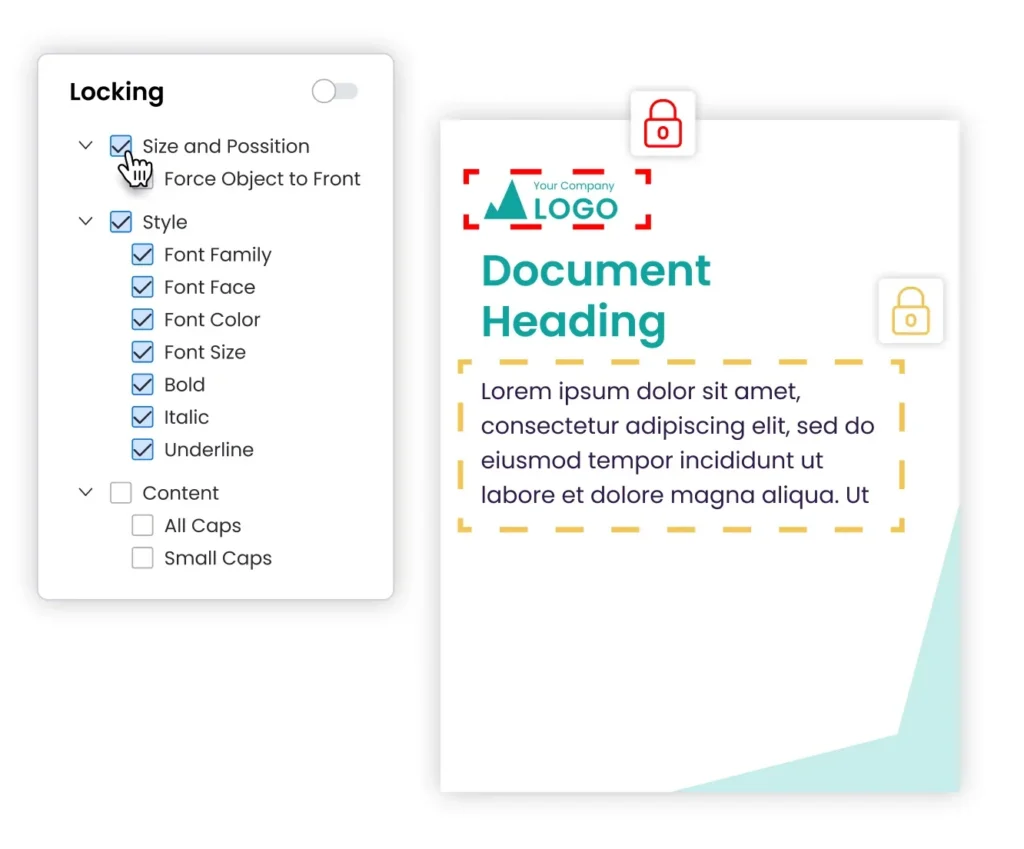
This is the feature that solves the core franchise problem. In Marq’s content design and template locking view, corporate decides what franchisees can touch and what stays fixed. A franchisee can swap the schedule, local phone number, and photo. They cannot change the logo, shift the colors, or resize the brand mark.
The rules live inside the template, so brand control does not depend on franchisees remembering the guidelines under deadline pressure.
- Brand portals franchisees actually use
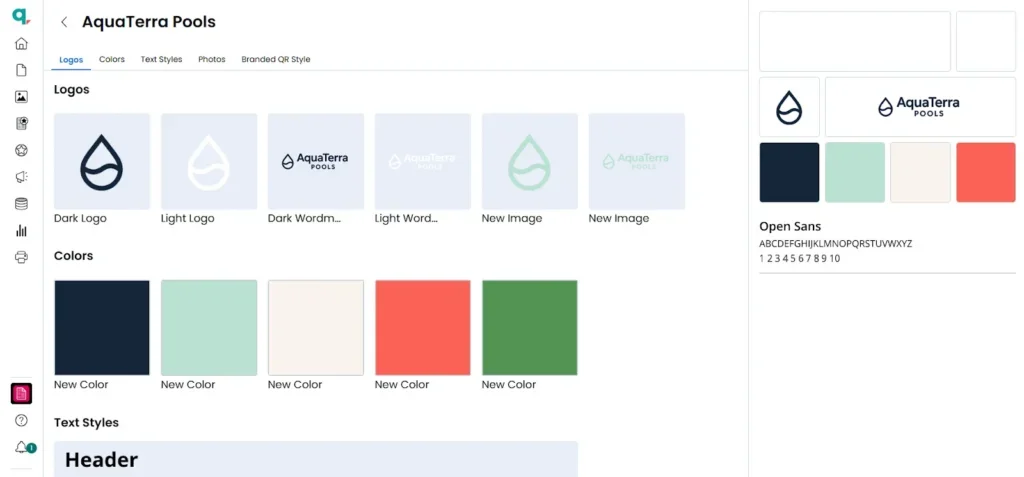
Corporate sets up a portal for each location group in Marq. Once every location has one place to find approved templates, franchisees aren’t digging through old emails or asking which logo is current. They choose a template, add their local offer, contact details, or photo, and get the asset out the door without routing every request through the corporate design team. Headquarters maintains the source templates and rolls updates into future projects, which can include brand kits for multiple subbrands.
- Creative automation and data merge
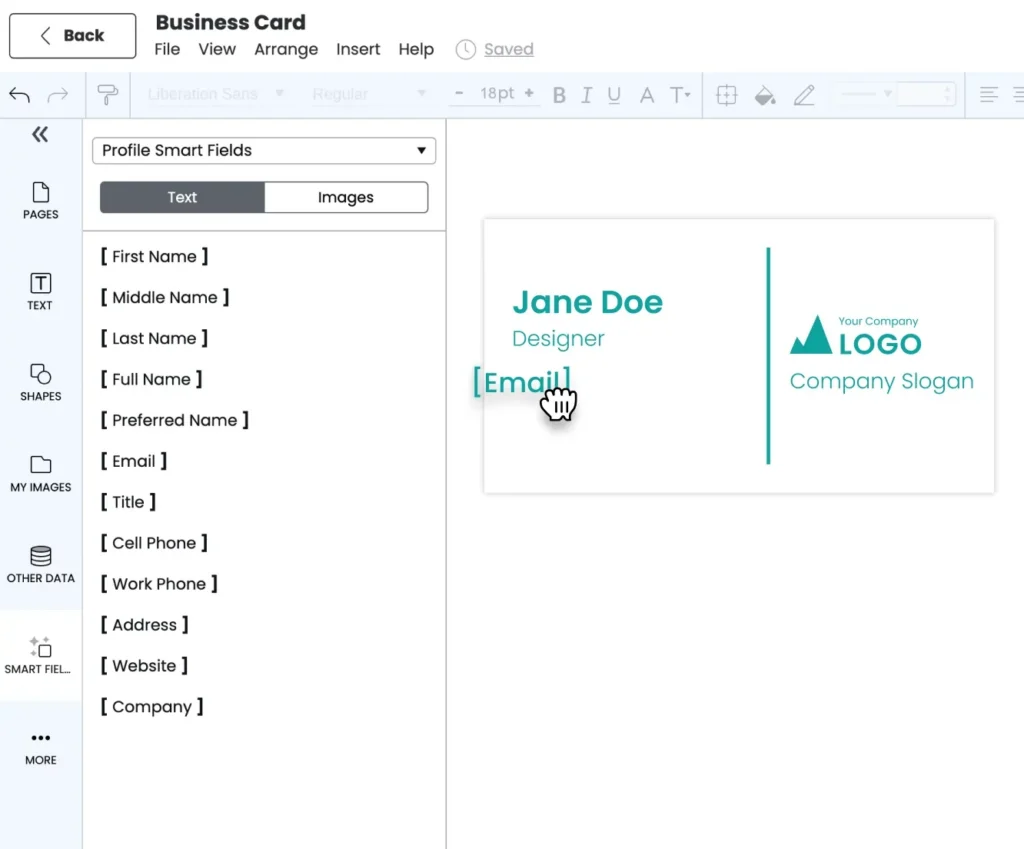
Rolling out one campaign across dozens or hundreds of locations often means rebuilding the same asset with a different address, offer, phone number, or photo. Marq connects approved location data from sources such as Google Sheets, CSV files, and XML feeds to the template. A corporate or local user selects the relevant location, and Marq fills the mapped fields, reducing copy-and-paste work while keeping every version rooted in the same approved design.
- Translation and localization
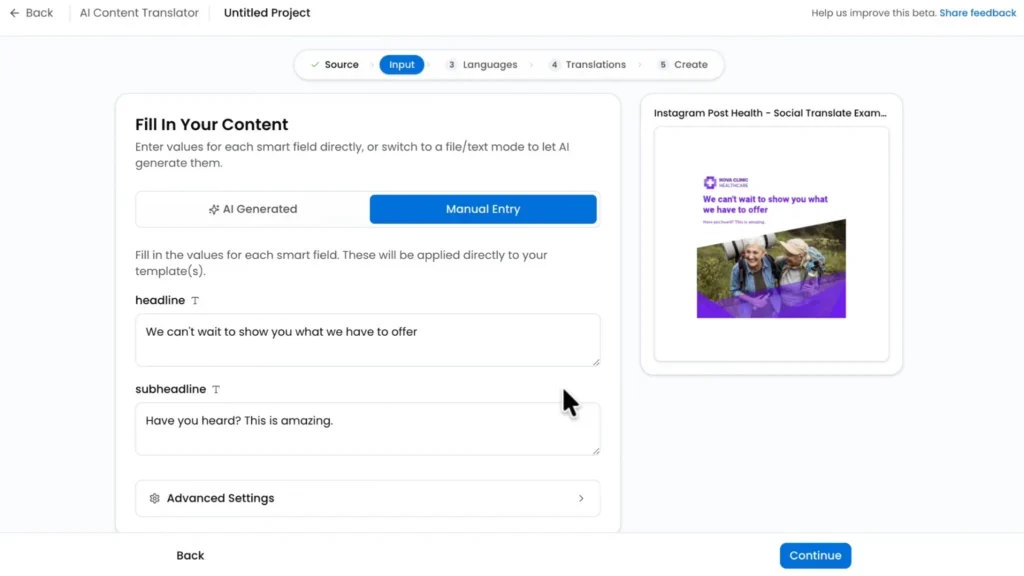
Franchises serving communities that speak different languages usually rebuild each asset one language at a time, and the layout breaks every time the text runs longer. Marq handles this inside the platform with its AI Content Translator.
Corporate picks a template, adds smart fields, enters the source-language content, and selects the target languages. Marq then generates a localized version of each one in minutes. The design stays locked the whole time, so brand colors, fonts, images, and layout do not shift.
Where Marq shines
- One campaign, many local versions: One template becomes many customized assets through data merge and creative automation.
- Adoption by non-designers: The drag-and-drop editor means franchisees who are not marketers can still produce clean, on-brand work.
- Works with an established content stack: Marq supports DAM integrations, connected data sources, and enterprise API and webhook access. The exact connections available depend on the systems and Marq configuration involved.
Where Marq falls short
- Not a complete franchise marketing suite: Marq manages branded content creation and distribution. It does not replace paid listings, SMS, social publishing, loyalty, or royalty-management software.
- Setup comes first: Corporate teams must build and maintain the templates, permissions, data connections, and review process franchisees will use.
- Best for repeatable content: Marq delivers the most value when teams produce recurring asset types and local variations. Original, one-off design work may still require dedicated design support (Note: Marq does offer ProServe design support)
Who Marq is best for
- Franchisors with distributed creators: Brands where dozens or hundreds of franchisees produce local marketing.

Scale Your Franchise Without Losing Brand Control
See how Marq helps franchise teams create consistent, on-brand content at scale.
2. Yext: Best for local search and listings
Yext is a digital presence platform. It keeps every location’s core information (name, address, phone, hours) accurate across search engines, maps, and directories. For a franchise, one update in Yext pushes the same correct details to Google, Apple Maps, Yelp, and more, so a customer searching for the nearest location finds the right hours instead of a closed door.
Key features
- Listings across 200+ directories: Update once and sync everywhere, including AI search assistants.
- Location pages and reviews: Indexable local pages plus review monitoring across major sites in one view.
- Role-based access: Corporate controls critical fields while local managers update photos and promotions.
Where Yext shines
- Local discoverability: Customers who search on their phones find accurate hours, directions, and reviews for the nearest unit.
- Scale with control: Corporate governs data fields across thousands of locations, with audit logs to trace changes.
Where Yext falls short
- Cost at scale: Reviewers frequently note that higher tiers get expensive as locations add up.
- Not a content creator: Yext manages your presence in search. It does not build your flyers, social posts, or brand templates.
Who Yext is best for
- Multi-location franchises that depend on foot traffic: Restaurants, retail, and home services where local search drives visits.
3. Voxie: Best for franchise-native SMS marketing
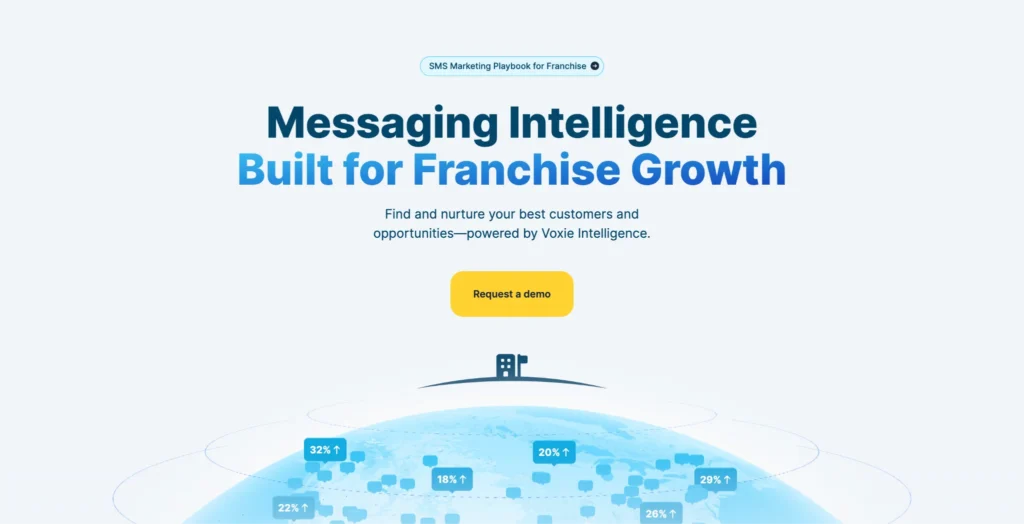
Voxie is an SMS platform built around franchise and multi-location workflows. Its Franchise Hub gives corporate teams centralized controls while allowing locations to communicate with local customers. Voxie also says its conversational intelligence identifies message intent with 98% accuracy, helping teams prioritize and manage incoming responses across the network.
Key features
- Franchise Hub with corporate guardrails: Corporate controls templates, opt-in workflows, and permissions; franchisees send locally.
- Localized numbers and playbooks: Location-specific numbers plus prebuilt message flows for acquisition and follow-up.
- Compliance built in: Structured opt-in keeps one franchisee’s stray text from turning into a fine or lawsuit.
Where Voxie shines
- Purpose-built for franchises: Corporate oversight and franchisee autonomy are designed in, not bolted on.
- ROAS roof from a franchise network: Voxie reports that Edible Arrangements generated 300% return on ad spend with the platform. That is one brand’s result, but it shows the potential of combining a corporate SMS strategy with local execution.
Where Voxie falls short
- Single channel: Voxie handles SMS well, so franchises still need separate platforms for social, listings, and design.
- Best for physical storefronts: Its value concentrates in multi-location businesses with local foot traffic.
Who Voxie is best for
- Franchises with storefronts and repeat visits: Food and beverage, fitness, childcare, and home services that drive local action through text.
4. Brandfolder: Best for storing and distributing brand assets
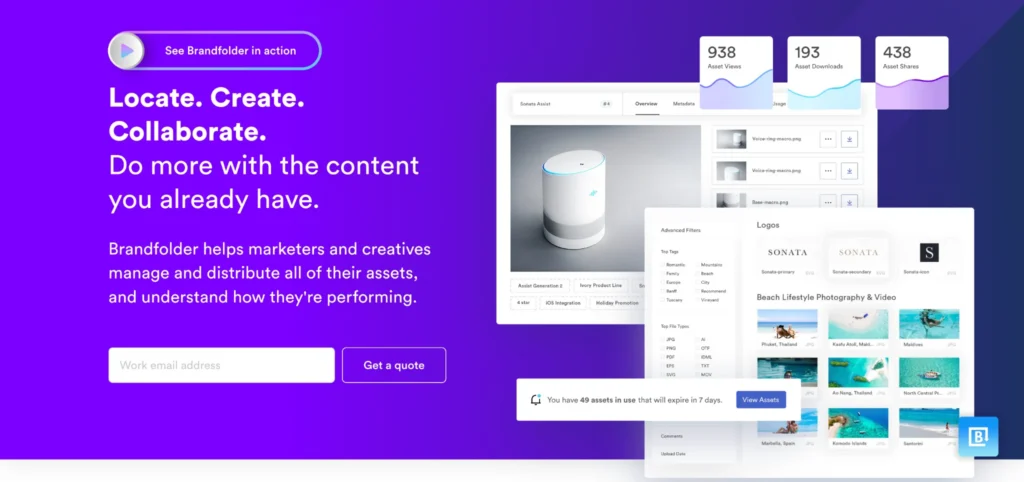
Brandfolder is a digital asset management (DAM) platform. It stores a franchise’s logos, photos, videos, and templates in one central library, then distributes the approved versions to the teams and partners that need them. When a franchisee needs the current logo or an approved product photo, they find it in the portal instead of emailing corporate.
Key features
- Central asset library: Store all file types with AI tagging and fast search.
- Brand portals and permissions: Curate assets for each location group and control who can view or download.
- Usage analytics: Brand Intelligence shows which assets get used, so corporate invests in what works.
Where Brandfolder shines
- Single source of truth: Approved assets stay in one place, which reduces off-brand versions.
- Distribution to partners: Guest access and share links get assets to retailers and vendors without email attachments.
Where Brandfolder falls short
- Storage, not activation: A DAM holds assets. It does not turn them into localized flyers or posts the way a templating platform does.
- Overhead for small teams: The advanced features can exceed what a small franchise needs, and some capabilities cost extra.
Who Brandfolder is best for
- Larger franchises with big asset libraries: Brands that need governed storage. Pair it with Marq, since Marq’s DAM integrations get those stored assets into templates franchisees actually publish.
5. Boomerang: Best for customer loyalty and retention marketing
Boomerang (Boomerangme) is a digital loyalty and customer retention platform built for franchise chains and multi-location stores. It runs reward programs through Apple and Google Wallet cards, so customers earn and redeem without a separate app.
A customer can collect points at one location and redeem at another, which keeps them coming back to the brand rather than a single store.
Key features
- Digital wallet loyalty cards: Membership, punch, and reward cards that skip app development.
- Multi-location management: One program with per-location dashboards, plus profit-and-loss visibility and data access for each franchisee.
- Push offers and referrals: Wallet push notifications and referral programs drive repeat visits.
Pricing: Subscription tiers, including a franchise plan with multi-location support. Contact Boomerang for pricing.
Where Boomerang shines
- Loyalty without a custom app: Boomerang lets franchises launch wallet-based rewards across locations without investing in a separate consumer app. Corporate can manage the shared program, while franchisees get location-level access and customers receive offers through Apple or Google Wallet.
- Fast setup: Franchisees launch loyalty cards in minutes.
Where Boomerang falls short
- SMB roots: It targets smaller chains and single locations, so very large franchises may want deeper enterprise controls.
- Loyalty focus: It drives repeat visits and does not manage brand templates, listings, or social.
Who Boomerang is best for
- Franchises that depend on repeat visits: Food and beverage, beauty, and retail chains focused on retention and average order value.
6. FranConnect: Best for running the whole franchise operation
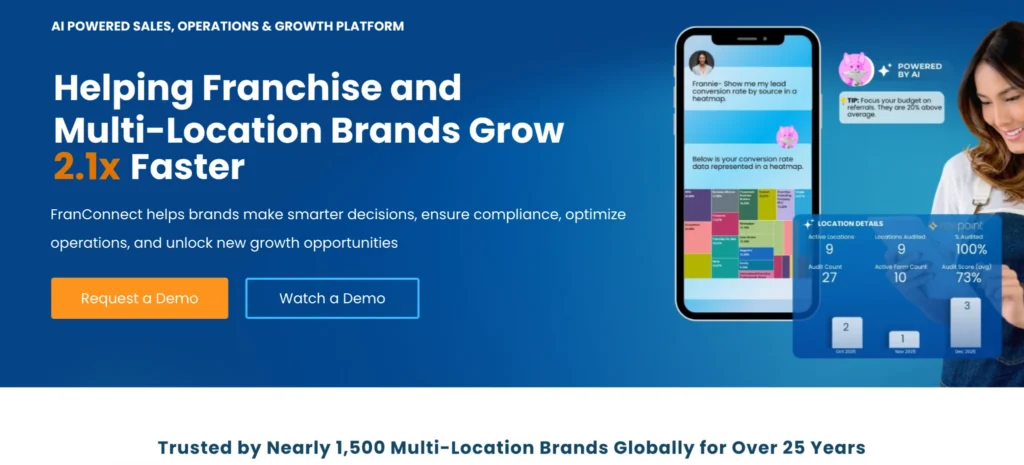
FranConnect is franchise management software, and its marketing module sits inside a broader operations suite trusted by 1,500-plus brands across roughly one million locations, so it is proven for franchisors managing real complexity.
For a corporate marketing leader, the draw is running campaigns, brand content, and franchisee communication in the same system that already tracks each location’s performance.
Key features
- Campaign management: Plan and run multi-channel campaigns across email, social, and events, then measure them against location performance.
- Brand content repository: Store approved marketing materials and branding content in one place, so every franchisee pulls from the same library.
- Ad localization and social presence: Localize ads for each market and manage franchisee social presence and online reviews from headquarters.
- Email marketing and lead nurturing: Send automated email campaigns to customers and to franchise candidates, with a “Heat Meter” that flags the most engaged prospects.
- Communication hub with Frannie AI: Push announcements, best practices, and marketing playbooks to franchisees, with generative AI that drafts content and surfaces insights.
Where FranConnect shines
- Marketing connected to franchise performance: FranConnect places campaigns and franchisee communication alongside broader location and operations data, giving corporate teams more context for evaluating marketing performance. In a FranConnect-published case study, BrightStar reported 5.5% annual growth, nearly twice the cited industry average. The result reflects BrightStar’s experience, but it demonstrates why connecting marketing and unit performance can matter at scale.
- Franchise development marketing: The lead-nurturing and campaign tools are purpose-built to recruit new franchisees, a job most marketing platforms ignore.
Where FranConnect falls short
- Marketing depth is lighter than dedicated tools: Reviewers note the marketing automation and design features trail specialist platforms, so brand and creative work usually still needs a dedicated platform like Marq.
- Learning curve: Franchisees who are less tech-savvy can struggle at onboarding.
Who FranConnect is best for
- Established franchises that want marketing inside their operations system: Brands that would rather run campaigns, franchisee communication, and performance in one platform than manage separate tools. For a wider view of the category, see this guide to franchise management software.
7. Sendible: Best for social media marketing across locations
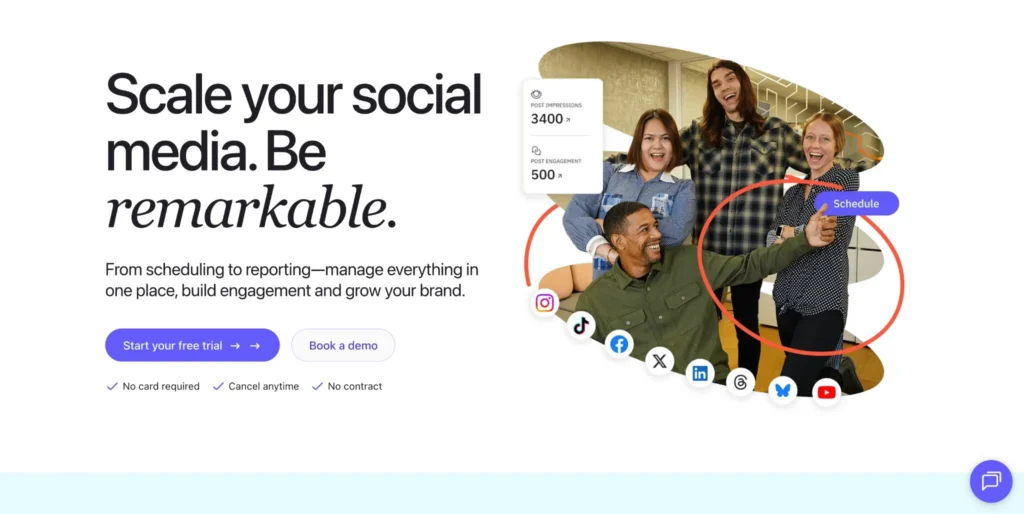
Sendible is a social media management platform for agencies and multi-location brands. It brings every location’s social profiles into one dashboard for scheduling, approvals, engagement, and reporting. A franchise marketing lead can plan a month of posts, route them for approval, and track results across every location without logging in to each account.
Key features
- Multi-profile scheduling: Plan and publish across Facebook, Instagram, TikTok, LinkedIn, Google Business, and more.
- Approval workflows and permissions: Corporate approves franchisee posts before they go live.
- Unified inbox and reporting: Respond to comments and messages in one stream, then share automated reports.
Where Sendible shines
- Location grouping: Profile Groups cluster location accounts while keeping separate reporting and approvals.
- Time savings: Bulk scheduling lets a small team cover many locations at once.
Where Sendible falls short
- Reporting limits: Some users want deeper analytics and note calendar visibility gaps.
- Higher tiers feel expensive: White-label and top features sit in pricier plans or paid add-ons.
Who Sendible is best for
- Franchises managing many local social accounts: Sendible fits corporate teams that need separate workspaces for locations, shared scheduling, post approvals, and consolidated reporting. Agencies managing social media on behalf of franchise locations can use the same structure across client accounts.
How to choose the right franchise marketing solution
No single platform covers every job. Weigh these considerations against your brand’s size and where their marketing is hardest to manage.
Brand control and local permissions
The first question is whether the software prevents franchisees from altering locked brand elements and helps maintain consistent franchise branding. General design tools let anyone change anything, and brand assets drift as versions multiply. Franchise-grade software locks the brand into the template so corporate does not police every file.
Decide which elements must stay fixed (logo, colors, type) and which franchisees can localize (address, offer, photo). Marq handles this directly. Corporate builds the template, locks the brand elements, and franchisees edit only editable fields through content design.
Local personalization and data automation
The second question is speed. Franchisees need local content now, and corporate cannot build it one asset at a time. Look for data merge that turns a spreadsheet of locations into hundreds of finished, personalized assets. Look for localization that ships a campaign in several languages without a manual rebuild. Marq can connect supported data sources to Smart Fields, allowing teams to apply location details to an approved template instead of retyping them into every version.
Approvals and channel compliance
The third question is protection. One franchisee sending the wrong text or an off-brand claim can create legal and brand risk. Franchise software should route franchisee work through approvals and keep an audit trail.
For SMS, the channel platform should manage consent and opt-out requirements. Marq handles the content-approval side: when configured, users must receive approval before downloading, printing, or publishing a project.
Integrations with the existing stack
The last question is whether the software fits your existing stack. Your franchise already runs a DAM, a CRM, social accounts, and maybe an operations platform. New software should fit into that workflow, connecting to the stack rather than sitting beside it.
Check for connections to your asset library and CRM so approved content flows in and finished materials flow out. Marq supports DAM and CRM integrations, connected data sources, and enterprise API and webhook access. The exact connections available depend on the systems and Marq configuration involved.
Final word on Marq
Every platform here earns its place. Yext gets you found, FranConnect runs the operation, Brandfolder stores the assets, Sendible schedules social, Voxie sends the texts, and Boomerang builds loyalty. The platform that keeps all of it on-brand across every location is Marq. If your franchise struggles with brand drift and slow local content, start there.