A Leadership Guide on Brand Stewardship: How Top Brands Do It

Brand stewardship sounds manageable until your team is producing content daily across multiple locations or departments and a small creative team has to review every piece. Bottlenecks form and brand standards start to slip.
If you’re responsible for the brand, you already have an idea of what good brand stewardship looks like.
For most of the executives and creative directors we work with, the real challenge is building a system where the people who aren’t designers can produce content quickly without the brand team spending their week cleaning it up. How do you protect brand standards when everyone needs more content, but the organization is decentralizing creation?
This guide walks through the audit-and-governance framework that brand stewards in distributed organizations are using to get ahead.
The subtle signs of brand drift leaders should know about
Brands don’t become inconsistent overnight. It happens one rogue flyer at a time – a branch that got tired of waiting, a sales rep who needed a deck by tomorrow, a faculty coordinator who found an old logo in their downloads folder.
Watch out for these signals:
- Inconsistent messaging across channels: Teams create content in different tools and pull logos, colors, or fonts from whatever files they can find locally. The result is content that carries the same company name but looks like it came from different brands.
- Non-designers creating external-facing materials: The creative team is backed up with design requests, so people don’t wait. They create materials themselves. When those materials go out unreviewed, every output is a slightly different interpretation of your brand. Across multiple regions, that inconsistency compounds fast.
- Poor customer experience due to off-brand touchpoints: Prospects and customers experience different branding across emails, ads, and sales materials. When the same company looks different depending on who sent the email, it quietly erodes confidence, especially at later stages of a buying decision.
How top brands establish and maintain strong brand stewardship
Scaling brand consistency is more of a systems problem than a culture problem. The brands that get it right build guardrails into the tools their people use to create content. The goal: to make following brand standards the path of least resistance, not an extra step.
Below are examples of successful brand stewardship in action.
Salesforce
Salesforce has hundreds of products, partners, and internal teams, but every experience feels on-brand.
That’s mainly because of its Lightning Design System (SLDS), a shared design language that ensures Sales Cloud, Service Cloud, and third-party apps all look and feel like Salesforce. Salesforce’s system builds those guidelines into the tools they use to create.

Yext
With just seven designers supporting 1,200+ employees across 18 countries, Yext shows how brand stewardship can work at scale. They built master templates in Marq, locked down essential brand elements, and gave each market editable zones for language.
Marq gives Yext a way to balance control and speed. Central designers oversaw brand assets, while local teams localized templates themselves without waiting on the creative queue.
Apple
Apple delivers a seamless brand experience across product design, packaging, and store ambiance. Apple’s Style Guide can be credited for this, which sets clear rules for maintaining a consistent voice across documentation, reference materials, training, and user interfaces.
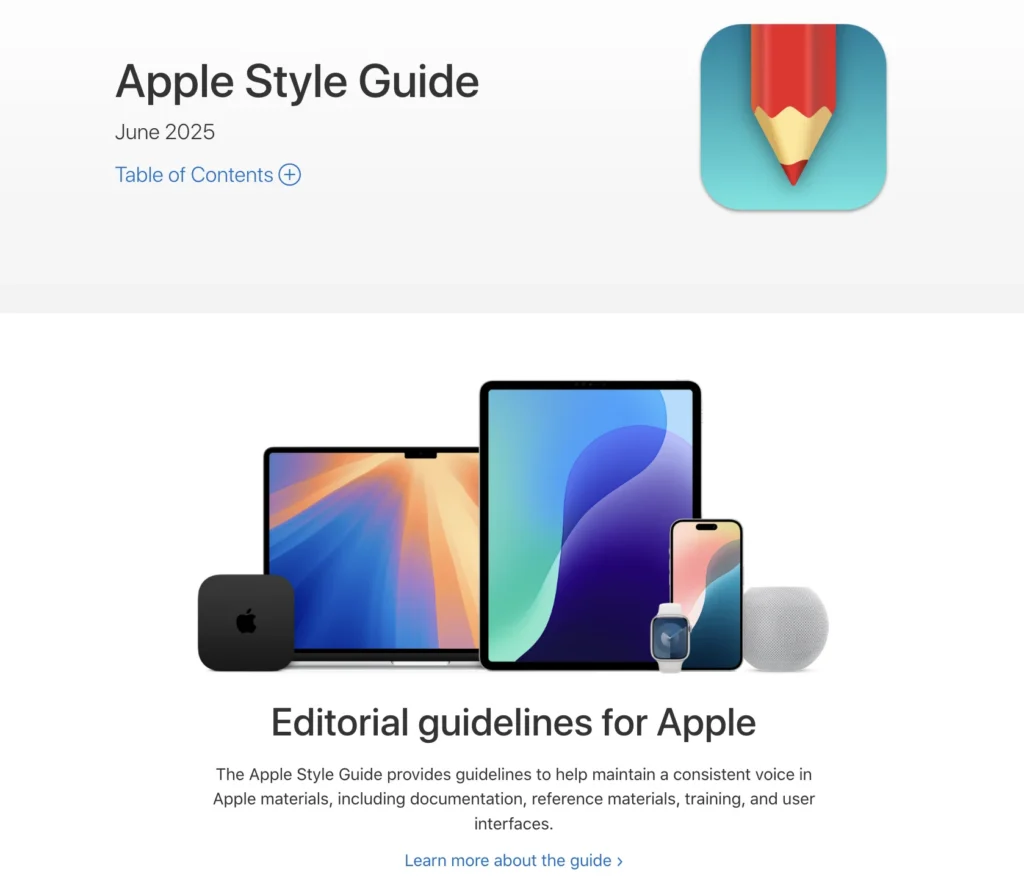
The style guide isn’t only for Apple employees. It also guides third-party developers, ensuring that every user-facing touchpoint aligns with Apple’s terminology and standards, not just the internal teams.
Strategic framework of auditing and maintaining a strong brand stewardship culture
Spotting brand inconsistencies is just the start. The harder work is tracing it to a specific gap in your workflow, naming an owner, and putting systems in place to prevent them going forward.
This framework gives marketing and creative leaders a working structure for all three.
Step 1: Audit every touchpoint where your brand appears
→ For marketing leaders: Use this step to identify your highest risk-governance gaps.
Log every place your brand appears, whether that’s website, email, social, sales collateral, event materials, or all of the above. For each touchpoint, answer:
- Who creates it? This reveals whether a designer or a non-designer owns the output.
- Who approves it? This highlights whether anything goes out unreviewed.
- Where do they get the assets? This tells you whether teams are getting brand elements from a centralized source or from whatever they have saved locally.
- How often does it get produced? This tells where volume is high enough to warrant a locked template over a manual process.
Any instance where approval is missing, assets are pulled locally, or a non-designer is producing external-facing content without a template is a governance gap. Prioritize closing the highest-volume ones first.
Step 2: Audit each channel against a defined standard
→ For creative directors and brand managers: Map each channel to a clear on-brand definition, then identify the specific failure mode.
Audit each channel against a specific standard.
Here’s what that looks like across the most common touchpoints and how you can solve the common friction points with Marq.
| Touchpoint | On-Brand Examples | Common Pitfall | How Marq Helps |
| Print / marketing collateral | Correct logo, approved color values, current version | Teams printing outdated files saved locally | Lockable templates, bulk template updates pushing the current version to everyone automatically |
| Digital assets / website | Consistent imagery, approved messaging, brand voice | Multiple CMS editors with no review process | Role-based access controls limit who can publish |
| Social media campaigns | Consistent visual identity, approved tone, correct handles | Regional teams posting from personal tools without templates | Locked social templates with editable copy zones |
| Partner / franchise materials | Approved co-brand standards, correct logo placement, consistent imagery | Outside designers unfamiliar with brand standards | Self-service portal with locked partner templates |
| Sales collateral | Current messaging, verified pricing, consistent win themes | Sales reps rebuilding decks independently per prospect | Smart fields for personalizing collateral automatically |
Step 3: Assign ownership and update the workflow
→ For creative directors and brand managers: This is where brand governance gets operationalized.
For each gap identified in Step 2, do three things:
- Name the owner: Each touchpoint needs a single owner, a brand steward, who ensures it remains aligned with brand standards.
- Build a locked template in Marq: The owner works with the creative team to decide what people can edit (contact details, local copy, and market-specific information) and what stays locked (logo, colors, and typography). Once the template is live, teams open it in Marq, customize their sections, and publish. The design team no longer needs to handle these routine requests.

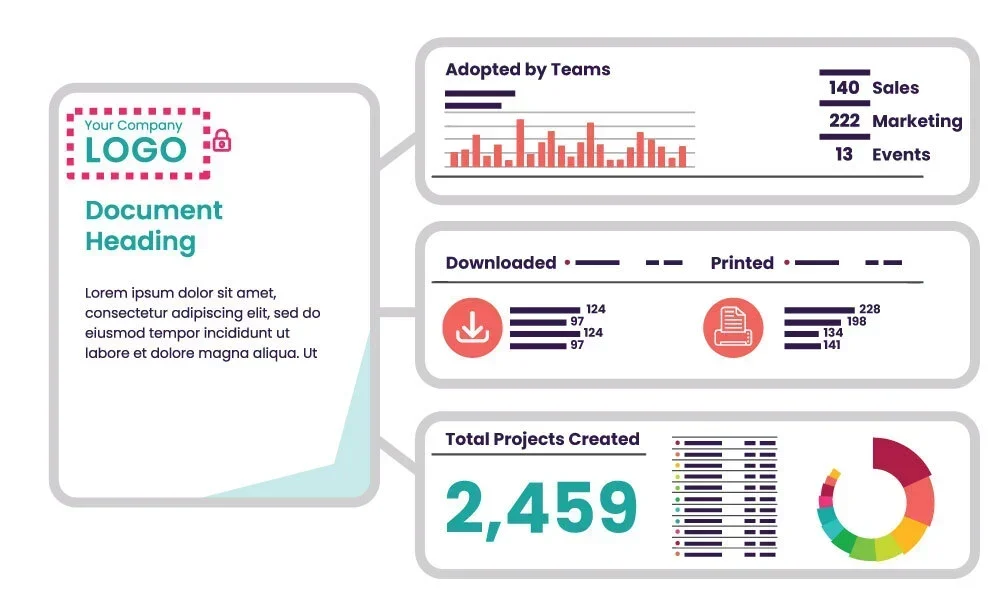
Review and update routinely: Monitor Marq’s usage analytics to see which templates are being used and which aren’t. A template nobody is using means it’s either outdated or the team is creating that material somewhere else. When updates are needed, Marq’s Bulk Update feature lets admins update names, descriptions, and sharing settings across multiple templates in one action.
Common mistakes every marketing leader should look out for
Distributed companies tend to run into the same few mistakes, and most of them are avoidable once you know where to look.
No single source of brand assets
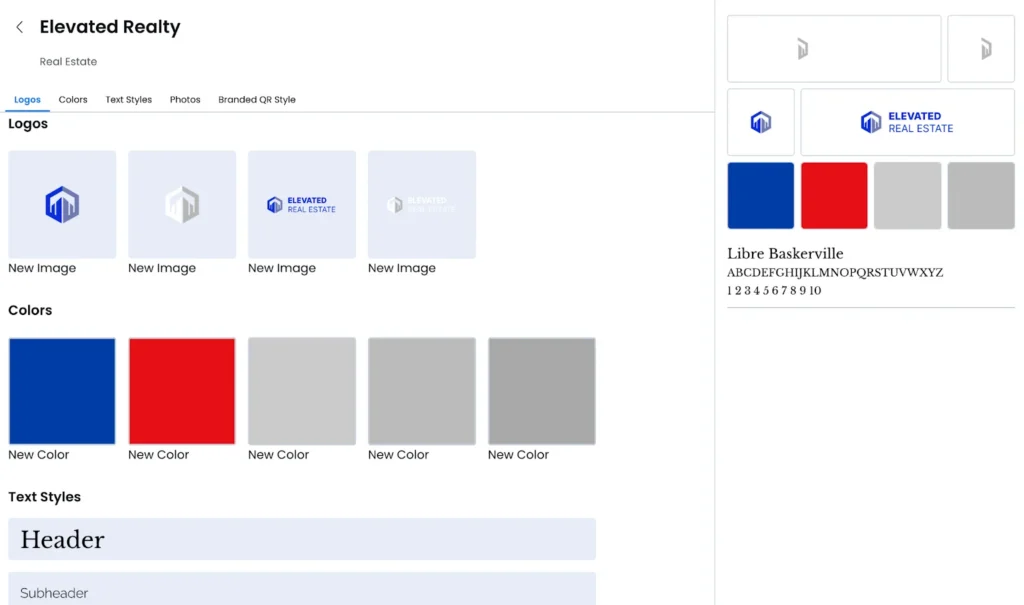
When teams pull assets from different locations (shared drives, old emails, local folders), brand inconsistency is inevitable. The fix is a centralized asset library where every logo, color file, and approved image lives in one place and stays current.
Marq stores brand assets in a centralized, cloud-based library with version control. When an asset is updated, every template using it reflects the change immediately. Teams always work from the current version without any manual intervention.
Marketing materials created outside your system
When distributed teams don’t have a governed creation path, they create their own. That means outside designers, personal Canva accounts, or files rebuilt from scratch, none of which go through a brand review.
Marq’s locked templates give every regional team a pre-approved starting point. Admins define what’s editable and what’s locked. Teams customize within those boundaries and publish directly. No design team involvement required for routine materials.
After implementing Marq’s lockable templates, 160 admins and agents now work from a single system and save 320 hours of work per week. Marketing Director Mary Cox no longer has to act as brand police.
AI used outside governed workflows
When teams use external AI tools and LLMs to generate copy or design visuals, every output is a slightly different interpretation of your brand voice. Across multiple regions and teams, that inconsistency compounds fast.
Marq 2.0 addresses this by keeping AI inside governed workflows. Brand Guardian acts as a real-time brand coach, reviewing logo usage, fonts, colors, imagery, and tone as content is being created. It then gives a brand score and flags issues before anything goes to the approvals stage.

For teams producing large volumes of content, AI Marqet provides brand-safe automation that generates ready-to-edit materials aligned with brand rules by default. Advanced brand stewards are using AI inside controlled environments which means:
- Drafting within locked templates
- Creating pre-approved copy blocks
- Restricting editable zones
- Monitoring usage analytics to catch drift before it spreads
This is especially relevant in complex organizations like higher education, where multiple teams such as enrollment, alumni, and community have to create content on tight timelines, and real estate, which requires rapid, personalized generation of agent materials.
Platforms that can help streamline brand stewardship
Choosing the right platform can make brand stewardship far more manageable. Below are three tools suited to different organizational needs.
1. Marq: Best for distributed teams needing governed content creation

Marq enables distributed teams to produce high volumes of content without compromising on brand integrity. Marketing leaders get confidence that every touchpoint consistently reflects their brand.
Features that make this possible include:
- Template locking and editable zones: Admins define exactly which fields teams can edit and which stay locked. Logo, colors, typography, and legal copy stay untouched, whereas contact details and local copy are open for teams to customize.
- Approval workflows: These can be set at account level or user level, so high-volume, routine requests from power users can bypass review while anything higher risk gets routed automatically to the right reviewer.
- Team management: Admins can replicate their company structure in Marq with unlimited groups and subgroups. Users are assigned to specific groups, giving control over which templates and folders they can access. Permissions can be managed at the brand, team, or individual level.
- Smart fields and data automation: Templates pull contact details, location data, pricing, and CRM fields directly into the design with the help of smart fields to personalize messages.
- Brand Guardian: It reviews logo usage, fonts, colors, imagery, and tone as content is being created. Gives creators a brand score and flags issues before anything goes to review.
- Usage analytics: Lets admins track which templates are being used, by whom, and how often.
Marq is built for distributed teams in complex, regulated industries, like healthcare, finance, and insurance, who need to scale content production while keeping branding consistent.
2. Bynder: Best for digital asset management

Bynder is a strong DAM that organizes, stores, and distributes approved brand assets at scale. It’s the right choice when the core problem is asset library management, searchability, and version control.
Bynder stores assets well and makes them easy to find. What it doesn’t do is govern how teams use those assets when creating new content, and it doesn’t provide self-serve templates for teams to work from.
If you’re already using Bynder, you can get more value by integrating it with a templating platform like Marq. This lets teams access brand-approved assets and ready-to-use templates, maintain consistency across distributed teams, and speed up content production.
3. Canva Enterprise: Best for democratized content creation
Canva Enterprise is built for speed and accessibility. Non-designers can create professional-looking materials quickly, and the template library covers most everyday content types.
The tradeoff: because brand controls are lighter. Logos, colors, or fonts can be adjusted freely, and multiple versions of the same asset often appear across teams. This may make it difficult to maintain strict consistency across distributed teams.
Canva Enterprise is best for teams that value speed and volume over strict brand consistency.
Brand management checklist for leaders
Each item below is tied to a specific, concrete outcome designed to function as a working reference for your team.
→ For marketing leaders (governance strategy)
- Audit all franchise locations’ materials quarterly for logo misuse, outdated templates, and off-brand copy. Assign a named brand steward to each market or location.
- Define the control vs. speed policy explicitly for instance, which content types require full review, which can go through an expedited approval, and which are cleared for self-serve publishing.
- Upload all brand assets to a centralized library. Remove access to local and shared-drive versions that aren’t source-controlled.
- Schedule a brand onboarding session for every new hire or partner creating content independently.
- Run a bi-annual touchpoint audit across print, digital, social, partner communications, and sales collateral. Document who owns each channel and what on-brand looks like for each.
→ For creative directors and brand managers (franchise branding, template systems, and approval workflows)
- Lock typography, color, and logo fields in all master templates. Editable zones should be limited to contact details, local copy, and market-specific fields.
- Build a locked template for every recurring content type produced by distributed teams. If a regional team is creating that material in a personal Canva account, that’s a template gap.
- Set up an approval workflow for any material produced outside the core design team. Route high-risk content to the appropriate reviewer automatically.
- Add smart fields in templates to automatically pull CRM data, enabling content personalization at scale.
- Review template usage analytics quarterly and sunset underused templates.
- Use Marq’s Bulk Update feature to push template changes and notify teams in one action when brand elements are updated.
→ For field and regional teams (self-serve guidelines)
- Only create materials from approved templates, not from copied files, personal tools, or rebuilt versions.
- Do not alter locked elements. Editable zones exist for contact details and local copy.
- Route any material that falls outside standard templates through the approval workflow before publishing or distributing.
See how Marq helps enterprise teams with brand management at scale
Brand stewardship at scale usually forces a choice: give teams the freedom to create and consistency falls, or lock everything down and overwhelm the design team. Marq removes that tradeoff.
A regional manager who needs a flyer simply opens a Marq template, updates the fields you’ve unlocked, and publishes. The logo, colors, and legal copy you’ve locked stay exactly where you put them, without a request ticket, a Teams message, or a revision round.
The same model applies across every content type and team. Marq’s approval workflows, Brand Guardian, AI Marqet, and usage analytics features further make brand stewardship easy to execute.
Schedule a demo to see how Marq works for your organization.
FAQs about brand stewardship
- What is brand stewardship?
Brand stewardship is the ongoing practice of protecting and amplifying a brand’s voice, visuals, and messaging consistently across every team, channel, and market that represents it.
- How is brand stewardship different from brand management?
Brand management focuses on shaping and maintaining the brand’s identity, messaging, and positioning. Brand stewardship is broader. It ensures teams across the company use the brand responsibly and consistently as they create and distribute content.
- Who’s responsible for brand stewardship?
Formally, marketing leadership (CMOs, Creative Directors, Brand Managers, etc.) is responsible. In reality, anyone creating content plays a role in protecting and applying the brand consistently.