Franchise marketing strategy: A step-by-step guide


A central marketing lead at a real estate franchise needs one campaign live across 100+ independently operated offices by Friday.
The central team needs the campaign to carry the same core message across every office, while each location needs to tailor the details for its market, including the agent photo, address, and open-house dates.
Without a clear system for managing those changes, every request either goes into the central design queue or gets recreated locally. That can leave local teams using outdated information, inconsistent layouts, or missing required fair-housing language.
A franchise marketing strategy fixes this by balancing national brand control with local execution. It defines who owns what, how locations create approved assets on their own, and how to measure results at both levels.
This article walks you through the franchise marketing strategy, highlights the common mistakes that stall growth, and shares the metrics that are worth tracking.
Why franchise marketing becomes more difficult as networks grow
One brand, many independently operated locations. As the network adds locations, markets, and local content needs, coordinating the work becomes harder. Every new location adds another person who needs assets, another market with its own promotions, and another chance for something off-brand to reach the public.
Common instances show up again and again as networks scale:
- Brand drift: Logos get stretched, colors shift, and old taglines resurface across locations.
- Slow local turnaround: Locations wait days for central design to make a simple change.
- Off-brand assets: Local teams (often non-designers) build their own flyers in whatever app they have when the deadline hits.
- Version chaos: Last quarter’s promo and last year’s logo keep showing up in “final_v4.”
- Untracked local campaigns: The central team has no idea what’s actually running in each market.
A real estate agent has an open house tomorrow. At 9 p.m., they open last year’s flyer, swap the photo, move the logo to fit their headshot, and delete the fair-housing line because it crowds the layout. That flyer goes to print and to Instagram before anyone at corporate sees it.
Central teams often handle more than content production. They may also manage print, fulfillment, and location-level distribution, along with the accounting involved in prepaying for materials and managing chargebacks to each location. These processes consume time and cash before a single lead comes in.
“One thing we’ve struggled with time and time again is the false expectation that franchisees join our system and don’t have to do any marketing, that the leads will just start flowing in.” – SVP of Marketing, 15-brand franchise group with ~2,000 franchisees.

Give Franchisees a Faster Way to Create On-Brand Content
Let local teams customize approved templates while corporate keeps control of the brand.
6 Steps of an effective franchise marketing strategy
A franchise marketing strategy brings together your target audiences, offers, channels, budgets, and performance measures to drive demand. It also clarifies who owns each part of the work, so corporate and local teams can execute against the same plan without diluting the brand identity.
The six steps below show you how to build that strategy.
1. Identify your key audience
Franchise marketing usually serves three distinct business goals, and each one requires a different audience, message, and measure of success.
- Customer acquisition targets people who have not yet bought from a franchisee. Campaigns might focus on local offers, new-location awareness, or services that bring first-time customers through the door. Measure performance through qualified leads, first-time visits, bookings, and new customer sales.
- Customer retention targets existing customers and aims to increase repeat business. Campaigns might promote new services, seasonal offers, loyalty programs, or reminders tied to previous purchases. Track repeat visits, purchase frequency, retention, and customer lifetime value.
- Franchise recruitment targets people who could become future franchise owners. These campaigns need to communicate the business opportunity, brand model, support, and investment requirements. Measure them through qualified inquiries, applications, and signed franchise agreements.
Once you know who the campaign needs to reach and what you want them to do, the rest of the strategy becomes easier to set. The audience shapes the offer, channels, budget, creative, and KPIs, giving corporate and local teams a clear target to work toward.
2. Define the national vs. local split
Once you know who you’re trying to reach, decide who owns each part of reaching them.
When ownership is unclear, corporate may try to make every local asset, or locations may get total freedom and go off-brand. Assigning each task to one owner prevents duplicate work and gaps.
In many systems, the corporate team or franchisor sets brand standards, maintains the template library, and coordinates national campaigns. Franchisees own their market: local promotions, community events, sponsorships, local listings, and reviews. Regional teams or agencies adapt national campaigns by market and pre-approving local work.
Responsibilities vary by franchise agreement and brand-fund rules, so treat the table below as an example to adapt, not a universal law.
| Marketing work | Corporate / franchisor | Regional departments | Location / franchisee |
| Brand standards (logo, colors, type) | Owns and updates | Enforces | Follows |
| Brand-safe template library | Builds and maintains | Curates by market | Uses to self-serve |
| National campaigns and messaging | Plans and funds | Adapts by market | Runs locally |
| Local promos, events, sponsorships | Sets guardrails | Coordinates | Owns and executes |
| Edits outside allowed fields | Sets policy | Supports | Owns day-to-day |
| Print, fulfillment, distribution | Manages vendors and funds | Coordinates | Orders and receives |
| Reporting | Consolidates national results | Reviews regional results | Reports local results |
“I’m trying to reposition my team around enabling and coaching franchisees. It’s their business, and they have to drive the business.” – SVP of Marketing, 15-brand franchise group of ~2,000 franchisees
3. Create offers with room for local adaptation
Once the corporate team knows who the campaign needs to reach, it should define the action it wants them to take. Then, choose an offer that supports that goal.
Depending on the goal, that could be a first-visit promotion, seasonal deal, open house, community event, or franchise opportunity.
Decide which parts of the offer should stay consistent across the network and which locations can adapt. Corporate might set the core promotion, logos, and taglines, while locations adjust details such as timing, imagery, or the call to action to fit their market.
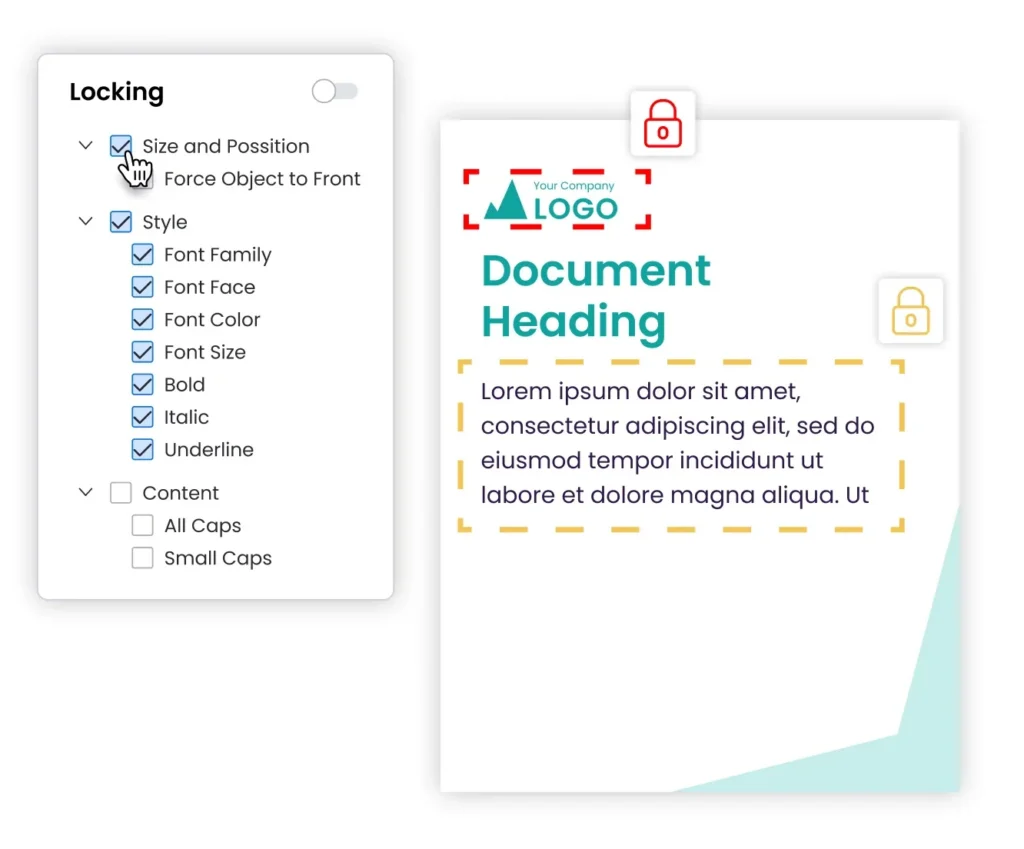
In Marq, brand-safe templates keep core brand elements and required copy consistent while giving franchisees approved fields they can edit. This lets each location tailor the campaign to its market while keeping the broader message and brand guidelines intact.
For high-volume, repeatable work, connect a CSV or Google Sheet to a template. A user can select a data row to populate the corresponding fields in a project.
For batch output, Marq’s mail merge can generate a separate file for each CSV row. Data automation and mail merge reduce the time spent filling fields by hand across location-specific versions.
“We can provide the assets, and they can change the pricing, the deal, or whatever they need.” – Field marketing manager, 800+ location QSR franchise
4. Choose the right channels
Choose channels based on where your audience spends the most time and what you want them to do.
A national campaign might use paid advertising, social media, email, or partnerships to reach a broad audience. A franchisee might use local social media, community events, or direct outreach.
Match each channel to the team responsible for it. Corporate teams might manage national advertising and the primary social account, while franchisees handle local channels that depend on knowledge of their communities. The right mix will vary by audience, offer, and market.
Set approval requirements for each channel before the campaign launches. Decide which content locations can publish themselves and which content needs corporate or regional review.
For example, a franchisee could publish a pre-approved seasonal offer with its local details without corporate review. A new claim about pricing, or customer results should go to the appropriate reviewer before publication. This keeps routine local marketing fast while putting higher-risk changes through the right checks.
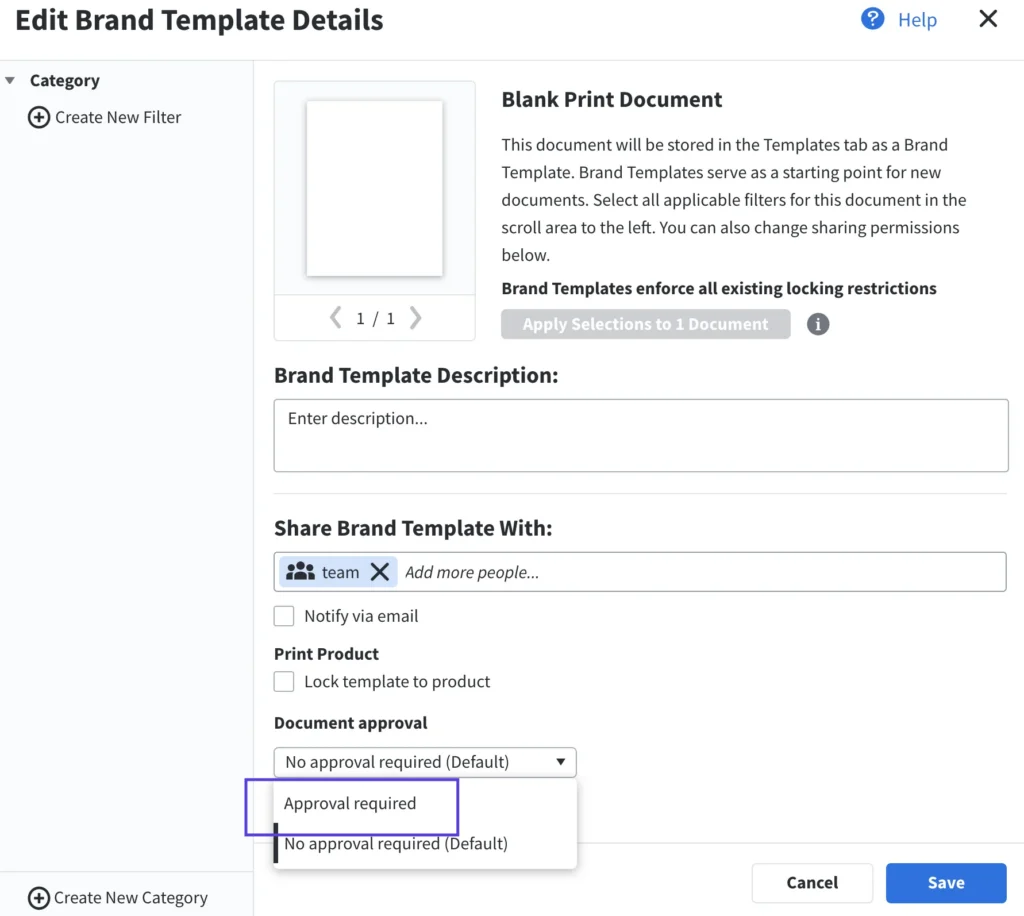
Marq’s approval workflows can route assets that require review to the appropriate approver before they are published, while templates and locked elements keep routine edits within the boundaries you have defined.
5. Set budgets for national and local marketing
Decide how much money goes to national marketing, local marketing, and the channels each team manages.
Define how the national brand fund and local budgets work together, then set clear amounts or allocation rules for each market and channel. Because franchise agreements and marketing-fund rules vary, document who pays for what instead of leaving the split open to interpretation.
Build the full cost of the program into the budget. Beyond media spend and creative production, central teams might pay for printing, fulfillment, distribution, software, or other services used across locations.
They also need to account for the administrative work involved in paying vendors, collecting location charges, or processing reimbursements. Include these costs upfront so the budget reflects what it takes to run the program.
6. Measure and optimize your franchise marketing strategy
Set a primary goal for each campaign before it launches, then define the KPI that shows whether it worked. Track leads, bookings, sales, event attendance, or engagement based on the campaign objective, and separate national results from location-level performance.
Review results by location, offer, channel, and campaign type to find meaningful patterns. If several locations outperform the network average, compare their offers, audiences, creative, and execution with lower-performing locations. If performance drops across markets, review the campaign strategy before assuming the issue sits with local execution.
Turn those findings into specific changes for the next campaign. Adjust the offer, audience, channel, creative, or local execution based on what the data shows. Give locations room to adapt campaigns to their markets, while keeping those changes aligned with the broader campaign goal and brand strategy.
The goal is a continuous measurement loop: set the objective, define the KPI, launch the campaign, compare results, identify the variable that needs attention, and apply the learning to the next campaign.
Franchise and multi-location content execution in practice
Two Marq customers show the strategy at work across very different distributed models, one a luxury real estate affiliate network and one a fitness franchise.
Case study #1: D1 Training
Overview: D1 Training is a fitness franchise with 25+ locations, headquartered in Franklin, Tennessee.
Challenge: Franchisees with no design background built their own flyers and posters, and some hired outside designers who did not know the brand. Fonts, colors, and even the logo drifted from location to location.
What they did: D1 built a central library of templates, secured the branded elements, and let franchisees localize the rest. New franchisees log in to preloaded templates, pick one, customize it, and publish without routing through corporate design.
Result: D1’s case study describes franchisees creating localized materials through locked templates, reducing back-and-forth with corporate and speeding content turnaround.
Case study #2: Engel & Völkers Gestalt Group
Overview: Engel & Völkers Gestalt Group is a luxury real estate brokerage and a U.S. affiliate of the global Engel & Völkers brand, with 750+ advisors across 50 offices in seven states.
Challenge: As the brokerage expanded, advisors and staff created materials in different ways, producing inconsistent assets across offices.
What they did: Director of Marketing Rick Rybarczyk rolled out Marq to the full marketing team. Templates with lockable elements hold the logo, colors, and layout steady while advisors localize each listing and open-house piece themselves.
Result: The team produces more on-brand content without adding staff, and advisors now request an asset one day and receive it the next, often within 24 hours.
Common mistakes to avoid when scaling franchise marketing
Most franchise marketing programs stall for the same handful of reasons. Each mistake carries a real cost, and each has a fix you can start this quarter.
| Mistake | Business impact | Fix |
| Corporate makes every local asset | Design backlog grows; locations wait days; campaigns miss local deadlines | Move high-volume requests into brand-safe templates; central creative handles net-new concepts |
| Locations get a blank Canva or PowerPoint file | Logos move, legal lines vanish, off-brand assets spread | Give locations templates with lockable elements so only approved fields change |
| One giant template library for everyone | Locations cannot find the right file; wrong templates get used | Show each group only the templates it needs |
| Treating fewer design requests as success | Locations quietly make their own materials elsewhere; brand drift hides | Track template adoption and unused templates, not just request volume |
| No approval path for out-of-bounds edits | Unreviewed legal or brand changes reach public channels | Route those edits through a fast, named sign-off before publishing |
| Measuring only national metrics | Local performance and listing accuracy go unmanaged | Track national and local KPIs separately |
Manual production slows local teams, while unrestricted editing creates inconsistent materials. A brand enablement platform such as Marq can support governed content execution with controlled templates, permissions, and approvals.
Metrics marketing leaders should track for franchise marketing success
Split your metrics into two groups and keep them in the right systems. Business results live in the tools built to measure them. Content-operations results live in your content platform. Mixing the two can create false attribution, such as crediting a template system for a sales increase it did not cause.
Business results (keep in their source systems):
| Level | Metric | Where it lives |
| National | Campaign reach and impressions | Channel and ad tools |
| National | Time-to-launch for national campaigns | Project tracking |
| Local | Local conversions and leads | Channel tools plus CRM |
| Local | Booked or in-store sales | POS or CRM |
| Local | Listing accuracy and local visibility | Google Business Profile |
| Local | Review volume and rating | Review and listing platform |
Content-operations results (track in your content platform):
| Metric | What it tells you |
| Template adoption by group | Which locations self-serve vs. still request design |
| Unused templates | What to cut or promote |
| Project activity | How often users create, update, and publish approved brand creations |
| Approval backlog and status | Where sign-offs stall |
Read these as separate signals. Template and project activity can show content adoption; evaluate local conversions in the systems that measure them. Track template and project activity in Marq analytics.
Marq supports scalable franchise marketing across every location
Marq supports the content-production portion of the strategy by helping teams create approved local versions, route exceptions for review, and track template use.
Unrestricted editing can make brand consistency harder to maintain as a network grows. A DAM can store and distribute approved assets; Marq can connect selected assets and data to controlled, template-based creation for distributed teams. That is the gap Marq fills for franchise and multi-location teams.
Key features
Marq supports brand-governed content production with these features:
- Brand-safe templates with lockable elements so only approved fields open for editing.
- A central brand portal for current logos, colors, and approved assets.
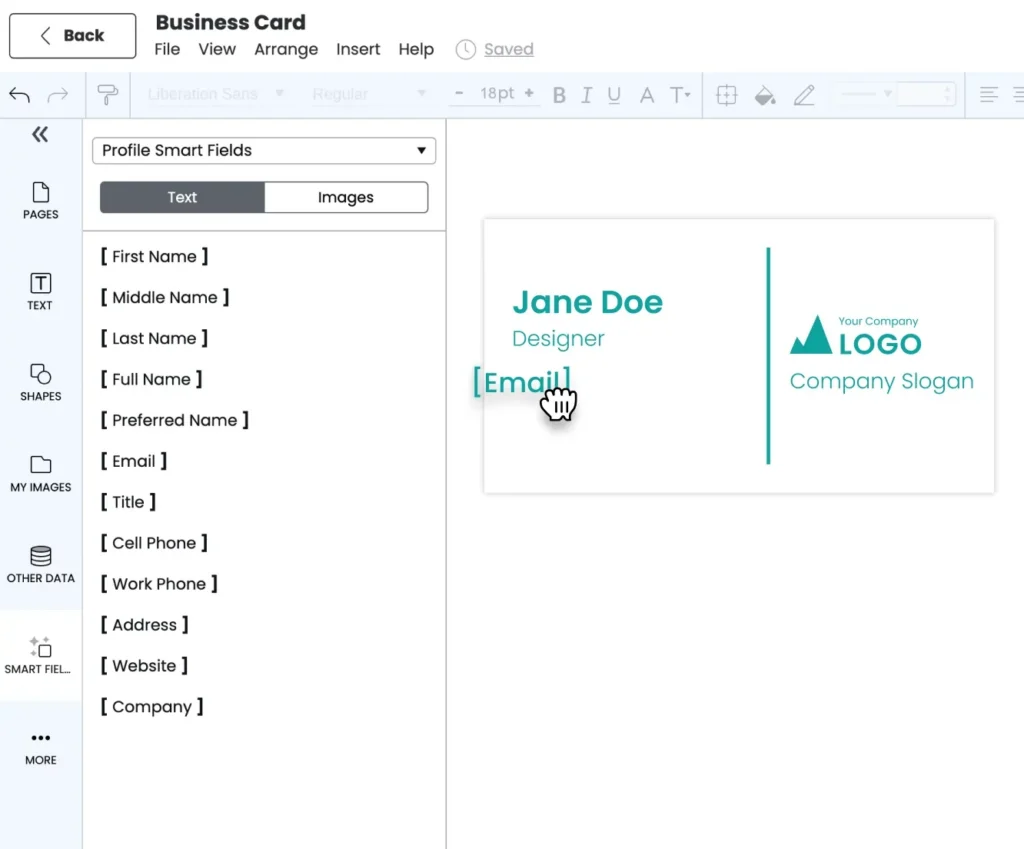
- Smart Fields and data automation: Populate approved template fields from profile information or connected data sources such as CSV and Google Sheets. Use mail merge when you need a separate output for each CSV row. Conditional dropdowns can swap the right disclaimer, contact info, or data set by location or offer.
4. Role-based access and permissions so each group sees only the templates it needs.
5. Approval workflows that can require review before a user downloads, prints, or publishes a configured project.
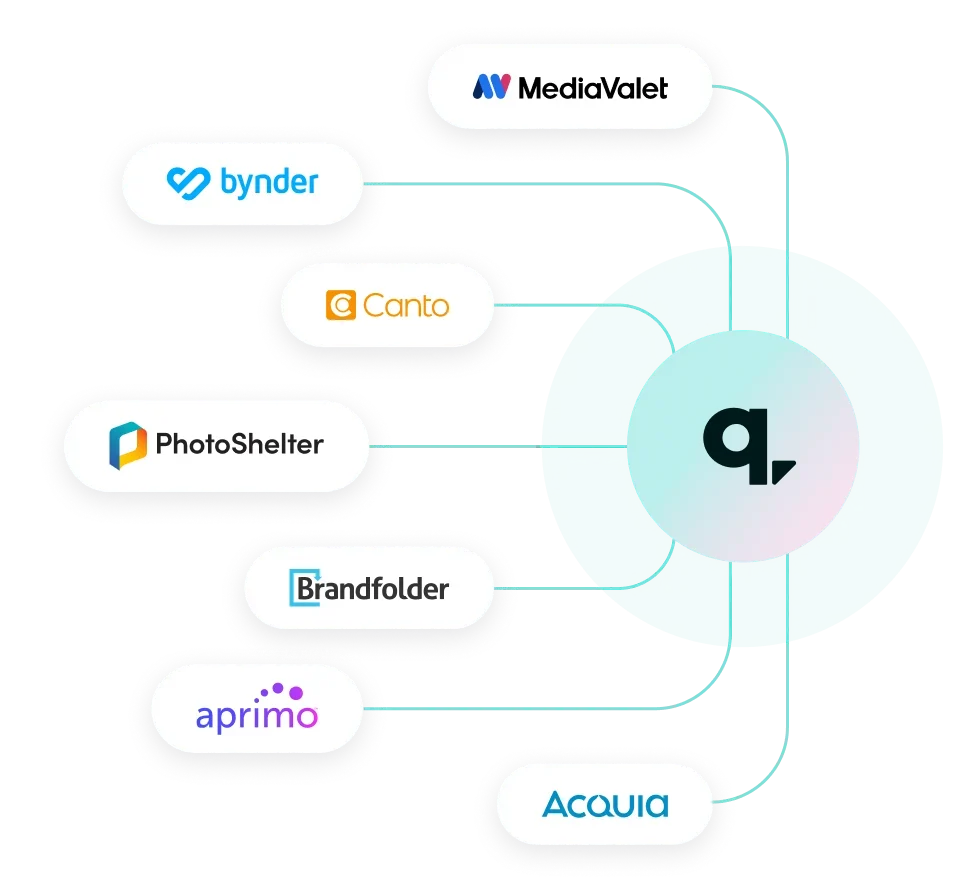
6. Integrations with DAMs (Aprimo, MediaValet), CRMs (Salesforce, HubSpot), Google Drive, and SSO, so Marq activates the assets your other systems store.
7. Template analytics that show adoption and usage across locations.
Pros
- Template-based brand governance: Templates with lockable elements, multi-brand kits, approvals, and granular template sharing controls keep selected brand elements fixed.
- Data and asset connections: Marq can connect selected DAM assets and data sources to templates, so approved assets and data are available to users natively.
- Enterprise security and access control: SSO plus role-based permissions let admins decide who can edit, localize, or publish, and show each group only the templates it needs.
- Activity reporting: admins can review template and project activity, usage, adoption, and approval status.
Give Franchisees a Faster Way to Create On-Brand Content with Marq
Cons
- Overkill for solo operators, freelancers, or very small teams.
- Organizations with advanced DAM requirements may pair Marq with an existing DAM; the right setup depends on the asset-management work the team needs.
Best for
Marq fits multi-location and multi-brand organizations with lean corporate marketing teams supporting many local creators: real estate brokerages, insurance agency networks, financial services firms, higher ed systems, healthcare networks, and franchise groups.
It suits regulated or brand-sensitive industries that need local teams to self-serve without changing protected brand elements.
Final thoughts on building a scalable franchise marketing strategy
A scalable franchise marketing strategy defines the audience, assigns ownership, gives locations controlled templates, routes high-risk edits to a named reviewer, and measures national and local results separately so locations can publish on time without changing protected brand elements.
Start with your highest-volume request types. Move those into templates first, show each group only what it needs, and track adoption from day one. Track adoption, request volume, and turnaround after launch to see whether the change reduces repetitive design work and helps locations publish on time.
Ready to see it in your own brand? Book a Marq demo today.
FAQs
What is franchise marketing?
Franchise marketing is how a franchise brand promotes itself at two levels: national campaigns run by corporate, and local marketing run by each independently operated location.
Who owns franchise marketing, the franchisor or franchisee?
Both may play a role, but the split depends on the franchise agreement and brand-fund rules. In many systems, the franchisor sets brand standards, templates, and approvals, and coordinates national campaigns, while franchisees handle local promotions, events, listings, and reviews.
How do franchises stay on brand at scale?
Franchises can give locations brand-safe templates where the logo, colors, and important copy stay fixed and only approved fields stay open for editing. A central brand portal gives locations access to approved templates, and an approval path routes high-risk changes to a reviewer.
What is the difference between national and local franchise marketing?
National franchise marketing builds the brand and coordinates campaigns across markets from the corporate team. Local franchise marketing adapts shared campaigns to a location’s offers and events. Listings and reviews are separate local-presence workflows managed in their own systems.
What is the difference between franchise brand management and franchise marketing strategy?
Franchise brand management sets what locations may change. Franchise marketing strategy defines the audiences, offers, channels, budgets, and measures used to generate demand.