Franchise brand management: How to scale consistency and ensure compliance across locations

Franchise brand management gets harder when a central brand team stays accountable for one brand while franchisees and local marketers need content at local speed. It is the system of rules, roles, templates, and approval paths that tells locations what they can change, what they must preserve, and where exceptions go.
The practical fix is to make the approved path faster than either submitting every routine request to headquarters or improvising off-brand content.
This guide shows you how to set decision rights, give locations a controlled way to personalize approved content, route exceptions, track adoption and freshness, and choose the right mix of content-creation, DAM, and social software, using D1 Training as a real example.
Why franchise brand management gets harder as you scale
One brand can run across dozens or hundreds of franchisee-run locations, each with local marketing needs. Corporate needs to keep the brand consistent while local teams need to produce content for their markets, often on short deadlines.
The corporate team remains responsible for how the brand looks and sounds, but it cannot handle every local request itself. When a location needs a grand-opening flyer by Friday, someone has to get it out the door.
Under pressure, teams often fall back on whatever is fastest. A regional manager updates last year’s flyer and sends it to print with an outdated logo. A franchisee hires a freelancer who recreates the brand from an old asset. A local promotion goes live before anyone checks whether the required legal copy is included.
The problem comes from the gap between central brand control and local execution. Franchisees need enough freedom to move quickly, while corporate needs clear boundaries around what can and cannot change.
Pro tip
“We’re creating assets over and over again that get translated, or they’re doing it themselves and not following brand standards.” – VP of Global Creative and Brand Engagement at a large international QSR franchise
The mistake most teams make here is treating all of these as one problem. They are four different problems, and they do not share an owner. Sorting them is the first real step:
- Content governance: Off-brand or outdated collateral: the wrong logo, an old address, a stale offer, an unapproved layout. This is the part a brand management platform can actually fix.
- Franchise operations: Inconsistent service and store experience. That belongs to operations, not marketing software.
- Reputation management: Reviews, local listings, and franchise reputation management belong to reputation and local-presence owners.
- Legal and compliance: Contractual, regulated, promotional, and trademark claims belong to legal, guided by the franchise agreement.
When you hand all four to one team or one platform, you overpromise and you leave locations without a clear person to ask. Name the owner for each, and the rest of this guide becomes usable.
Reputation deserves its own note, because franchisors who scale well build it early. Chris Conner, President of Franchise Marketing Systems, makes the case that brand and reputation management belong in franchisee training from day one.
Pro tip
“Right from the initial training with the franchisee, the franchisor should be educating and informing franchisees how brand management and reputation management are important and part of their operational responsibilities in running the franchised business.” – Chris Conner, President of Franchise Marketing Systems
Franchise brand management vs. franchise marketing
Franchise brand management and franchise marketing overlap, but they answer different questions.
Franchise marketing covers how you generate demand: campaigns, local advertising, promotions, and lead generation for corporate and for each location. Franchise brand management covers how anything that carries the brand gets made, approved, and kept consistent, no matter who creates it.
Marketing sets the message and the offer. Brand management sets the templates, the editable fields, the approval path, and the standards every location works from. You need both, and you want the brand management system in place before local marketing scales, so speed never costs you consistency.
Frameworks for managing your franchise brand effectively
Strong franchise brand management rests on four pillars. Each one answers a question your locations ask every week: where do the rules live, how do we stay consistent everywhere, who approves exceptions, and is any of this working.
Gary Findley, CEO of Restoration1 and a longtime franchise expert, frames the central challenge as balancing brand uniformity with franchisee independence.
Pro tip
“Balancing brand uniformity while respecting franchisee independence and regulating brand messages while effectively targeting local communities are two of the struggles that often arise.” – Gary Findley, CEO of Restoration1
| Pillar | What it answers | What to put in place |
| Build a clear brand foundation | Where do brand rules live? | Documented guidelines; mandatory vs. adaptable elements |
| Stay consistent across channels | How do we stay on-brand online and in print? | Channel plan, social policy, pre-approved templates |
| Assign owners and route exceptions | Who approves what? | Named owners, approval paths, escalation to legal |
| Audit the system | Is it working? | Adoption, workflow health, and hygiene metrics |
1. Build a clear brand foundation
Every location needs one place to answer “what does our brand look like, and what am I allowed to change.” That place is your brand foundation: the guidelines and standards every franchisee works from.
Start by documenting the essentials in a brand book: logo usage, color, typography, photography style, messaging, and tone of voice.
Then do the part most guidelines skip: mark what is mandatory and what is adaptable. A franchisee should see at a glance that the logo, brand colors, and legal disclaimer never change, while the local address, phone number, staff photo, and event details are theirs to set. Leave that line undefined, and locations guess. They usually guess in favor of speed.
Keep one boundary clear. Brand guidelines do not carry legal authority. Contractual requirements, required disclaimers, and trademark rules come from the franchise agreement, your documented location standards, and legal counsel. Your brand book should point to those sources rather than stand in for them.
Pro tip
Pro tip: Write the foundation for the person working under a deadline, not the auditor. A franchisee scanning for “can I move the logo” should find the answer in seconds.
2. Maintain consistency across digital channels and marketing materials
Digital channels can create inconsistency when locations publish without using current approved content. A franchisee may post to Instagram, Facebook, TikTok, X, and Google Business Profile in the same afternoon, often from a personal device.
Give them a plan and the assets to follow it. Set a simple social media policy that spells out approved handles, hashtags, logo placement, and what locations may and may not say about promotions. Update it for the platforms your locations actually use now, and retire references to networks nobody posts to anymore.
A policy alone does not give locations a fast way to create approved content. The mechanism that makes consistency the easy choice is pre-approved brand templates. When a location opens a social post, flyer, or email that already carries the right logo, colors, and layout, staying on brand costs them nothing extra.
Marq lets central teams turn those approved designs into templates that locations can use and personalize without rebuilding the layout from scratch.
Pro tip
“A lot of these franchisees want something and they want it today, which unfortunately isn’t always possible.” – Marketing manager, nearly 500-unit franchise

Give Franchisees a Faster Way to Create On-Brand Content
Let local teams customize approved templates while corporate keeps control of the brand.
A template keeps national brand elements fixed while a location adds its address, a neighborhood photo, or a regional offer. It lets franchisees make content relevant locally without changing protected brand elements.
3. Assign owners and route exceptions
Templates handle the routine. Exceptions are where brands drift, so every exception needs a named owner and a clear path. Without one, a franchisee’s “quick question” can stall or turn into an off-brand asset nobody approved.
Assign ownership across the five roles involved:
- Corporate brand teams publish the standards, assets, and approved templates.
- Franchisees and local marketers edit the approved fields inside those templates.
- A named approver reviews defined brand exceptions, such as a new asset type or an unusual layout request.
- Franchise operations own rollout, training, and the recurring communication that keeps the network current.
- Legal and compliance teams handle contractual, regulated, promotional, and trademark questions.
For the content that flows through your templates, you can enforce the approval step in the software itself.
In Marq, admins can require users to request approval before downloading, printing, or publishing configured projects. Pair that with a clear marketing approval workflow so franchisees know exactly who reviews what and how long it takes.
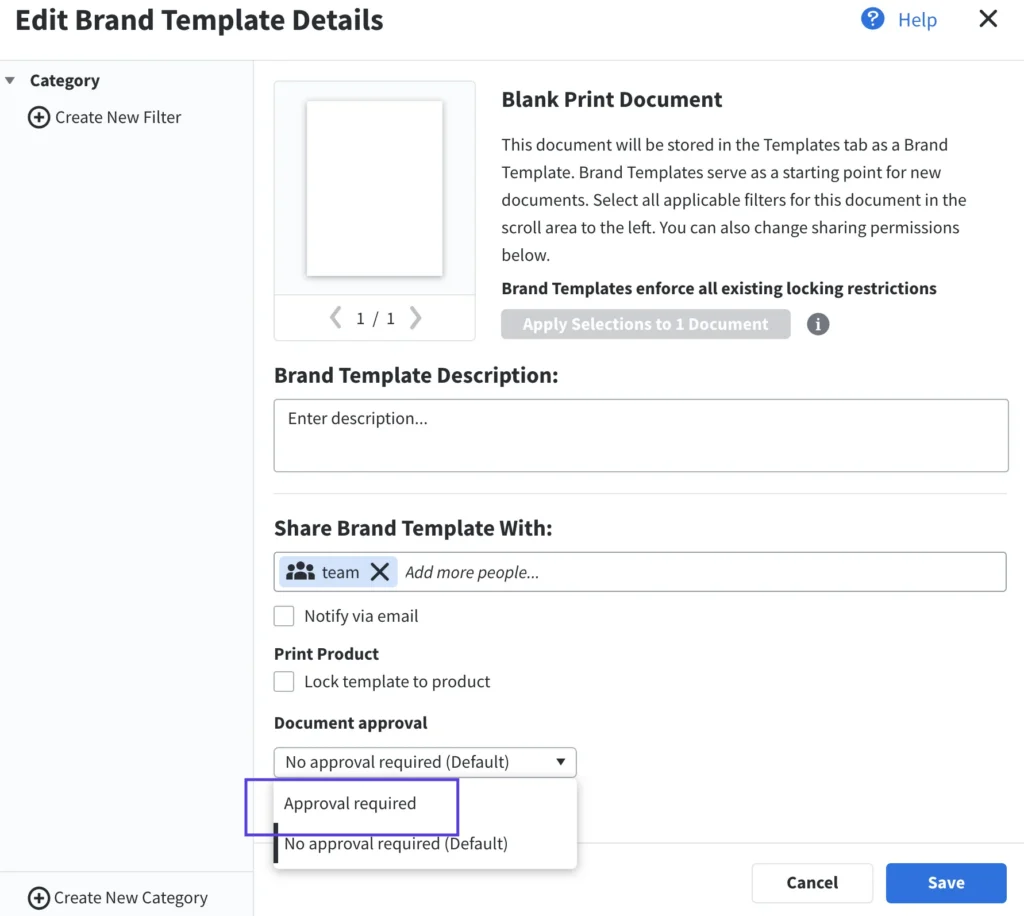
One caution, because it protects you: the approval step in Marq is a brand check on content made in Marq. It does not replace legal review, and it does not police content created in other apps or guarantee network-wide compliance.
One caution, because it protects you: the approval step in Marq is a brand check on content made in Marq. It does not replace legal review, and it does not police content created in other apps or guarantee network-wide compliance.
Keep legal sign-off and operational rollout as separate steps with named owners. Brand consistency depends on those roles and handoffs, not on a single software setting.
4. Audit the system, not just the outputs
Finished-asset reviews catch errors after they ship. Add a system-level audit to identify where approved content, exception routing, or template upkeep needs attention.
Track three things:
- Adoption: Which locations use the approved templates, and which quietly went back to building their own.
- Workflow health: How long approvals take, and which exceptions keep coming back. A repeat exception may point to a missing template, unclear guidance, or an approval rule that needs revision.
- Hygiene: Which templates are stale, unused, or duplicated, so you can retire or fix them.
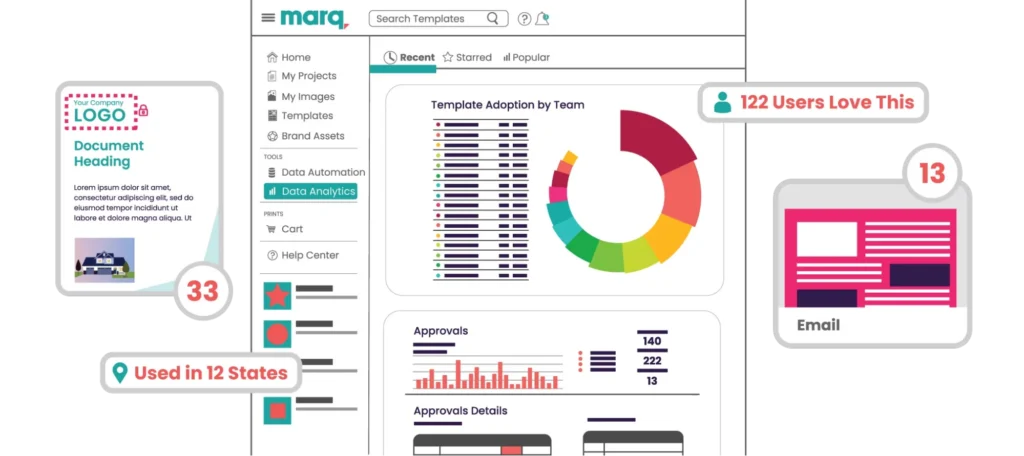
If you run Marq at the Enterprise tier, Advanced Analytics is an add-on that reports on this kind of activity: template and project usage, user and group activity, and approval steps.
Read it for exactly that. It tells you who uses what inside the platform. It stops short of measuring reputation, conversion, revenue, or whether the whole network is on brand, so avoid stretching the numbers to claim results they cannot support.
Numbers only help when you close the loop. Pilot the system with a handful of representative locations first. Train franchisees around the tasks they do most, like updating a flyer or a social post, rather than around a feature tour.
Watch where they get stuck, then remove that friction before a wider rollout. Use that feedback to update templates, training, or the exception path.
Common franchise branding mistakes and how to fix them
Four patterns can undermine approved local content. Here is the risk each creates and a practical response.
Pro tip
“I’m pretty certain they’re all off doing their own thing, which raises concerns about whether the brand standards are being met.” – Marketing manager at a nearly 500-unit franchise
| Common mistake | Business impact | The fix |
| Publishing brand guidelines nobody reads | Locations guess and default to speed, so off-brand assets ship | Put the rules inside brand-safe templates, so following them is the fast path |
| Routing every edit through the design team | Design becomes a bottleneck and simple requests wait days | Give locations editable fields for address, dates, and local images; keep net-new work with design |
| Handing locations a blank canvas (or just Canva) | The brand drifts as everyone rebuilds it their own way | Provide brand governed templates that expose only approved fields |
| Buying a platform and skipping rollout | Franchisees ignore the software and revert to old files | Pilot, train by role, and fix friction before a network-wide launch |
Case study: How franchise brand D1 Training governed local content across 25+ locations
Overview. D1 Training is an athletic-training franchise based in Franklin, Tennessee, with more than 25 locations. Like most growing networks, its locations created marketing through different routes: some built assets themselves, others hired outside designers.
Challenge. Every new asset created another chance for the brand to slip. A logo sized wrong here, off-brand colors there, an old layout somewhere else. Corporate stayed accountable for a consistent brand without a fast, approved way for locations to make their own materials.
Pro tip
“We were letting franchisees use whatever tool they wanted, and we had no control over what they were pushing out.” – Madelyn Reynolds, Communications Officer, D1 Training
What they did. D1 moved its core marketing into brand-safe templates in Marq. The team set the logo, layout, fonts, and required brand elements so locations could not change them, then left open only the fields a location should touch, like the local address, class schedule, and regional promotions.
Corporate set up a preloaded template library and role-based brand portals, so a franchisee logs in, picks a template, localizes it, and gets an on-brand asset without routing the request through the corporate design team.
Result. Locations now produce their own marketing faster while the brand holds together across the network. The design team stopped fielding repetitive one-off edits and got time back for higher-value work, which is exactly the shift a lean creative team needs as it scales.
How to choose a franchise brand-management stack
No single platform covers every job in the ownership model, so choose for the job you care about most here: creating approved content that locations can personalize. Below are three platforms in that category, with where each fits and where each falls short.
| Platform | Best for | Key strength |
| Marq | Distributed teams that need approved templates plus local personalization at scale | Governed templates with editable fields and data automation, plus approval before publishing |
| Canva Enterprise | Fast, flexible design with the easiest on-ramp for non-designers | Very easy to use, large template variety |
| Frontify | A central home for brand guidelines and assets | Polished guidelines hub plus no-code templates |
1. Marq: Brand enablement for distributed franchise networks
Best for: Franchise and multi-location brands that want locations to self-serve on-brand content without a designer, while corporate keeps control.
Marq is a brand enablement and design automation platform built for the exact tension in this article: one brand, many locations creating content. It focuses on the content-governance job, so keep your expectations there.
Marq activates approved content creation and local personalization, and it connects to your DAM so stored assets reach the field. For storage itself, you still rely on your DAM, and for reviews and listings you still rely on reputation software.
Here is what Marq does for a franchise network:
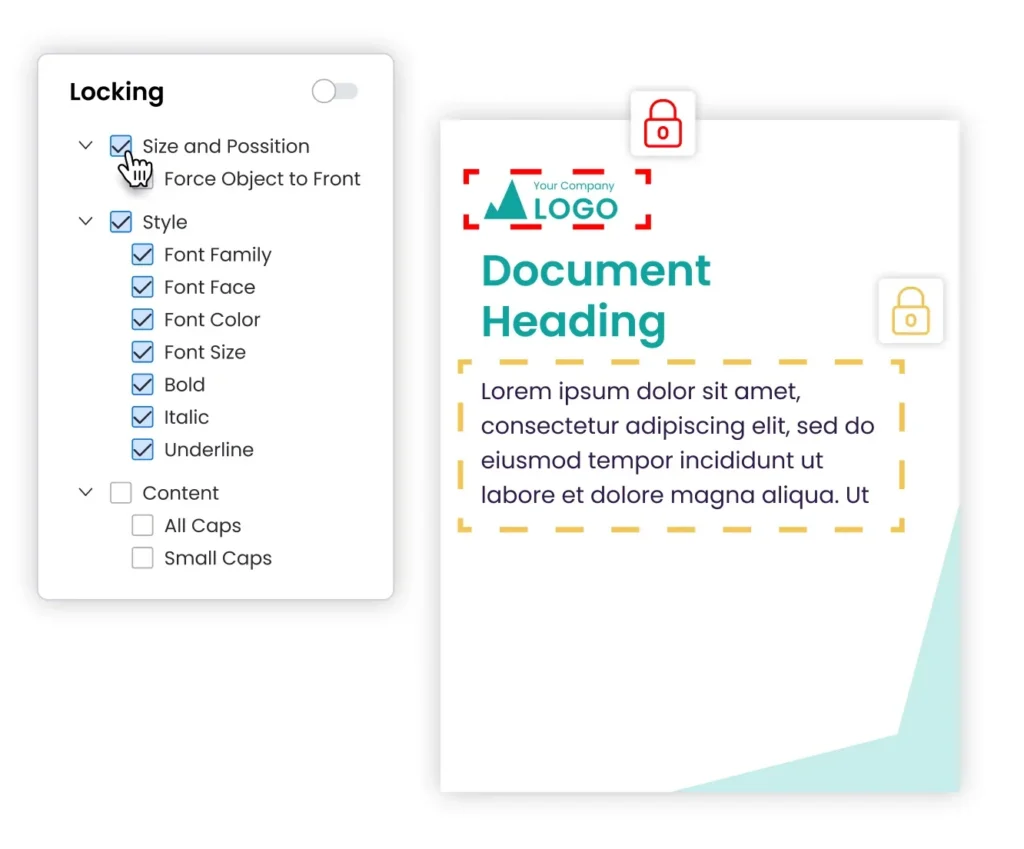
1. Brand-safe templates: Designers build in Adobe InDesign or in Marq, then set the logo, layout, and required language as fixed so locations cannot change them.
2. Approved editable fields: Locations see only the fields they should touch, like address, phone, dates, and local images.
3. Configurable approval: Admins can require users to request approval before downloading, printing, or publishing selected projects.
4. Smart Fields: Repeated profile or connected data can populate a project across brands, reducing manual re-entry of details such as addresses and phone numbers.
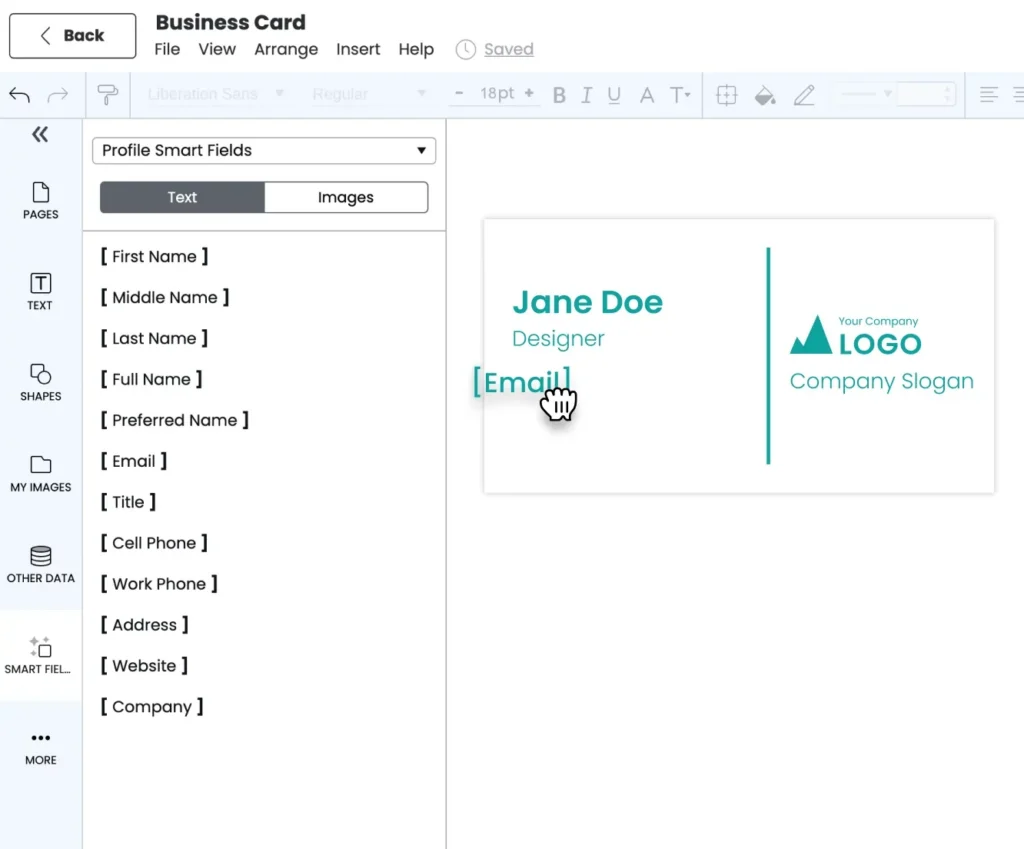
A marketing executive at a 21-location property-services franchise described why automated fields matter to teams concerned about location-data errors:
Pro tip
“It’s (Smart Fields) going to completely remove the user error. Everything will pull through from their account.” – Marketing executive, 21-location property-services franchise
Two limits apply. First, Marq governs content made in Marq. It does not validate the source data you feed it, and it does not stop a franchisee from making something off-brand in another app, so template adoption still matters.
Second, deeper analytics and some enterprise controls sit in higher tiers, so scope your plan to what your network needs.
2. Canva Enterprise
Best for: Teams that want fast, flexible design and the easiest possible on-ramp for non-designers.
Canva earns its popularity. Franchisees already know it, it is quick to learn, and it offers a huge range of templates. For a single location that needs a quick social post, it does the job well.
Where it strains for franchise networks is control at scale. Template locking and admin controls live in the Enterprise plan and stay lighter than a governed franchise system needs.
Because Canva makes editing so easy, it also makes going off-brand easy, and brand teams we hear from worry about “rogue” designs from locations that rebuild assets their own way. It also does not slot cleanly into an Adobe InDesign workflow, so designers who build in InDesign lose that pipeline.
3. Frontify
Best for: Marketing teams that want a strong central home for brand guidelines and assets, with light templating on top.
Frontify handles brand management well. It gives you a polished, central place for guidelines, logos, colors, and approved assets, so everyone references the same source of truth. It also offers a no-code template builder and imports from Adobe, which helps marketing teams produce on-brand pieces.
For franchise networks, the gap shows up in personalization at scale and distribution. Frontify’s templating leans on rules-based editing rather than data that populates from each location’s own records, so mass-producing the same piece for hundreds of locations, each with its own details, takes more effort.
Real-time digital sharing and print workflows are more limited than a production-first system, and many advanced controls sit in the Enterprise tier.
Give franchisees approved content they can adapt locally
Franchise brand management works when national scale and local speed stop fighting each other. You get there by holding the brand in one central system: documented standards, brand-safe templates with approved editable fields, clear owners for exceptions, and a habit of auditing adoption and fixing friction. Give locations a path that is approved and fast, then pilot it with representative locations, train by role, and address repeated friction before scaling.
Pro tip
To evaluate whether this fits your network, test it with your own templates and representative locations. Book a demo to see how Marq can help your locations create and customize on-brand content without relying on the corporate design team.
FAQs
What is franchise brand management?
Franchise brand management is the system of rules, roles, templates, and approvals that keeps every location on brand while letting franchisees personalize approved content. It decides what locations can change and what they must keep.
Why is franchise brand management important?
Consistent branding across locations builds customer trust and protects the brand as the network grows. When locations improvise off-brand assets to hit deadlines, the brand drifts and corporate loses control of how it looks and sounds.
What are common franchise branding challenges?
Common challenges include off-brand or outdated collateral, slow approvals when every edit routes through corporate design, inconsistent local marketing, and low adoption of software that locations find hard to use.
How do franchisees access approved marketing materials?
Franchisees work from pre-approved, brand-safe templates in a central platform. They edit only the approved fields, like address, dates, and local images, then download, print, or publish, with an approval step where the brand team requires one.
What tools support franchise brand management?
Brand enablement platforms like Marq support franchise brand management by combining governed templates, editable fields, data automation, and approval workflows. DAMs store the assets and reputation platforms manage reviews, so most networks run a small stack together.