7 Best Brandfolder alternatives & competitors (tested)

Marketing leaders start looking for Brandfolder alternatives when the platform no longer meets their needs: renewal costs increase, teams need to leave the platform to make basic edits, or regional marketers have to wait on designers to localize a single flyer.
The honest answer is that no single platform replaces Brandfolder for everyone. The right choice depends on your team size, your workflow complexity, and whether you are brand-first, workflow-first, or developer-first. Below, we compare seven strong platforms, show where each shines and breaks, and name exactly who each one serves.
7 Best Brandfolder alternatives compared: At a glance
| Brandfolder Alternative | Best For | Key Strengths | G2 Rating |
| Bynder | Enterprise brand teams replacing Brandfolder | AI search, governance, 155+ integrations | 4.5 |
| Aprimo | Regulated teams with content-ops and compliance needs | Policy-driven governance, workflow automation, deep integrations | 4.3 |
| MediaValet | Security-first teams on Azure | Enterprise security, unlimited users, video management | 4.4 |
| PhotoShelter | Image-first and creator-heavy teams | Real-time distribution, speed, visual asset handling | 4.3 |
| Orange Logic | High-end enterprise and IP-heavy archives | DAM, MAM, DRM, and project management in one platform | 4.4 |
| Acquia | Deep metadata and taxonomy | 200+ connectors, open API, product catalogs | 4.4 |
| Canto | Mid-market teams wanting simplicity | Easy setup, visual search, built-in HIPAA compliance | 4.4 |
A DAM gives your team a central place to store, organize, and distribute brand assets. Many enterprise DAMs also offer templating features, though they are often secondary to the platform’s core purpose and can be difficult for non-designers to use.
Marq complements your DAM by turning approved assets into on-brand templates that teams across your organization can customize while staying within brand guidelines.
Book a demo to see how Marq activates the assets your DAM already stores.
1. Bynder
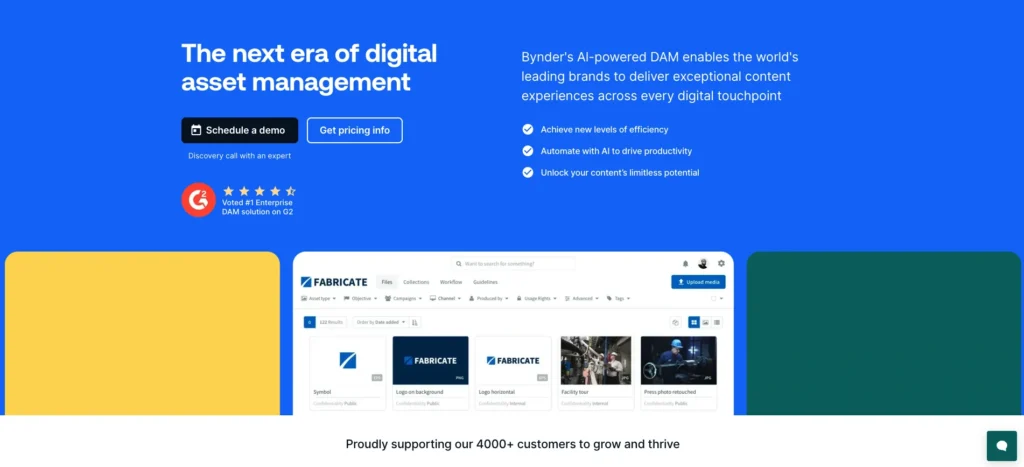
Bynder is the closest head-to-head enterprise alternative to Brandfolder. It positions its DAM as the system of record for all your content, and 4,000+ brands including Spotify, PUMA, and Mazda run on it. For teams that outgrow Brandfolder but want the same “brand hub” model, Bynder is usually the first name on the list.
Key features
- AI search and discovery
Bynder surfaces assets through natural language prompts and image-based search, not just metadata. A designer can drop in a reference picture and pull up visually similar approved assets in seconds.
- Governance and control
Bynder combines configurable taxonomy that maps to your business language with role-based access and support for multiple brands and markets on one platform. A global team can give each region its own view while central brand managers still control who edits and publishes what.
- Open integrations
Bynder connects upstream and downstream so assets flow from a single source of truth to the channels that need them. Sportswear brand On saves an estimated 55 hours a week after connecting its stack, freeing the team to ship campaigns faster.
Where Bynder shines
- Enterprise governance: Role-based controls and multi-brand support hold up when hundreds of users touch the library.
- Integration depth: 155+ integrations mean assets reach your CMS, e-commerce, and creative tools without manual downloads.
- Analyst recognition: Forrester named Bynder a Leader in its Q1 2026 DAM Systems Wave, which gives risk-averse buyers external proof.
Where Bynder falls short
- Implementation lift: A full rollout takes time and planning, so lean teams feel the setup more than they expect.
- Cost at scale: Per-package pricing grows as you add users and modules, which pushes total cost up over a multi-year contract.
Customer reviews
Nicole R. shares, “The AI facial recognition and smart search queries are huge time-savers and make it much easier to find the right assets quickly. The ability to remove duplicates is also a huge time and space saver.”
A G2 reviewer says, “The implementation and integration process has not been straightforward. We were not informed about the considerable amount of time needed to migrate assets, which has added to our challenges.”
Who Bynder is best for
- Enterprise brand teams: Large marketing groups replacing Brandfolder that need governance and integrations at scale.
- Multi-brand organizations: Companies running several brands or markets on one platform.
- Consumer and retail brands: Teams with heavy visual libraries and many downstream channels.
2. Aprimo
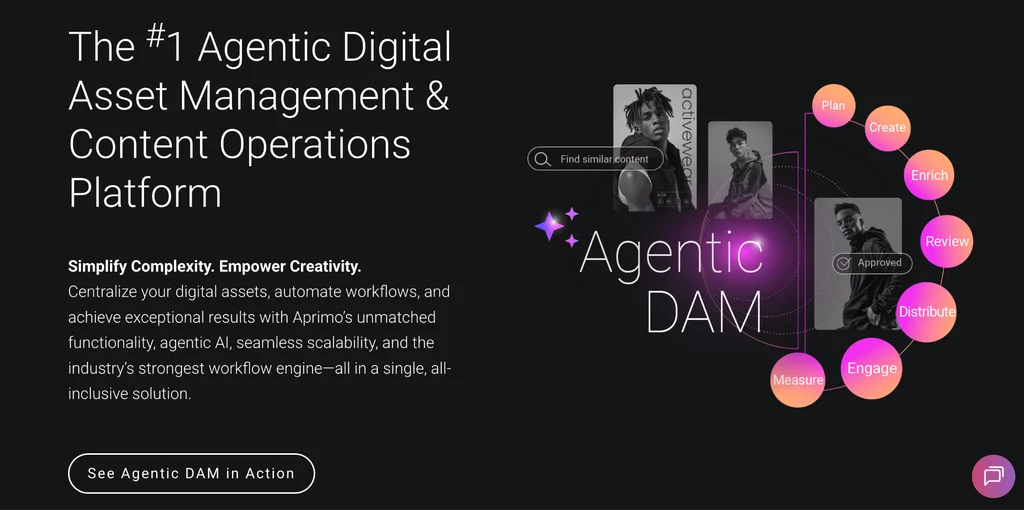
Aprimo is the step up when Brandfolder starts to feel limiting on governance and content lifecycle. Our partners at Aprimo frame it plainly: the platform is built for organizations where governance and compliance are non-negotiable and the user base extends well beyond the creative team.
Aprimo manages more than 4 petabytes of content across its customers, so large teams do not worry about outgrowing it. Aprimo earned Forrester’s highest Current Offering score in the 2026 DAM Wave at 4.38 out of 5, which gives enterprise buyers external proof before they commit.
Here is what our brand partners at Aprimo say:
“Compared to Brandfolder, Aprimo lets hundreds of non-creative users personalize content without creating brand or compliance risk, because its governance and workflow automation are purpose-built for that scale, not retrofitted onto a simpler asset library.”
Key features
- Policy-driven governance
Aprimo shifts brand control from permissions (who can touch what) to policy (rules and approvals built into the system). This matters because early DAM setups collapse as teams grow. As our partners at Aprimo put it, brand control that runs on a few people who know the rules stops working once you pass a few hundred users, when approval bottlenecks form and duplicate assets pile up. Policy-driven governance keeps the DAM functioning as headcount and content volume climb together.
- Workflow automation
Aprimo tiers its review workflows so automated brand and compliance checks clear high-volume, low-risk content first. Only genuine exceptions reach a human reviewer, which protects reviewer time and lets approvals scale without hiring a bigger review team.
- Content discoverability
Aprimo automates metadata and semantic search, which it credits with 72% faster content discoverability. That speed matters because a marketer who finds the right asset in seconds does not recreate one that already exists, and Aprimo reports 48% greater content reuse as a result.
Where Aprimo shines
- Compliance depth: Approval routing and audit trails fit regulated groups in financial services and life sciences.
- Content lifecycle: Aprimo manages content from plan to distribution, not just storage, which suits large content-ops teams.
- Integration ecosystem: Approved DAM assets flow directly into governed Marq templates, so non-creative teams personalize on-brand materials themselves while template locks and approval routing remain enforced.
Where Aprimo falls short
- Implementation overhead: The platform’s depth means a heavier rollout, so small teams often find it more than they need.
- Creative teams alone: Aprimo shines when the user base spans marketing, legal, and compliance, but less so for a lone creative team.
Customer reviews
Sushanta D. shares, “The digital asset management and workflow automation make it easier to control versions, approvals, and brand compliance at scale. It’s especially valuable for teams managing large volumes of content across multiple stakeholders, where visibility and governance really matter.”
Erin N. says, “The platform is powerful, but it comes with a learning curve especially for new users or smaller teams without dedicated admins. Configuration and onboarding take time but it is worth the investment.”
Who Aprimo is best for
- Regulated enterprises: Financial services, insurance, and life sciences teams where compliance is non-negotiable.
- Content-ops teams: Groups that treat DAM as a lifecycle problem, from planning through distribution.
- Large user bases: Organizations where hundreds of non-creative users need safe, governed access.
3. MediaValet
MediaValet is the security-first choice for teams that need enterprise compliance and predictable scaling. Built on Microsoft Azure, it targets regulated groups in healthcare, finance, and government.
It also pairs naturally with a templating platform. Our brand partners at MediaValet describe the DAM as the “system of record” that only delivers value once it connects to the tools where content gets made, distributed, and measured.
Key features
- Enterprise security and compliance
MediaValet runs on Azure with SOC 2 Type II, HIPAA, ISO 27001, GDPR, and FERPA coverage. Its SecurityScorecard sits at 95 against Brandfolder’s 75, a gap that decides deals for teams where data integrity is a hard requirement rather than a nice-to-have.
- Predictable scaling
MediaValet includes unlimited users in its model. A growing team adds people without watching license costs balloon, which keeps budgeting steady as adoption spreads across regions.
- Video management
MediaValet handles video with auto-tagging, transcription, and trimming in one place. A creative team repurposes footage instead of re-shooting it, and MediaValet’s research points to teams reclaiming 40+ hours a month through integrated video workflows.
Where MediaValet shines
- Regulated industries: Azure-native security and broad compliance make it a strong fit for healthcare and finance.
- Faster payback: MediaValet reports ROI in about 11 months against Brandfolder’s 18, so teams justify the spend nearly 40% sooner.
- Integration framework: Its Unify framework keeps connections in sync, which spares IT the constant maintenance that brittle integrations demand.
Where MediaValet falls short
- Creation still lives elsewhere: MediaValet stores and secures assets, but non-designers still need a separate way to build on-brand collateral.
- Feature-rich learning curve: Teams that want the full video and AI toolset invest time to adopt it well.
Customer reviews
A G2 reviewer says, “We love most the user-friendly functionality and experience of the DAM interface, the security of our sensitive assets, and also the world-class support provided.”
Albert H. shares, “I encountered a learning curve with MediaValet that required some training, which could be smoother for new users. Additionally, there are limitations around file names and metadata customization, which can be restrictive in tailoring the platform to our specific needs.”
Who MediaValet is best for
- Security-driven teams: Healthcare, finance, and government groups with strict vendor requirements.
- Growing organizations: Teams that want unlimited users and predictable costs as they scale.
- Video-heavy brands: Marketing groups that repurpose large volumes of footage.
4. PhotoShelter
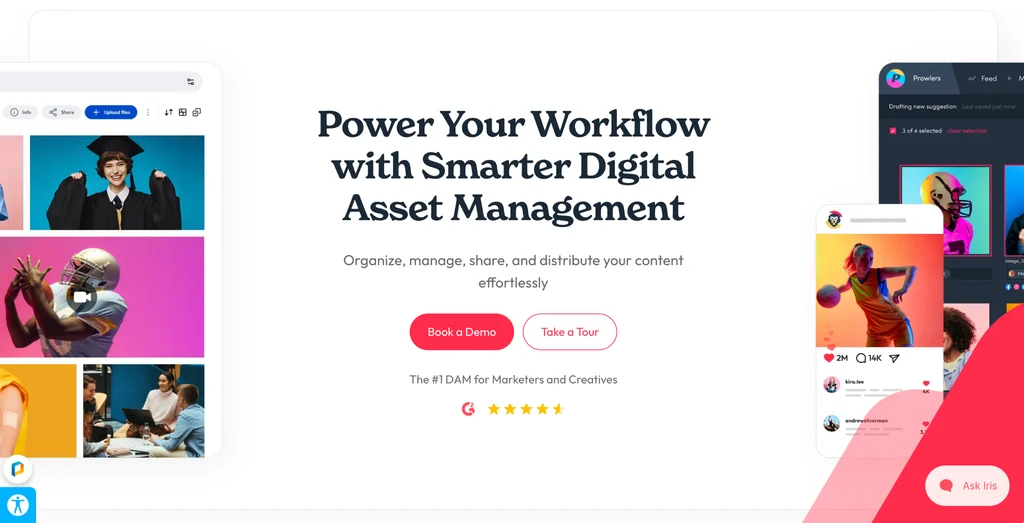
PhotoShelter is built for image-first and creator-heavy teams that move content fast. It grew up serving sports, media, and news, where a photo has to travel from the field to social in seconds. Major League Baseball, the New York Jets, and Hartford HealthCare run on it.
Gartner classifies PhotoShelter as a Niche Player rather than a broad-market Leader, which fits its focus: it does image-first distribution exceptionally well, and it does not try to be an all-purpose enterprise DAM.
Key features
- Real-time distribution
PhotoShelter moves content from camera to channel in seconds, which suits sports and news teams that publish while audience interest peaks. A photographer uploads from the sideline and the social team posts before the moment passes.
- Self-service sharing
QuickSend and branded portals let stakeholders find and download what they need without logins or file requests. A marketing manager stops fielding one-off asset requests because partners and departments serve themselves.
- Time savings through automation
PhotoShelter auto-tags people, objects, and brands at upload and generates alt text automatically. It reports teams saving 16+ hours a month, time a lean creative team can spend on higher-value work instead of tagging.
Where PhotoShelter shines
- Speed to publish: Real-time upload and distribution fit sports, media, and event-driven teams.
- Visual asset handling: The platform is built around photography and video, so image-first teams feel at home.
- Broad integrations: Connections to Adobe Creative Cloud, Slack, Hootsuite, and Marq keep assets moving without manual downloads.
Where PhotoShelter falls short
- Governance depth: PhotoShelter optimizes for speed and distribution, not the deep brand governance regulated teams need.
- Templated creation: It shares finished assets well, but it does not turn them into governed templates for non-designers.
Customer reviews
Ashley C. shares, “I really like the AI/intelligence PhotoShelter offers. It helps our College quickly find images that might not have specific metadata attached to them. I like the ease of upload as well, that I can just drag and drop images into a folder and don’t have to search from a drop down menu where they might live.”
Juliette D. says, “I sometimes find the accessibility features limited and believe there could be more options to cater to different needs. Additionally, I think better integration with other platforms would enhance usability.”
Who PhotoShelter is best for
- Sports and media teams: Groups that publish visual content in real time.
- Image-first brands: Organizations whose primary asset is photography.
- Distributed creative teams: Groups sharing assets with external partners and stakeholders.
5. Orange Logic
Orange Logic serves high-end enterprises and IP-heavy archives such as museums, media companies, and large corporate collections. Orange Logic built OrangeDAM to unite digital asset management, media asset management, digital rights management, and project management in one platform, which appeals to organizations that would otherwise stitch several systems together.
Key features
- One platform for many functions
OrangeDAM combines DAM, MAM, DRM, and project management so teams stop context switching between tools. A rights manager, an archivist, and a marketer work in the same system on the same source of truth.
- Rights and preservation
Built-in digital rights management tracks talent rights and usage rules, and enforces where and when assets can run. This protects IP-heavy organizations from distributing an asset past its licensed window.
- Deep configurability
With 9,000+ API endpoints and 100+ integrations, OrangeDAM adapts to complex stacks, which helps explain its 98% customer retention. Each department configures its own workspaces and workflows without a separate system.
Where Orange Logic shines
- Rights management: Strong DRM fits museums, media archives, and IP-heavy organizations.
- Enterprise scale: The platform handles large asset volumes and complex, multi-department workflows.
- Configurability: An API-first design lets large teams tailor the system to their exact needs.
Where Orange Logic falls short
- Complexity for smaller teams: The platform’s depth is more than most mid-market marketing groups need.
- Setup investment: A configurable, enterprise-grade system takes planning and resources to deploy well.
Customer reviews
John G. shares, “I have worked with multiple organizations that use Orange DAM and have seen first hand the flexibility and configurability of this application. Whether you are using it as your source of truth for brand content, as a drive wheel in your marketing stack, or to manage content from teams throughout a broad and deep enterprise, you can achieve your goals with OrangeDAM.”
A G2 reviewer says, “Be prepared for a steep learning curve with Orange DAM, which may not be ideal for beginner or new DAM administrators. The system offers extensive and complex permission controls: including asset, user group, folder permissions and asset visibility classes. While powerful, these features do require significant effort to set up your system to meet your organization’s needs.”
Who Orange Logic is best for
- IP-heavy archives: Museums, media companies, and organizations managing rights at scale.
- Large enterprises: Groups that want DAM, MAM, DRM, and project management in one system.
- Complex workflows: Teams where several departments need tailored workspaces.
6. Acquia
Acquia DAM, built on Widen technology, is the enterprise alternative for teams with deep metadata and taxonomy needs, especially those in the Drupal ecosystem. Zurich, Crayola, and Boston Consulting Group use it to centralize assets and maintain brand consistency across the organization. It runs standalone or as part of Acquia’s broader content platform, which gives Drupal shops a native path.
Key features
- Asset library and metadata
Acquia DAM turns files into usable data, linking content to campaigns, personas, and channels. AI-assisted tagging generates keywords, color profiles, and transcriptions, so a team that manages thousands of assets finds the right one without manual data entry.
- Templates and portals
Branded portals share assets and guidelines with external teams, and templates let users create localized, on-brand materials. A regional marketer builds a compliant local flyer without pulling a designer onto the task.
- Open integrations
Acquia offers 80+ pre-built integrations, 200+ marketplace connectors, and an open API. A developer connects the DAM to Adobe Creative Cloud, Shopify, or Salesforce without heavy custom work, which is why Acquia reports 2x faster campaign launches.
Where Acquia DAM shines
- Metadata and taxonomy: Strong tagging and search fit teams with complex classification needs.
- Drupal ecosystem: Native ties to Acquia’s content platform suit organizations already on Drupal.
- Integration breadth: 200+ connectors and an open API give developers room to build.
Where Acquia DAM falls short
- Developer lean: The platform rewards technical teams, so non-technical marketers face a steeper start.
- Best in the Acquia stack: Much of its value shows up when you use it alongside other Acquia products.
Customer reviews
Umair M. shares, “The platform provides flexible configuration options for asset groups, categories, metadata, and user roles, allowing organizations to tailor the DAM to their specific needs. Search functionality is powerful, helping users find assets efficiently even within large libraries.”
A G2 reviewer says, “Bit of a learning curve to get setup for multiple personas and access levels. The interface is a bit complex for non-technical users.”
Who Acquia DAM is best for
- Drupal-based organizations: Teams already invested in the Acquia and Drupal ecosystem.
- Metadata-heavy teams: Groups with deep taxonomy and classification requirements.
- Developer-supported marketing: Teams with technical resources to configure and integrate.
7. Canto
Canto is the down-market alternative for mid-market teams that want a straightforward, lower-cost library. It positions itself as an easy-to-use hub for organizing, finding, and sharing assets, and marketing teams adopt it quickly without a dedicated admin. One customer calls it their “brand Bible,” the single place where logos, guidelines, templates, and presentations all live.
Key features
- Organize and search
Canto offers folders, albums, auto-tagging, facial recognition, and AI visual search. A marketer finds the right image by concept, not just file name, which cuts the time spent digging through drives.
- Manage and collaborate
Customizable workflows, version control, and brand management keep teams aligned on approved content. A brand manager sets expiration dates on seasonal assets so no one reuses an outdated promo by accident.
- Distribute and analyze
Unlimited portals, sharing links, and dashboards extend reach and show what content performs. A team sees which assets get downloaded most and plans future shoots around real usage.
Where Canto shines
- Ease of use: Fast setup and an approachable interface suit teams without a dedicated DAM admin.
- Built-in compliance: HIPAA compliance comes standard, which helps healthcare-adjacent teams.
- Lower entry point: Canto positions as a simpler, more affordable option for mid-market groups.
Where Canto falls short
- Governance ceiling: Its controls suit mid-market needs, but the largest enterprises want deeper governance.
- Learning curve at depth: Some users note the platform takes time to master beyond the basics.
Customer reviews
Angelique B. says, “I use Canto to house, organize, and share assets for a nonprofit organization. I like how Canto has made it much easier to keep track of assets and relate them to each other, especially when revisions are needed. Replacing an old version of a file with a new one is very straightforward. The speed at which I can find content by tagging assets and using the filtering tool has been very helpful.”
Adi A. shares, “This product is excellent for its simplicity, making it easy to use. However, it can feel limiting if you require advanced automation features or need more control at an enterprise level.”
Who Canto is best for
- Mid-market marketing teams: Groups that want simplicity and a lower cost of entry.
- Single-admin teams: Organizations without dedicated DAM staff.
- Healthcare-adjacent groups: Teams that value built-in compliance out of the box.
Marq: Best for getting the most value out of your DAM software
Marq is not a DAM. It is a brand enablement and design automation platform that turns approved assets into governed, on-brand templates the whole organization can personalize.
Marq does store brand assets. Logos, fonts, color palettes, images, and approved content live inside Marq and feed directly into templates, and for many distributed mid-market teams that built-in storage replaces the need for a separate DAM. For larger teams that already run a DAM, Marq is the layer that makes those stored assets usable by every sales rep, partner, and field marketer. For deep metadata, rights management, rich-media libraries, and enterprise lifecycle needs, Marq brand asset management is not a replacement.
Switching DAMs is hard, and the DAM you pick will not solve everything. Brand control, templating, and local content creation still live outside most of these platforms. Marq fills that gap.
Key features
Marq’s differentiators center on turning static assets into governed, self-serve creation. These are the capabilities that matter most for distributed teams.
- Governed brand templates: Take your approved brand assets, turn them into intelligent templates with editable zones, then govern who can edit what. This preserves design quality while letting non-designers self-serve safely, which neither Canva nor Adobe Express supports the same way.
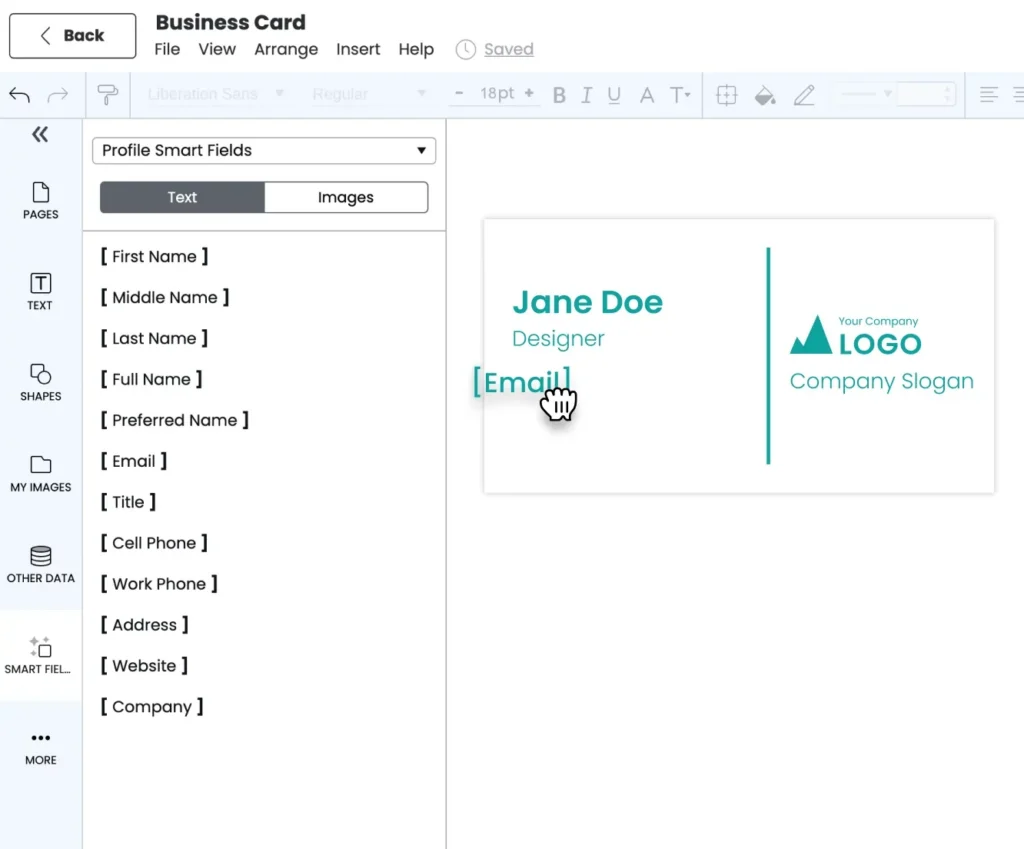
- Smart fields and data automation: Templates adapt to the user. Logos, disclaimers, and contact details change automatically based on department, location, or role, and dynamic fields pull data from spreadsheets or a CRM to mass-personalize collateral. A manufacturing team generates localized one-pagers for every distributor from a single file.
3. DAM integrations that activate stored assets: Marq connects to Brandfolder, Bynder, MediaValet, and other platforms, pulling approved assets into templates without the slow download, edit, and re-upload loop. Your DAM stores the source of truth, and Marq gets it into the right hands.
4. Role-based access and distributed publishing: Central admins define user groups for marketing, sales, and regional teams, then control who can edit, localize, or publish. A higher education comms team lets each department create its own materials while the central brand stays in control.

Connect your DAM to everyday content creation using Marq
Bring approved assets from Brandfolder, Bynder, and other DAMs directly into governed templates, then help teams create localized content without downloading and re-uploading files.
Where Marq shines
- Activation over storage: Marq gets approved assets out of the library and into on-brand collateral, which closes the gap most DAMs leave open.
- Governance without friction: Locked templates hold brand rules in place, so non-designers self-serve without creating off-brand work.
- Personalization at scale: Smart fields turn a spreadsheet into hundreds of brand-perfect outputs, which manual creation cannot match under deadline.
- Fast adoption: Non-designers pick up Marq quickly, so creative operations teams stop acting as a service desk for one-off edits.
- Built for complexity: Marq fits multi-location and multi-brand teams in regulated industries where brand and compliance both matter.
Where Marq falls short
- Not a storage-first archive: For massive rich-media libraries with deep metadata needs, pair Marq with a dedicated DAM rather than replacing one.
- Not for pixel-perfect one-offs: High-design, bespoke creative work still belongs in a designer’s hands, not a template.
- Overkill for solo teams: Individual owners and small teams without distributed creators will not use most of what Marq offers.
Customer success story
Healthcare provider PT Solutions shows how Marq and MediaValet work together in practice. As the physical therapy group grew past 550 clinics across 25 states, its creative team hit a weeks-long backlog of more than 300 requests a month, and off-brand flyers with stretched logos and off-color palettes started circulating.
PT Solutions paired MediaValet for asset management with Marq for templating, and the two connect directly. MediaValet holds approved logos, photography, and style guides in brand portals. Marq turns those approved assets into governed templates.
Teams pull DAM assets straight into the Marq editor, then push finished designs back into MediaValet as the single source of truth.
Sales reps who once waited two to four weeks for a flyer now create one themselves the same day, and regional teams create more than 300 projects a month without requesting routine help from the creative team.
Malia Hostetler from PT Solutions shares, “Now, when our sales team needs something, they don’t have to wait. They can open a template, drop in the details, and get it out the door the same day.”
Who Marq is best for
- Distributed teams: Organizations with many locations, regions, or business units where local teams need to produce their own on-brand materials. Instead of routing every flyer and one-pager through a central design team, each location builds what it needs inside a template that keeps the brand intact.
- Brand- and compliance-sensitive teams: Groups where off-brand or non-compliant output carries real risk. Elements like disclaimers, logos, and contact details can autopopulate from configured, approved data sources, reducing the risk of inconsistent asset use and making review more efficient
- Teams that already run a DAM: Organizations that want to get more out of stored assets by turning them into templates the whole company can use, rather than leaving approved files sitting unused in a library.
- High-volume creators: Teams that produce large batches of personalized assets from spreadsheet or CRM data, generating hundreds of on-brand variations in the time it would take to build a handful by hand.
Book a demo to see how Marq works with your current DAM.
How to choose the right Brandfolder alternative
The seven platforms above solve different problems, so the right shortlist depends on how your team works, not on a feature checklist. Weigh these three factors before you commit.
Governance and control as you scale
Brand and compliance risk grows with every user you add. A platform that runs on a few people who know the rules works at 20 users and breaks at 200, when approval bottlenecks form and off-brand assets slip out.
Look closely at how each platform handles role-based access, approval routing, and audit trails, and whether admins can control who edits and who publishes. Regulated teams in financial services, insurance, and healthcare feel this first, because a single non-compliant asset can trigger real consequences.
Aprimo and MediaValet lead here on policy-driven governance and compliance depth, while lighter platforms trade some control for simplicity.
Findability at scale
A DAM provides value only when people can find the right asset fast. As a library grows into tens of thousands of files, poor search wastes time: a marketer who cannot find the approved logo may recreate it, producing a duplicate.
Check how each platform handles metadata, taxonomy, and search. Strong search that reads natural language or matches by image, as Bynder and Aprimo offer, means teams surface assets in seconds instead of pinging colleagues. For teams with deep classification needs, Acquia’s metadata and taxonomy depth matters more than flashier features.
How easily it connects to your stack
Your DAM does not work alone. It has to feed your CMS, your creative tools, and the places your team actually builds content. Watch for the “brittle integration tax” our partners at MediaValet describe: long integration lists that need constant IT upkeep to stay useful. The platforms that scale keep those connections in sync on their own.
A specialized templating platform like Marq can complement DAMs by helping teams turn assets into localized, on-brand collateral.
Marq plugs into your DAM, pulls approved assets straight into governed templates, and pushes finished designs back as the source of truth. A regional rep builds an on-brand flyer in minutes without touching the original files.
Final word on Marq
The right Brandfolder alternative depends on your team, and this list gives you a clear starting point. If your real problem is storage, governance, or rights at scale, one of these seven DAMs will fit. If the harder problem is getting approved assets into on-brand collateral that every rep and regional team can create safely, that is where Marq earns its place.
See how Marq activates your DAM: book a demo!