Patient acquisition: 6 strategies and supporting solutions that work


Patient acquisition is the work of helping prospective patients discover your organization, find the right provider, and complete a first visit. That process might begin with a search result, referral card, local campaign, or provider profile. At every stage, patients need trustworthy information and a clear next step.
For prospective patients, the path to a first visit usually has five stages:
- They discover a provider.
- They evaluate whether that provider fits their needs.
- They weigh trust, access, and cost.
- They schedule a visit or arrive through a referral.
- They complete a first appointment.
Patients may move between several channels before that first visit. A local campaign, provider profile, referral resource, and booking process can all shape whether they keep moving forward.
This article covers six strategies healthcare organizations can use to attract and convert new patients, the metrics that show what is working, and the software categories that support each stage.
Why patient acquisition becomes difficult as healthcare organizations scale
As health systems add clinics, providers, and service lines, there are more places for the patient experience to break down. Provider details need to match across locations and channels. Referral resources need to point patients to the right next step. Local campaigns need to reach the market while the information they contain is still current.
Keeping all of that aligned creates a practical challenge for a small central marketing team. Routine changes to provider and location details, referral guides, appointment materials, and local campaigns can pass through tickets, email, agencies, and designers before they reach a clinic. When updates move slowly, local campaigns can stall and patients can encounter outdated or inconsistent information while deciding where to seek care.
Location, service, and provider information fragments across systems
Provider names, specialties, locations, phone numbers, and appointment information often live in multiple places: the website, CRM, printed directories, referral cards, and campaign materials.
When one source gets updated and another does not, patients can find conflicting information while researching where to book. That creates confusion at the point when they are deciding whether to move forward.
Central marketing teams become the last-mile production bottleneck
When every flyer, banner, and location-specific ad has to go through the same small central design team,routine production can become a constraint. Requests pile up, turnaround times stretch, and designers spend more time handling small revisions than working on larger campaigns.
PT Solutions experienced this as it grew from 300 to more than 550 clinics. Its creative team was handling more than 300 requests each month, many of them small, repeatable jobs. Instead of spending that time planning campaigns to attract new patients, designers were repeatedly creating and updating the same types of flyers and other local assets.
Local teams improvise when approved materials arrive too slowly
Deadlines can push local teams to create content before the approved version is ready. When the central marketing team cannot turn requests around quickly enough, local teams may build what they need with whatever tools they have available. Patients can then encounter inconsistent content under the health system’s name.
Marketing, patient access, and referral teams lack shared ownership
Marketing runs the campaign. Patient access handles scheduling. Referral teams manage incoming referrals. A prospective patient may experience all three before a first visit.
When the information and handoffs between those teams are unclear, it becomes harder to see where patients stop moving forward. The six strategies below address the points in that path where healthcare organizations can reduce friction.
6 strategies healthcare organizations use to improve patient acquisition
These below acquisition strategies help healthcare organizations attract, convert, and retain prospective patients as they move toward a first visit.
The last strategy, standardizing patient-facing materials, provides the content infrastructure teams need to execute those strategies consistently across locations.
| Strategy | What it fixes | Primary owner |
| Improve local discovery with accurate provider and location information | Conflicting or outdated information | Digital Marketing Manager |
| Build trust through reviews and verified credentials | Low trust and local visibility | Digital Marketing Manager, with Compliance Officer sign-off |
| Run localized service-line campaigns | Low awareness in local markets | Regional Marketing Manager |
| Strengthen provider referrals | Lost or delayed referred patients | Referral Manager |
| Reduce booking and intake friction | Drop-off between interest and appointment | Patient Access Manager |
| Standardize patient-facing materials across every location | Slow, inconsistent content production | Brand Manager |
Strategy #1: Improve local discovery with accurate provider and location information
Most patients research a provider online before they ever call. A listing with the wrong hours or a departed physician sends them to the practice down the street instead.
Google says local visibility rests on three factors: relevance, distance, and prominence, as its local ranking guidance explains. You cannot change a patient’s distance from a clinic, but you control relevance and prominence through complete, accurate information.
Fill out each location’s Google Business Profile, keep categories and services current, and make sure your website’s location and provider pages match. When the details line up across your site, your listings, and your printed materials, patients get one consistent answer no matter where they look.
Pro tip
Audit one location’s information across your website, Google Business Profile, and top three printed materials before scaling any acquisition campaign there. Fixing mismatches first means your ad spend sends patients to accurate information, not a dead phone line.
Strategy #2: Build trust through reviews and verified credentials
Reviews, ratings, and credentials can influence whether a patient chooses a provider or healthcare organization. Healthcare marketers also need to handle reviews and patient testimonials carefully because privacy and endorsement rules apply to how they are collected, displayed, and used in marketing.
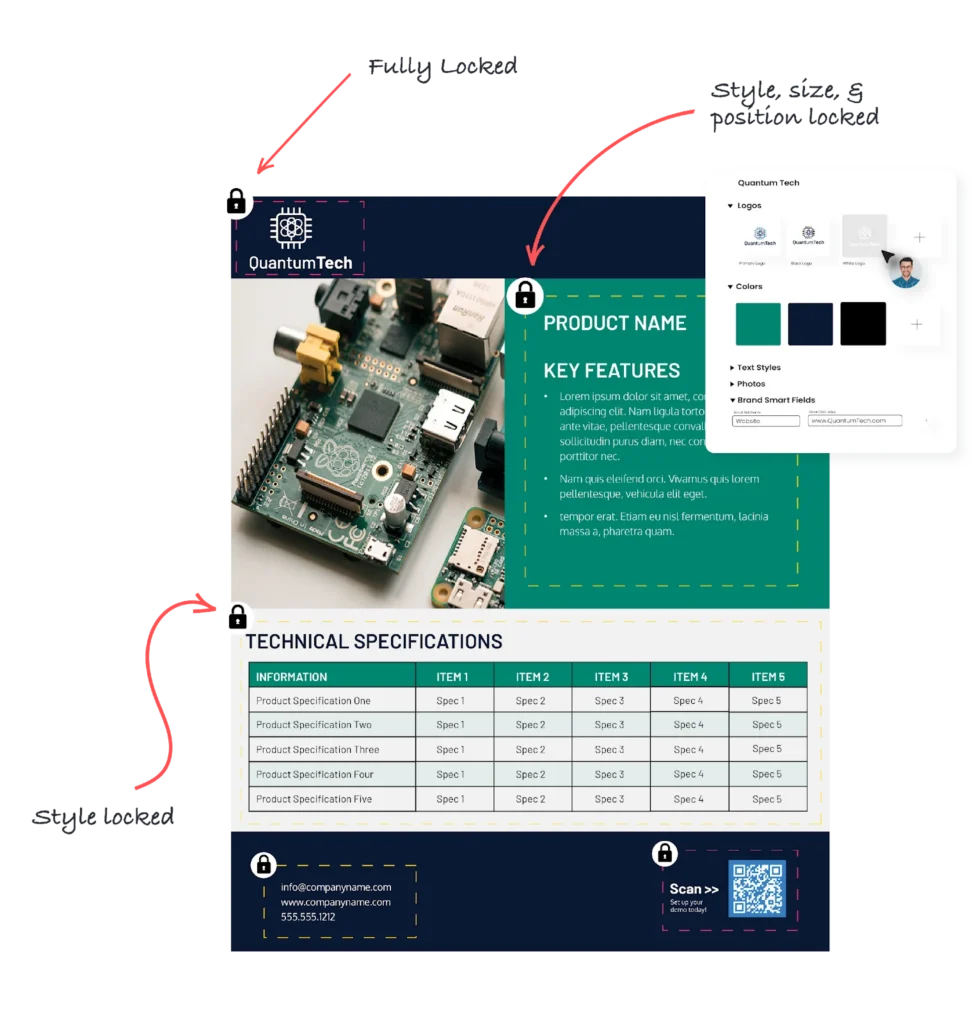
Ask every patient for honest feedback after a visit, and highlight your ratings, awards, and accreditations in approved materials so prospective patients feel confident choosing you. Use templates with lockable elements to keep accreditation badges, disclaimers, and required language correct on every location’s materials. Three guardrails keep this safe:
- Never offer incentives for reviews. Google’s prohibited content policy bans payment, discounts, or free services in exchange for reviews and removes them. The FTC’s 2024 rule prohibits incentives conditioned on a positive or negative sentiment. Other incentive programs may still require disclosure and platform-policy review.
- Never confirm publicly that a reviewer is a patient. Responding to a review by naming someone or referencing their care can disclose protected health information. The HHS Office for Civil Rights has taken enforcement action against healthcare providers that disclosed patient information when responding to online reviews.
This includes a $23,000 settlement with New Vision Dental over disclosures of protected health information in responses to patient reviews, as its enforcement record shows. - Use identifiable testimonials only with written authorization. A named, photographed patient story needs documented consent before it goes anywhere near a campaign.
Respond to feedback in general, non-specific terms that thank the reviewer without confirming any care details. That reduces the risk of disclosing care details while showing prospective patients that you engage.
Strategy #3: Run localized service-line campaigns
A healthcare organization can use local campaigns to promote services and providers based on the needs of each market. For example, a hospital opening a new urgent care location can run a local campaign highlighting its hours, services, location, and appointment options for patients in the surrounding area.
The challenge is producing enough local assets without sending every variation through a central design team.
Instead of creating a bottleneck for the central team, give regional and local teams ready-made templates for common campaign formats, with approved brand elements and editable fields for location-specific details. Local teams can then adapt each asset to their market without routing every request to the central department.
Marq supports the content production behind these localized campaigns through governed templates. It does not handle audience targeting, media buying, or performance optimization, which remain with your advertising platforms and analytics systems.

Create localized healthcare campaigns with Marq
Give local teams ready-made templates they can customize with market-specific details while keeping approved healthcare branding and messaging in place.
Strategy #4: Strengthen provider referrals
Referrals from physicians and other healthcare providers are an important source of new patients, particularly for specialty care. Strengthen this channel by making it easy for referring providers to find the right specialist and understand where they practice.
Start with the providers and specialties that generate the most referral volume. Build relationships with referring practices and give them clear information about available specialists, locations, services, insurance requirements, and referral procedures. Make the next step easy to complete, whether that means a referral form, electronic referral pathway, or direct contact with the relevant team.
The information supporting those relationships also needs to stay current. An outdated provider guide or specialty directory can send a referring provider to the wrong location or list a service that is no longer available.
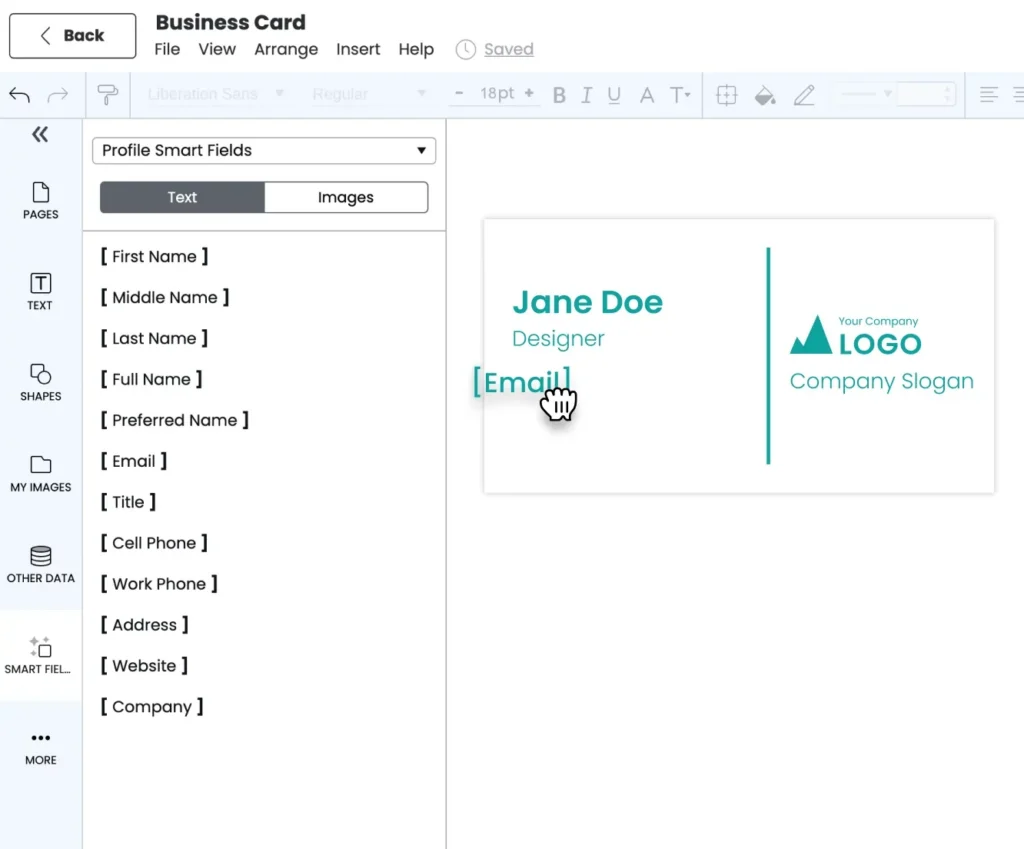
With Marq’s Smart Fields, teams can connect provider names, specialties, locations, and contact details to supported data sources and use them across referral cards, specialty directories, and provider guides.
When information changes, local teams can update the source data and use the template to generate new materials without starting from scratch or sending a request to the central team.
Strategy #5: Reduce booking and intake friction
A patient can find the right provider and decide to book, then drop off when scheduling requires a long phone tree or a callback days later. Reduce that friction by making it easy to schedule an appointment and complete intake.
Connect discovery directly to booking with self-scheduling and digital intake, and assign this work to your scheduling, intake, EHR, and patient-engagement systems, which own it. Online scheduling can reduce access friction, and a 2024 study in the Journal of Medical Internet Research found a self-scheduling tool added more than 2,500 patient service hours by filling cancelled slots at one academic medical center.
The same study cautioned that digital scheduling can widen gaps for patients who are less comfortable online, so measure equitable access alongside booking completion rather than assuming the tool helps everyone equally. Track booking completion, appointment attendance, and access across patient groups so you know the change is working for the patients you want to reach.
Strategy #6: Standardize patient-facing materials across every location
This is less a patient acquisition strategy on its own and more the content infrastructure that helps the strategies above work across multiple locations. Accurate listings, local campaigns, referral materials, and other patient-facing content depend on teams being able to produce and update materials consistently.
Standardizing these materials gives every location access to the same approved messaging, branding, and core information while still allowing for local details. It also reduces routine production work for central marketing, so teams can create and update materials faster.
Marq supports this content-production layer through governed templates, AI localization, and Smart Fields. Together, these capabilities help central teams maintain brand and content standards while local teams adapt materials for their markets and keep approved information current.
Examples of companies following patient acquisition strategies
The most relevant supplied evidence comes from teams that scaled content production while maintaining brand control, which is how brand consistency becomes a competitive advantage. Read each example for what it actually demonstrates, not for a claim it cannot support.
PT Solutions scaled content across 550+ clinics
PT Solutions grew from 300 to more than 550 clinics in a few years, and its small creative team was handling 300-plus monthly requests, most of them repeatable flyers and promos. Outdated collateral with stretched logos circulated across locations.
After putting brand-safe templates and connected assets at the center of its operations, regional and clinic teams began completing more than 300 projects a month through self-service, and turnaround improved by 93%. A flyer that once took two to four weeks now ships the same day.
“Now, when our sales team needs something, they don’t have to wait. They can open a template, drop in the details, and get it out the door the same day,” says Malia Hostetler, Senior Manager of Creative Solutions at PT Solutions.
This case provides evidence of faster distributed content production; it does not establish patient-acquisition impact. Read it as evidence that the content-operations bottleneck can be removed without losing brand control.
Electronic referrals improve specialty access
The AHRQ-funded eReferral program at UCSF and San Francisco General shows what happens when referral workflows tighten. Providers reported better access to specialty care, faster triage, and stronger referral tracking than the paper process it replaced. The lesson for marketing leaders: the referral stage rewards accurate, well-organized information, which is exactly what current provider guides and specialty directories supply.
Self-scheduling expands access, with caveats
The 2024 JMIR self-scheduling study offers directional evidence, not a universal promise. Filling cancelled slots added thousands of patient service hours, yet the same data flagged the risk of widening access gaps for less digitally comfortable patients. Treat self-scheduling as a strong access lever you must measure by patient group, rather than a guaranteed conversion win.
Ready to remove your content bottleneck? See how healthcare marketing teams use Marq to ship current, on-brand materials across every location. Book a demo.
Metrics healthcare marketing leaders should track for patient acquisition success
Measure patient-acquisition metrics and content-operations metrics separately. Blending them hides where the problem sits, and only the second group maps directly to what a content-production platform can affect.
Patient-acquisition metrics tell you whether the funnel is converting:
- New-patient appointment requests: The number of first-time patients asking to book.
- Request-to-booked rate: The share of those requests that turn into a scheduled appointment.
- Time to appointment: How long a new patient waits between the request and the visit date.
- Cancellation and no-show rates: The share of booked visits that fall through before completion.
- Completed first visits: New patients who actually show up, the real acquisition outcome.
- Referral completion rate: The share of referred patients who reach a booked or completed visit.
- Acquisition cost per completed first visit: Total acquisition spend divided by new patients seen.
- Results by location, service line, channel, and access route: The same metrics segmented, so you can see where acquisition works and where it leaks.
Marketing-operations metrics tell you whether your content engine is keeping up:
- Content turnaround time: How long a request takes to become a finished, approved asset.
- Self-service template adoption: How many clinics and teams create their own materials from templates.
- Request volume removed from the central team: The routine requests self-service absorbs so designers stop remaking flyers.
- Location coverage: The share of locations actively using approved templates.
- Approval-cycle time: How long content sits in review before it can be published.
- Outdated-content usage: How often teams still push old or off-brand materials into the market.
Track the first group in your CRM, EHR, and analytics stack.
Track the second in Marq Analytics, which reports on content usage and template adoption rather than patient bookings or revenue attribution. When turnaround time drops and template adoption climbs, compare those changes with acquisition metrics while treating the relationship as directional, not proof of causation.
Software categories that support patient acquisition
No single platform runs patient acquisition end to end. These three sit at different stages and work best as connected layers: one produces on-brand content, one stores and governs approved assets, and one manages the patient’s path into the practice.
Marq: Best for creating on-brand content at scale
Marq is a brand enablement platform built to help distributed teams in brand-sensitive or regulated industries such as healthcare. It gives a central marketing team a way to let distributed clinic and regional staff create their own materials without breaking the brand or the required language. That makes it the production layer of a patient-acquisition operation.
Marq’s capabilities for healthcare marketing include:
- Templates with lockable elements. Designers build in-app or import existing ones via Adobe InDesign, then convert files into governed templates that lock brand elements and open only the fields a clinic should edit.
- Smart Fields. Configured fields can populate provider names, specialties, locations, and contact details in referral cards, directories, and provider guides from supported data sources.
- Role-based access and distributed publishing. Central admins decide who can edit, localize, or publish, so a regional team moves fast inside guardrails.
- Centralized template controls. Administrators can update a logo, color, or disclaimer once so future projects start from a source-of-truth template.
- Approvals. Teams can require review before a project is downloaded, printed, or published, with settings that control who can bypass approval.
- Content analytics. Reporting on template adoption and content usage shows where self-service is working.
Best for: Mid-market and enterprise health systems with many locations and a lean creative team supporting many contributors.
Strengths: Strong brand governance, self-service for non-designers, automated data in configured materials, and connections to supported DAMs and CRMs.
Limitations: Less suited to solo creators, single-location practices, or pixel-perfect bespoke design work where governance adds little value.
Aprimo: Best for centralizing approved assets
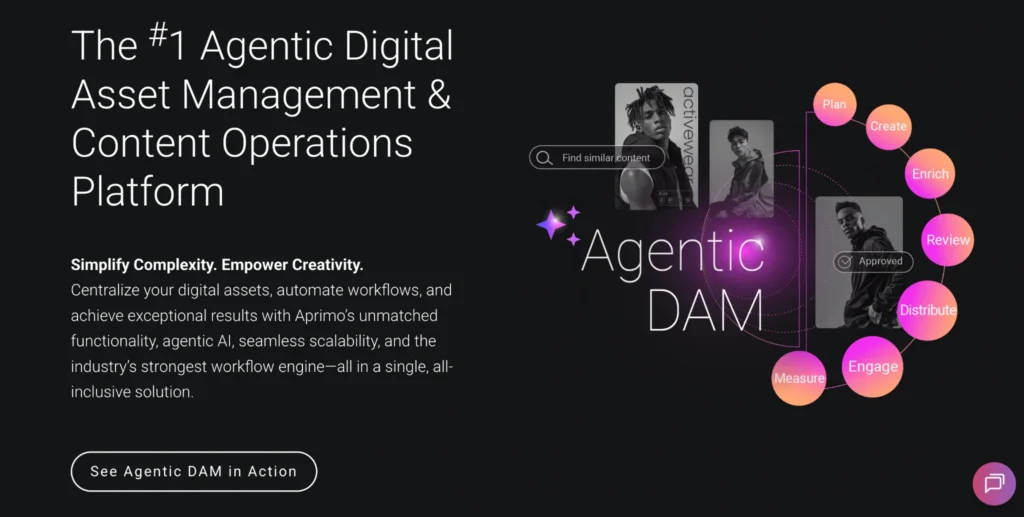
Aprimo is an enterprise digital asset management (DAM) and content operations platform. It acts as the governed source of record for approved brand assets, which makes it the storage-and-governance layer beneath your content production.
Key features:
- Centralized repository for approved images, videos, and documents
- Metadata tagging and fast search across large asset libraries
- Review, approval, and version-control workflows with audit trails
- Rights management plus connectors to creative and marketing systems
Best for: Large enterprises that need deep marketing asset management system and a single approved-content repository.
Strengths: Strong governance and compliance controls, structured metadata, and proven scale for complex, regulated content ecosystems.
Limitations: Aprimo focuses on asset storage and governance rather than distributed template creation. Marq and Aprimo complement each other: Aprimo holds the approved assets, and Marq activates them inside brand-safe templates that clinic teams actually use.
Luma Health: Best for managing patient referrals and intake workflows
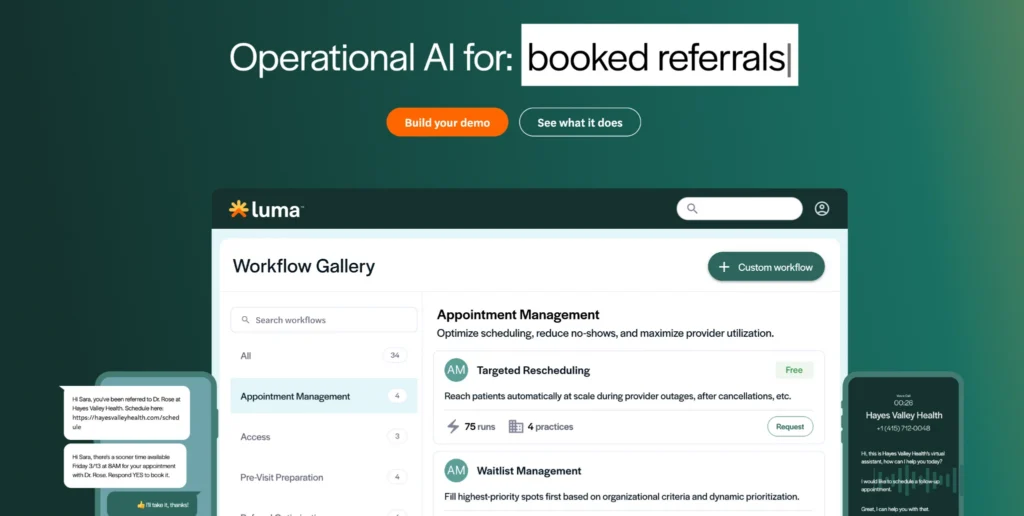
Luma Health is a patient engagement platform that automates the patient’s path into the practice. It owns the access, scheduling, and intake stage that Marq deliberately does not.
Key features:
- Automated referral outreach that texts referred patients to help them schedule
- Patient self-scheduling and a smart waitlist that fills cancelled slots
- Automated appointment reminders and recalls that reduce no-shows
- Mobile digital intake and multilingual messaging
Best for: Clinics and health systems that want to automate scheduling, reminders, and referral coordination, with deep EHR integration.
Strengths: Broad EHR and practice-management integration, automated referral and intake workflows, and strong patient messaging.
Limitations: It does not create or govern brand content. Pair it with a content platform so the materials feeding those workflows stay accurate and on brand.
Because pricing for these platforms depends on your size and needs, contact enterprise sales for a quote rather than relying on list prices.
Scale patient acquisition content with Marq
Help local healthcare teams create current, on-brand materials faster while central marketing keeps control of critical brand and compliance elements.
Patient acquisition checklist for healthcare marketing leaders
Use this sequence to build the system rather than react to requests. Work top to bottom, and pilot before you scale.
- Define capacity first. List the service lines and locations that can absorb more patients, so you market where you can deliver.
- Audit your information. Check location, provider, and directory details across your website, listings, and top printed materials, and fix mismatches.
- Map your highest-volume materials. Identify the flyers, referral cards, and campaign assets that clinics request most, and template those first.
- Assign approval owners. Name the clinical, privacy, legal, and brand reviewers for each material before you build.
- Set your templates. Fix brand elements and required language, then define the fields each location may edit.
- Stand up a privacy-safe review process. Document how staff request reviews and respond without disclosing patient information.
- Test every access path. Walk the referral, phone, scheduling, intake, language, and accessibility routes as a patient would.
- Baseline your funnel. Define each metric and record where you start, so you can prove change later.
- Pilot one region or service line. Prove the model small before rolling it out.
- Measure both sides. Track patient-access results and content-operation performance together.
Support patient acquisition at scale with Marq
Patient acquisition works best when prospective patients can find accurate information, trust what they see, and move easily toward a first visit. Across a growing health system, supporting that journey requires a steady flow of current, locally relevant materials.
Marq helps central marketing teams manage that work with brand-safe templates, controlled local editing, and configured Smart Fields for provider and location details. Local teams can produce approved campaign and referral materials while central marketing retains control over the elements that must remain consistent.
Start with one service line and template its highest-volume materials. Then measure whether clinics receive what they need faster and whether fewer routine requests require central design support.
Ready to support patient acquisition without slowing local teams down? Book a demo to see how Marq helps healthcare organizations produce location-ready content at scale.
FAQs
What is patient acquisition?
Patient acquisition is the process of attracting and converting new patients. It covers every step from a patient first discovering your organization to booking and completing their first visit.
Why is patient acquisition important?
New patients drive growth and help healthcare organizations replace patients they naturally lose over time. Patients move, age out of a practice, change providers, or no longer need certain services. Without a reliable way to attract and convert new patients, even organizations that provide excellent care can see their patient base and revenue decline.
What channels support patient acquisition?
Patient acquisition spans several channels, including local search and Google Business Profiles, web pages for individual doctors and clinic locations, online reviews, referral relationships, and paid and organic campaigns. Each channel should provide accurate, consistent information and make it easy for patients to book an appointment.