6 Content Strategies to Increase Patient Engagement as You Scale

Patient engagement depends on how effectively healthcare organizations communicate with patients before, during, and after care. For multi-location health systems, that means keeping service information, provider details, and patient-facing materials accurate and relevant across every facility.
Patient engagement also encompasses areas beyond marketing content, including clinical communication, access to care, patient education, shared decision-making, care coordination, digital tools, and the overall care experience. This article focuses specifically on how marketing teams can manage patient-facing content to support patient acquisition and engagement.
As a healthcare network grows, maintaining content consistency becomes harder, especially when local teams rely on the central marketing team to create or update every piece of content.
When every request requires manual design work or one-off edits, the central team becomes a bottleneck. Local teams may turn to outdated materials or create their own versions, making it harder to deliver a consistent patient experience across locations.
This article explores how marketing leaders can build a content operation that supports patient engagement at scale. It covers the systems and processes that help central teams maintain control while giving local teams the flexibility to create relevant content for their communities.
The importance of consistent patient engagement content: Key difficulties as you scale
Consistent engagement becomes harder to maintain as a health system expands across locations. Each facility needs to communicate with patients in ways that feel relevant to its community while still reflecting the same brand, messaging, and standards.
Four challenges take shape as that network grows.
1. Distributed content creation can lead to brand inconsistency
A clinic needs a flyer for a Saturday wellness event, so someone creates one using the design platform they have available. Multiply that across dozens of locations and service lines, and small differences start to add up: logos change size, colors vary, and messaging gets rewritten from one location to the next.
Patients may encounter a different version of the brand depending on which location they visit or which material they see. Press Ganey’s 2024 research found that consumers expect a consistent brand narrative across interactions with healthcare providers. As more teams create content, maintaining that consistency becomes harder.
2. The central team becomes the bottleneck
When every request for a new or updated asset goes to a small creative team, the queue grows quickly. Time-sensitive campaigns can sit in review while designers work through routine requests.
PT Solutions, a physical therapy provider, faced this challenge with more than 300 creative requests each month, many of which involved repeatable work. That volume created a backlog that could stretch for weeks.
Giving local teams more ways to create approved content can reduce the number of routine requests that reach the design team and leave designers more time for higher-priority work.
3. Compliance exposure grows as content creation is distributed across teams
Patient-facing healthcare content often includes required disclaimers, legal language, and accessibility requirements. Those details need to stay intact when local teams update a template. If someone removes a disclaimer or changes approved language, the resulting material can create a compliance issue.
As more people create content, central marketing needs a way to keep required elements in place without relying on every contributor to remember every rule. Putting those controls into the template itself gives local teams room to make approved changes without removing required information.
4. Personalizing content across locations becomes a manual task
Every location may need its own address, provider names, hours, and service information. Creating those variations by hand takes time and makes errors more likely. A new location opening or a seasonal campaign can also create dozens of similar files for the central team to update.
Content personalization lets teams populate location and provider information without entering it into each file manually.
What this means for marketing leaders: These four challenges have the same underlying problem – central marketing must maintain consistency across a growing network, but too much work still depends on manual requests and edits.
A sustainable content operation gives local teams clear boundaries for what they can create and change, while keeping brand, compliance, and key information under central control.
Connection between patient engagement and healthcare growth
Patient engagement can affect how well a health system attracts, retains, and earns referrals from patients. The content patients see online and at local facilities shapes how they understand your services and experience your brand.
- Patients often research care before choosing a provider: Press Ganey’s 2024 research found that self-directed search has become a leading influence on how people choose care. That makes your digital presence an important part of the patient experience before the first appointment.
- Reviews can influence whether someone books: A 2024-2025 rater8 survey of 1,008 US adults found that 84% of patients check online reviews before choosing a new provider, while 40% have canceled or changed an appointment based on what they read. Keeping location and provider information accurate and consistent across channels helps patients make decisions with confidence.
- A good experience can support retention: Dialog Health’s analysis of 6.5 million healthcare encounters in 2024 found that 61% of people who had a positive experience continued seeing the same provider, compared with 33% of those who had a negative experience. Content is only one part of that experience, but inconsistent or outdated information can create unnecessary friction.
- Healthcare organizations are investing in patient engagement: The US patient engagement solutions market reached $7.59 billion in 2024 and is expected to grow at roughly 19.77% annually through 2030, according to Grand View Research. As investment grows, marketing teams also need the systems to manage the content that supports these engagement efforts.
Consistent branding also has a business impact. It strengthens brand recognition, builds customer trust, and creates a more cohesive experience across customer touchpoints.
For multi-location health systems, maintaining that consistency requires more than brand guidelines. Central marketing needs the right systems to help local teams create content that stays within those guidelines.
Acquisition and retention both depend on the experience patients have with your health system. A prospective patient may read a location page or review before booking, while an existing patient may receive follow-up materials after an appointment. Keeping those touchpoints accurate and consistent helps create a more reliable experience across the network.
6 Content strategies for large healthcare organizations to increase patient engagement
These six strategies focus on how central marketing can scale and govern patient-facing content across a distributed healthcare system. Approved templates, controlled localization, accurate provider and location information, and clear approval processes help teams produce relevant materials consistently. These practices support patient acquisition and engagement by helping ensure patients receive accurate, useful information across locations.
| Strategy | What It Changes | Engagement Payoff |
| Unify the brand across touchpoints | Consistent branding across every touchpoint | It reinforces credibility across patient touchpoints |
| Templatize patient-facing collateral | Clinics start on-brand and launch the same day | Campaign materials reach patients while the information is still relevant |
| Localize within guardrails | Local teams edit only what you allow | Local teams add details without changing protected brand elements |
| Personalize with provider and location data | Smart fields populate details automatically | Each site gets materials with its provider and location details |
| Build compliance into the content | Required disclaimers stay in the template, and teams route selected materials for approval | Teams reduce regulatory risk before publishing |
| Centralize assets and measure adoption | Approved assets in one library, with template use recorded | Teams identify outdated materials and see where the library lacks needed content |
1. Unify your brand across every patient touchpoint
Patients encounter your health system across websites, location pages, social media, digital ads, and materials at the clinic. Keep the core brand and messaging consistent across these touchpoints, while giving each location room to include relevant local information.
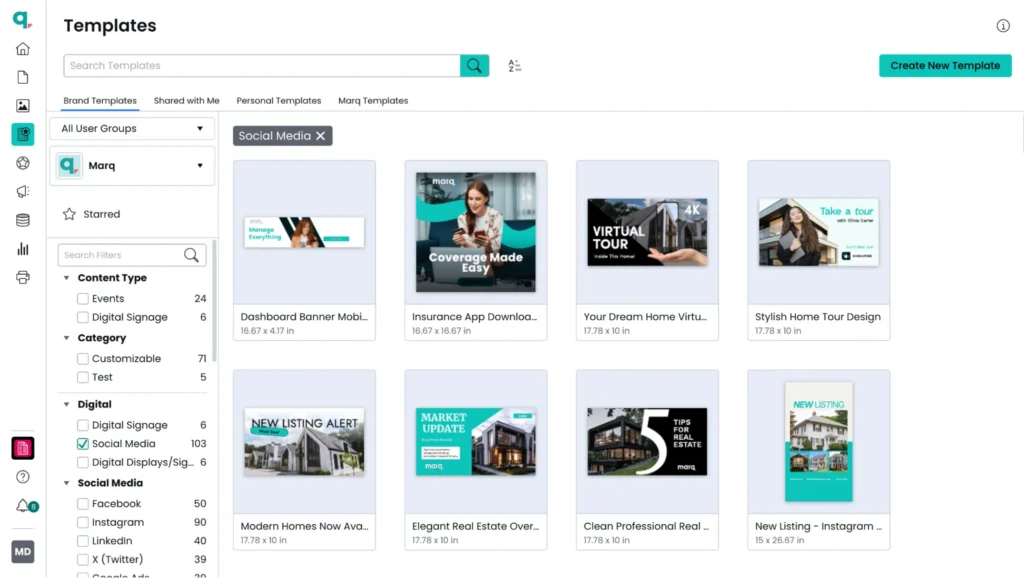
Marq gives central marketing a library of approved templates and brand assets that local teams can use. Teams can create location-specific materials without changing the core brand elements.
2. Templatize high-volume patient-facing collateral
Start with the materials clinics request most, such as event flyers, referral cards, and service-line one-pagers. Turn repeatable requests into templates so teams can create approved content without starting from scratch each time.
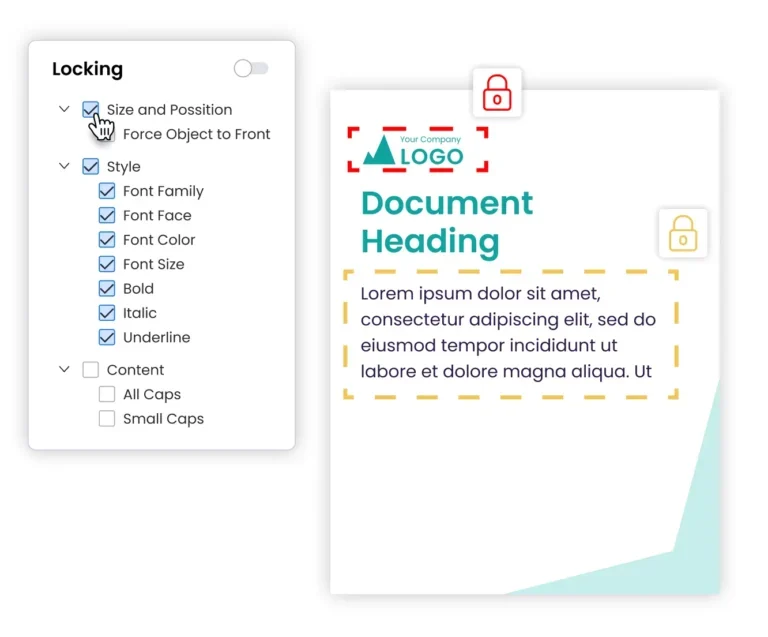
Marq lets central marketing create templates with editable and locked elements. Local teams can update the fields they need while the core design and messaging stay in place.
Rank your template backlog by request frequency and compliance risk. Automate the high-frequency, high-risk assets first. That’s where you free the most design time and remove the most exposure at once.
3. Give local teams governed self-service content creation
Local teams need to adapt content for their communities, but they should not have to rebuild materials from scratch. Give them clear areas they can edit, such as location details, provider information, and local promotions, while keeping brand elements under central control.
Marq gives admins granular controls over which elements teams can edit. Clinics can personalize approved templates without changing the logo, colors, layouts, or other elements set by central marketing.

Create patient-facing content faster with Marq
Turn frequently requested flyers, referral cards, and service-line materials into approved templates so clinic teams can create content without waiting on designers.
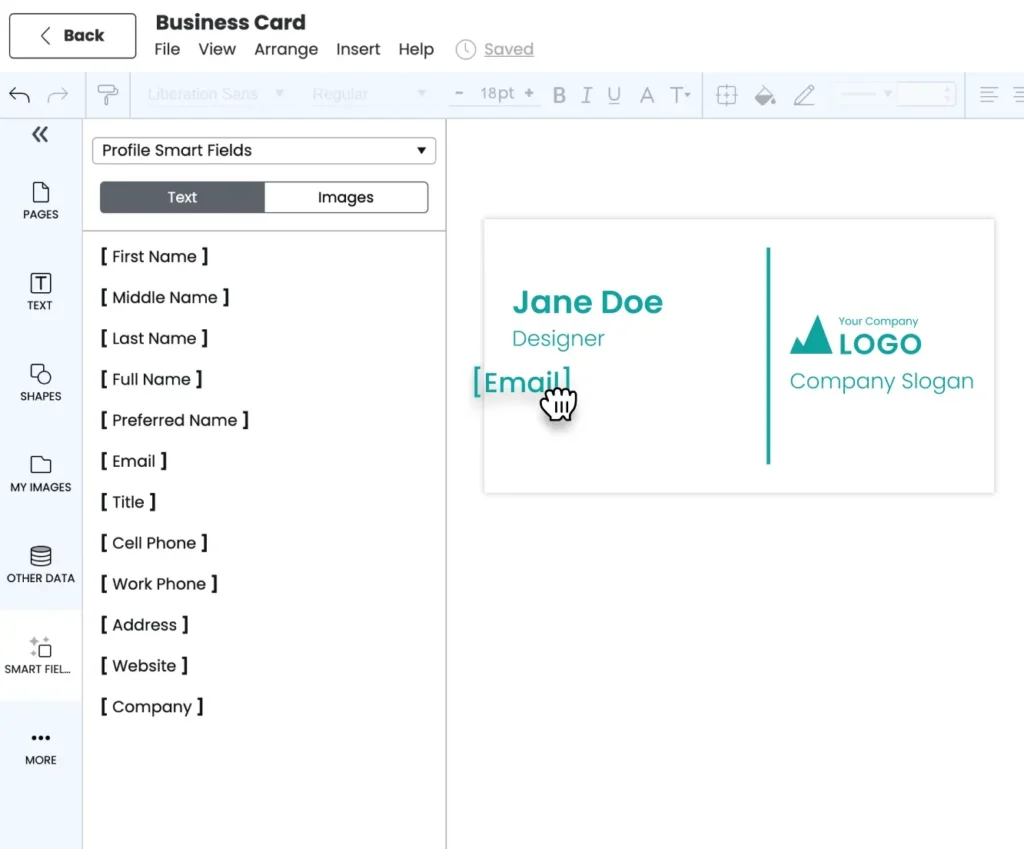
4. Personalize at scale with provider and location data
Manually adding addresses, provider names, hours, and service details to every asset creates unnecessary work and increases the chance of errors. Connect templates to structured data so the right information can populate each version automatically.
Marq’s SmartFields can pull information from sources such as spreadsheets, CSV files, and CRM systems. Update the source data once, then use it across the templates that rely on that information.
5. Build brand governance and approvals into the content
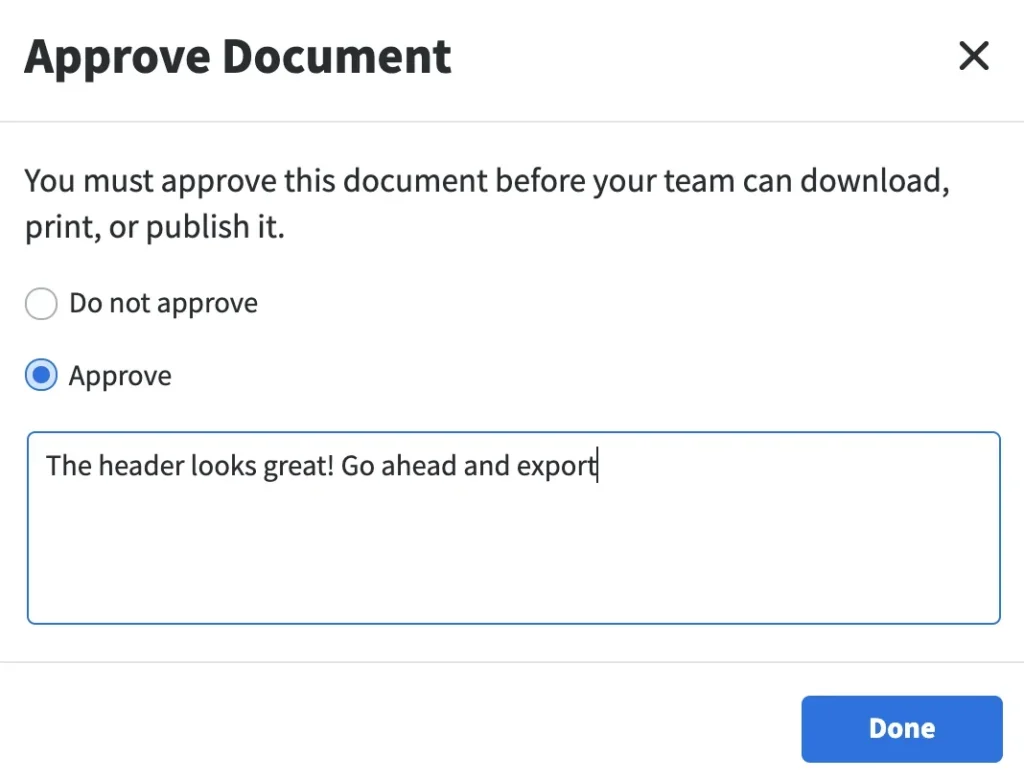
Patient-facing content often includes required legal language, disclaimers, and accessibility requirements. Keep those elements in the template and define an approval process so local teams can create content without accidentally removing or changing required information.
Marq’s approval process lets central marketing require teams to get approval before downloading, printing, or publishing a project. Admins can review the finished content, approve or decline it, and leave feedback directly in Marq.
This gives central marketing a clear review step for materials that need closer oversight, while teams can see whether their project is waiting for approval, approved, or declined. Approval admins can also be assigned to handle these requests, so one person does not have to handle them all.
6. Measure how content supports patient engagement
Track the content activity that can influence the patient experience across locations. Look at how quickly teams publish materials, how widely approved templates are used, and how often local teams create content without central marketing support. These measures help marketing leaders see whether patients are getting timely, consistent information across the network.
Marq gives central marketing visibility into template usage and content activity across teams. This helps identify which locations are using approved content and where gaps in adoption may affect the consistency of the patient experience.
PT Solutions: An example of using a successful patient engagement strategy
PT Solutions, a physical therapy provider with 550 locations across 25 states, grew rapidly through acquisitions and new clinic openings. As the network expanded, its creative team struggled to keep up with repeat requests, while local teams sometimes worked from outdated or inconsistent materials.
PT Solutions addressed this by locking core brand elements into Marq templates and centralizing approved assets in a MediaValet portal. This gave clinic and regional teams a way to create the materials they needed while keeping key brand elements consistent.
As a result, teams that once waited two to four weeks for a flyer could create one the same day, while the creative team spent less time on repetitive requests and more time on strategic work.
This gave PT Solutions a more efficient way to produce consistent, locally relevant materials to inform patients about its services and support engagement across its growing network.
“Now, when our sales team needs something, they don’t have to wait. They can open a template, drop in the details, and get it out the door the same day.” – Malia Hostetler, Senior Manager of Creative Solutions, PT Solutions
Metrics to measure the content operation behind patient engagement
Patient engagement metrics, such as appointment bookings, patient retention, and digital interactions, show how patients respond to a health system’s services and communications.
Content operations metrics help marketing leaders assess how effectively their teams deliver accurate, consistent information across locations. Tracking these metrics helps identify publishing delays, low template adoption, and inconsistencies in patient-facing materials that could affect patient engagement and experience.
| Metric | What It Measures | Why It Matters |
| Time-to-publish | Time from content request to finished asset | Shows whether teams can prepare patient-facing materials in time for campaigns, events, and service updates |
| Self-service content creation | Number of projects local teams complete without central design support | Shows whether local teams can meet routine content needs without adding to the central team’s workload |
| Template adoption by location | Share of locations using approved templates | Identifies locations that may need additional training or easier access to approved materials |
| Content accuracy across locations | Share of audited materials with correct provider, location, and service information | Helps marketing teams identify outdated or incorrect information that could confuse patients |
| Design hours spent on routine requests | Time the central team spends handling repeatable content requests | Shows whether local self-service is freeing the creative team to focus on higher-priority work |
To understand the effect on patient engagement, compare improvements in content delivery and accuracy with patient-facing measures such as appointment conversion, digital engagement, and patient retention.
Marq is designed for scalable patient engagement: Here is how
Marq is a brand enablement and design automation platform that supports patient engagement at the content-operations layer. It gives a central marketing team control while letting clinics, service lines, and providers create on-brand, compliant materials on their own.
How it helps
Marq gives local teams templates based on the materials central marketing approves:
- Locks brand and compliance elements: Logos, fonts, colors, and legal language stay fixed while local teams edit only the fields you open.
- Enables safe self-service: Non-designers at clinics build finished materials from approved templates without a design request.
- Automates personalization: Smart fields and CRM data populate provider names, locations, and service details across many assets at once.
- Routes materials for approval: Administrators can send selected projects to reviewers, and Marq records project changes in an audit trail.
- Activates your asset library: Marq is not a digital asset manager; it integrates with DAM platforms like MediaValet, Bynder, and Aprimo to pull approved assets into editable templates and push finished work back.
- Distributes everywhere: Teams send materials to print, social, or the web from one place, using the current version.
In practice, this lets a lean central team support many locations at once. The brand team designs and governs the templates; clinics execute within them. That division keeps a health system’s marketing consistent as the footprint grows, and it does so without adding creative headcount for every new site.
Final thoughts on increasing patient engagement
For multi-location health systems, patient engagement depends in part on how consistently patients see accurate, relevant content across locations. Marq gives central marketing a way to manage that content while letting clinics create materials for their local needs. With locked templates, SmartFields, approval workflows, and controlled editing, teams can produce content faster without losing central oversight.
Start with the patient-facing materials your locations use most often, then expand as teams adopt the system. Track template usage, content turnaround, and adoption across locations to see where the process is working and where teams need more support.
Ready to scale patient engagement without losing brand control? Book a demo.
FAQs
What is patient engagement in healthcare?
Patient engagement is the ongoing relationship between people and their healthcare provider, covering how actively they take part in their care and how consistently they connect with your organization. For marketing leaders, it also covers the brand experience that builds trust, earns the first appointment, and keeps patients coming back.
Why is patient engagement important?
Patient engagement plays an important role in patient satisfaction, retention, and continuity of care. When patients feel heard and involved in their healthcare decisions, they’re more likely to stay connected with their providers and follow through with their care plans. Strong patient relationships also help healthcare organizations build lasting trust within their communities.
What drives patient engagement the most?
Trust, built through a consistent, easy-to-navigate brand experience across every touchpoint. Self-directed online search now outweighs referrals in how people choose care (Press Ganey, 2024), so your digital presence and content consistency shape engagement before any clinical interaction.
How can healthcare systems personalize patient experiences at scale?
By connecting content templates to data. Smart fields and CRM integrations populate location, provider, and service details automatically, so every clinic produces relevant, on-brand materials without manual rework or off-brand risk.
Does technology support patient engagement?
Yes. The US patient engagement solutions market reached $7.59 billion in 2024 and is growing near 20% a year (Grand View Research). Content-operations platforms like Marq support the marketing side: consistent, compliant, personalized patient-facing content across every location.