2026 Brand Governance: Framework & How to Implement It At Scale
Key takeaways
- Brand governance is the system of rules, workflows, tools, and guardrails that keeps your brand consistent as more people create content across teams or locations.
- Good brand governance protects consistency without slowing teams down by balancing control, flexibility, and speed based on content type and risk level.
- Brand governance components include brand guidelines, approval workflows, asset management, training, and risk mitigation, all built into day-to-day operations.
- To implement brand governance at scale, centralize templates and assets, enable self-serve creation, automate approvals and data, and train teams on the process.
As organizations grow, brand inconsistencies happen more often.
Brand governance is how you stop fixing other people’s mistakes and start scaling the brand with confidence.
Why brand governance matters as your brand scales
The more people creating content, the faster brand standards degrade. As organizations scale creation, brand systems have the tricky task of balancing the needs of content requesters (I need it fast) with governance (I need it compliant).
And it’s worth it. According to Marq’s brand consistency report, brand consistency can increase a company’s revenue by more than 20%.
Platforms like Marq are designed to help distributed teams create content both quickly and safely with granular template locking, role-based permissions, and self-serve options.
Here are some risks involved with an inappropriate governance approach:
Distributed teams misuse assets
Distributed teams rarely go off-brand on purpose.
They do it because the right assets take too long to find, the old version is still in the shared drive, or local teams need content faster than the central brand team can deliver it.
Before you know it, you start to see old logos, unapproved imagery, and comic sans appearing in the advisor deck. Over time, that creates visible brand erosion.
Manual approvals create bottlenecks
When every request has to go through one designer or brand manager, it slows everyone down. That model might work for a small team, but it breaks once dozens or hundreds of people need branded materials at the same time.
Requests pile up, reviews stall, and teams stop waiting. They make the asset themselves instead and despite their best efforts, you, your boss, and your audience notice. The result: inconsistent branding and compliance gaps.
Partner and multi-location compliance issues
Brand governance becomes even more critical when you work with partners, agents, franchisees, departments, campuses, or regional teams that create content independently.
You’re responsible for what they put out, but without guardrails in place, you have no visibility into most of it.
Without the right guardrails in place, this “flexibility” quickly turns into a free for all.
What are the main components of brand governance?
The main components of brand governance include brand guidelines, approval workflows, asset management, training, and risk mitigation – all with the goal of supporting consistency.
The brands we work with already have these pieces in place:
- They have brand guidelines in a PDF
- They have folders full of approved assets
- They have a review process that lives in email or Slack
So why does brand governance still break down in practice? Static formats and manual enforcement. The rules are documented, they’re just not built into how work gets done.
Let’s look at the components of brand governance in more detail, and how Marq helps you centralize and implement them:
Consistency
Brand consistency is the main outcome governance is designed to protect.
It means your materials look, sound, and feel like they came from the same organization, even when they’re created by different people in different places.
For example, a regional team may need to update location details, event information, or contact names. But they should not be changing logos, fonts, layout structures, or approved messaging.
Good brand governance makes that difference obvious from the start.
Brand guidelines
Brand guidelines are necessary, but they need to be implemented properly.
If you already have static guidelines somewhere, you’re assuming people are actually reading them, remembering them, and applying them correctly under pressure.
You might have noticed your internal contributors aren’t opening another tab to double-check spacing rules or approved logo usage before sending a flyer (the dream). If it’s not in the workflow, it might as well not exist.
Governance works when guidelines are embedded into the creation process.
With Marq, brand teams can lock critical elements directly into templates. Users can personalize approved content, but they can’t accidentally change the parts that are supposed to stay fixed.
When the rules are built into the template, teams follow your brand guidelines automatically.
Approval workflows
Approval workflows define when review is needed, who needs to approve what, and how content moves forward without endless back-and-forth.
Some content needs strict review because it includes legal language, regulated claims, or high-visibility brand messaging. Other content can move faster because it is low risk and already built from approved templates.
Marq helps brand teams apply approvals more intelligently. Teams can build workflows around the level of risk and integrate those workflows into the broader systems they already use.
Asset management
A strong brand governance system makes approved assets easy to access and hard to misuse.
If teams cannot find approved logos, photos, disclaimers, or templates quickly, they’ll use whatever they can find – and then it becomes your problem.
Marq supports asset management through integrations with DAM platforms, so teams can work from approved assets inside the creation workflow instead of hunting through folders, old emails, or random cloud drives.
This reduces “version chaos” and keeps the source of truth connected to the work itself.
Training and education
Governance only works if people understand how to use the system. This applies to both template creators and template users.
- Designers and brand admins need to know how to build flexible templates with the right controls in place.
- Users (your agents, reps, clients) need to know what they can edit, when approvals are required, and when they should request custom work instead.
Marq’s implementation, professional services, and customer support can help teams roll out governance in a way that feels technically complete and usable.
Risk mitigation
Mitigating risks keeps small mistakes from turning into expensive ones.
Brand teams want the system to literally be fool-proof – make it hard for anyone to accidentally break the brand, regardless of their technical skill.
Marq reduces that risk through locked elements, guided editing, approval controls, and data automation. A field or element that used to require manual copy-paste now populates from an approved source automatically.
Brand governance audit: how to spot brand erosion
When the content reaching your audience no longer matches the standards your brand team approved, your brand starts to break down.
A brand governance audit helps you catch signs of that “erosion” early.
Follow the tips below to conduct a proper brand governance audit.
Audit your live content
Instead of just reviewing your master brand deck or official template library, look at the content people are actually using in the field.
This includes any sales decks, one-pagers, flyers, social graphics, or event materials being created outside your core design team (e.g., by partners, franchisees or regional teams).
Check for things like:
- Outdated logos
- Unapproved images
- Inconsistent fonts or colors
- Expired messaging
- Old contact details
- Unofficial layouts
This gives you a more accurate picture of brand erosion than reviewing guidelines alone.
Review where your workflow breaks
After spotting inconsistencies, figure out why they’re happening.
Review each stage of the workflow and ask:
- Where are people getting their assets from?
- Which requests are getting stuck in review?
- Which teams are working outside the system?
- What content types or assets are being recreated the most?
These answers help you find the weak points in your governance model, whether that’s poor access, lack of clarity, or inadequate templates.
Build regular audits into your operations
Brand audits are not a one-time cleanup task. You have to integrate them into your daily operations so they’re easy to maintain over time.
That means:
- Centralizing approved templates
- Connecting asset libraries
- Reducing unnecessary manual approvals
This makes ongoing audits more manageable because it reduces content sprawl and makes governance activity easier to track.
Marq gives teams one platform to manage templates, approvals, and assets. It also gives non-designers safe self-serve options so they can create branded content right the first time.
How to implement brand governance at scale
Here’s how to roll out brand governance at scale.
Step 1: Build a flexible brand governance framework
First, decide where you need strict control.
Not every asset carries the same level of risk. A regulated product sheet or investor-facing presentation might need tighter governance than a local event flyer or internal update.
Your brand governance framework should reflect that. A practical way to do this is to sort content into tiers based on risk, visibility, and frequency of use.
For each content tier, define:
- What must stay locked
- What can be edited locally
- Whether approval is required
- Who approves it
- Which teams can access it
This helps you avoid two common mistakes.
- Over-governing everything and slowing teams down.
- Leaving too much open and hoping people will use good judgment.
Strong brand governance protects the parts of the brand that carry the most risk, while giving teams enough flexibility to do their jobs quickly.
Step 2: Centralize templates and assets
Once your rules are set, gather all the brand assets people need to work from, including any templates, logos, photos, icons, disclaimers, and messaging blocks.
Then, use a brand enablement tool like Marq to centralize everything in one place.
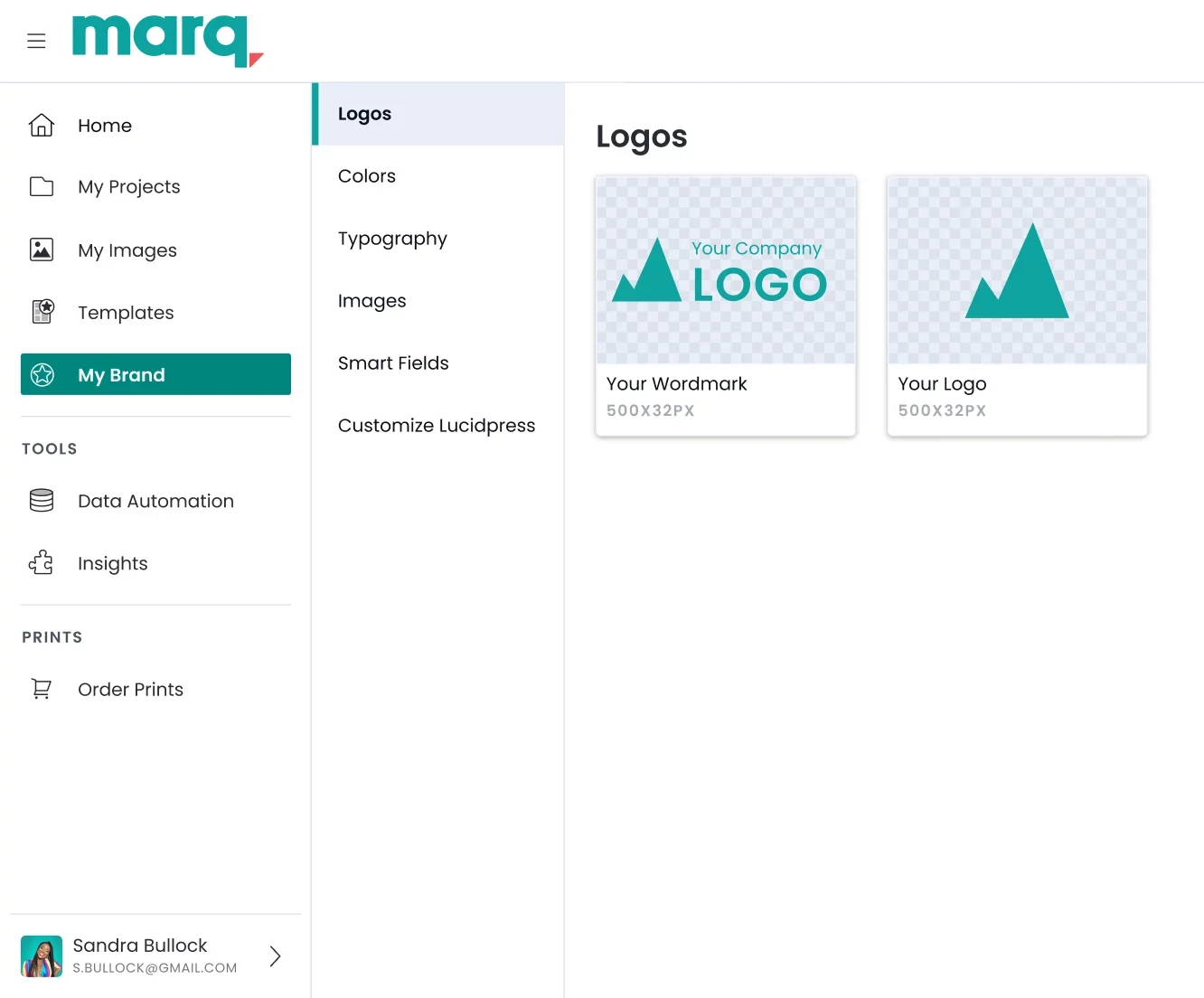
When teams know where to go for current content, they’re more likely to stay inside the system.
Marq also supports DAM integrations so users can pull content from another platform directly into their templates.

Step 3: Enable self-serve creation inside guardrails
If every edit still has to go through a designer or brand manager, your process will always hit a ceiling. Eventually, the volume gets too high, approvals slow down, and people start making their own materials outside the approved system.
Marq is designed to let non-designers create for themselves, but only within the boundaries you set. You can share locked templates that allow teams to customize brand materials while protecting core design elements.
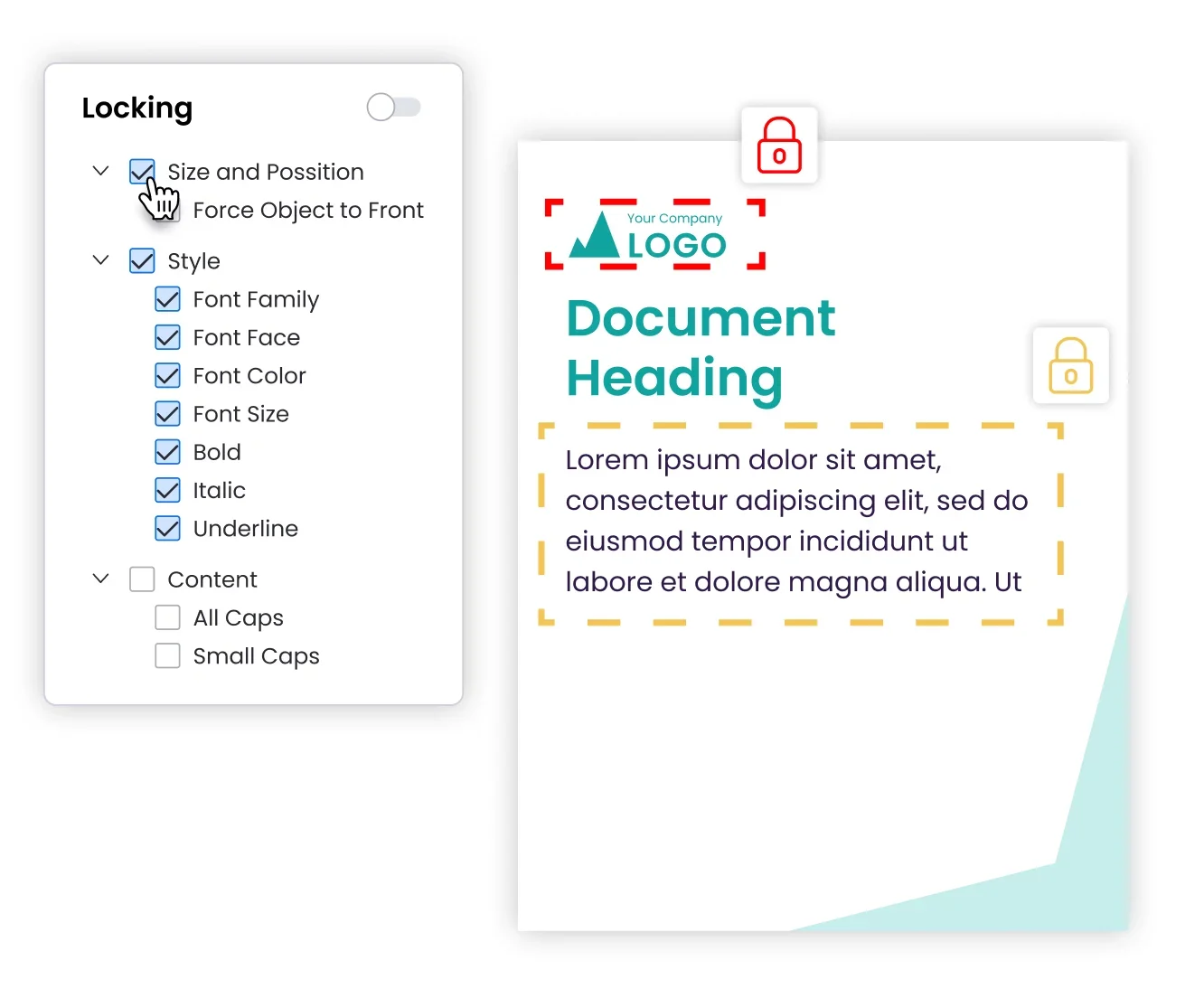
For example, a real estate agent could update their headshot, contact details, listing information, and local office address without changing the logo, colors, fonts, or overall layout.
Step 4: Automate approvals and data where possible
The more repetitive, manual steps you have in your workflow, the more likely your brand governance approach is to break.
Tasks worth automating include:
- Approval routing by content type
- Permissions by team or role
- Auto-filling smart fields connected to approved data sources
- Bulk or repeatable content generation
In Marq, you can set up approvals so managers can review collateral before it goes live. The brand team can also leave comments or hop on the built-in chat for quick feedback.

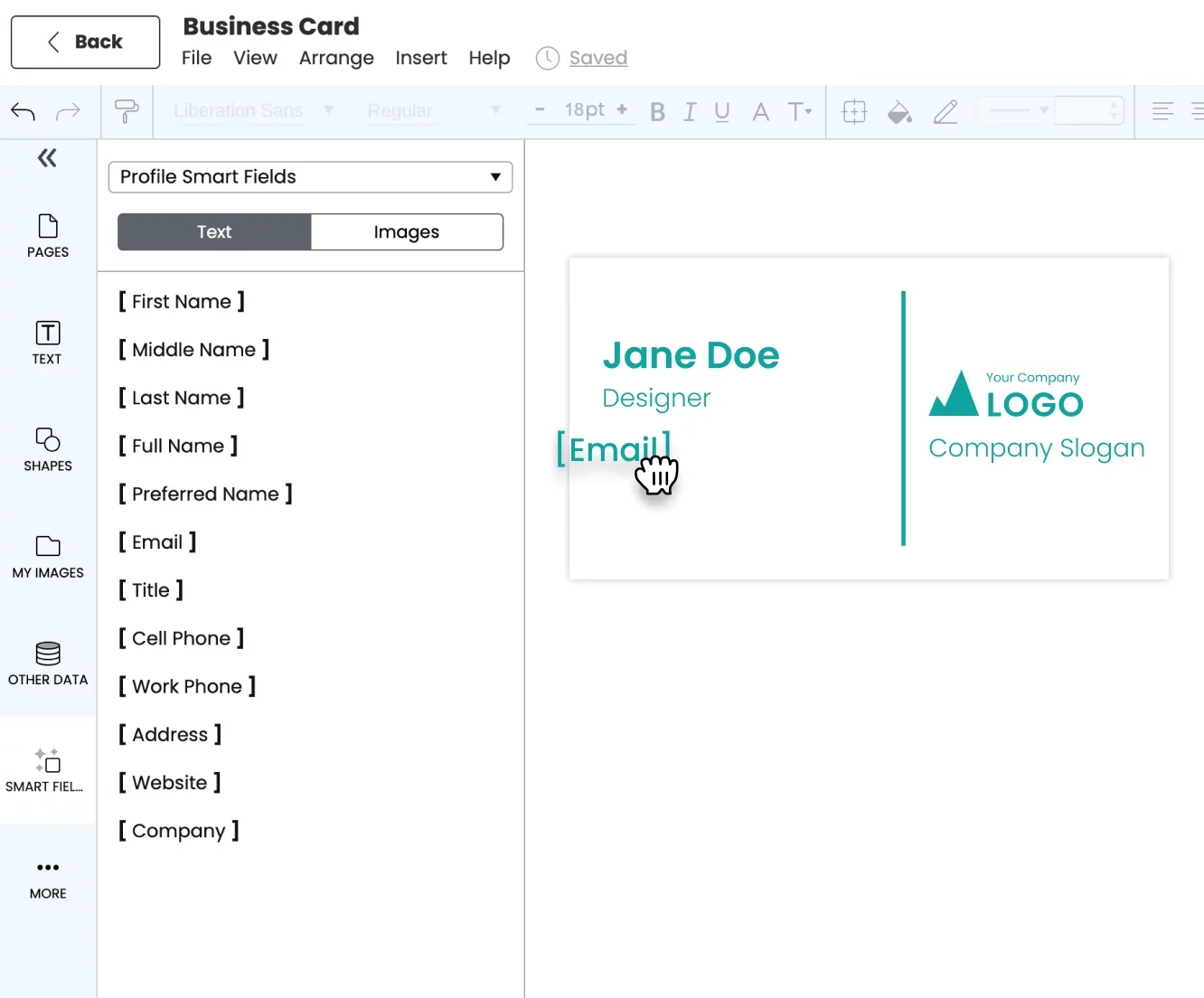
Marq also offers data automation with smart fields, which can be filled automatically or by users while preserving brand integrity. A sales rep can easily personalize a one-pager by changing the numbers without swapping the fonts or colors.
Step 5: Train teams and communicate changes
Even a strong governance system will fail if people don’t understand how to use it.
Your internal and external teams need to know:
- Why the new process is easier than the old workaround
- Where to find approved templates
- What they’re allowed to edit
- When approval is required
- When they should request custom work
Training should also be role-specific. Regional partners only need to know how to personalize and publish. The governance layer handles everything else before they ever open the template.
Marq supports this through onboarding, implementation help, and customer support resources that make rollout smoother.
Brand Enablement vs. brand management vs. brand governance: key differences
Brand enablement, brand management, and brand governance all refer to important branding processes. But each one drives a different outcome and engages different stakeholders within a company.
So which of the three is relevant to internal problems you’re trying to solve?
Below, we’ve prepared a simple table that breaks down the key differences. Use it to diagnose where your current bottleneck lies, and which approach (or combination) is the right fit for your needs right now.
| Element | What It Is | Who Owns It | Who Uses It | Who Benefits |
| Brand Enablement | Empowering teams with branded assets, tools, and guidelines | Branding, marketing, and design teams | All stakeholders utilizing branded assets | Design teams (reduced internal requests) and employees (faster turnarounds) |
| Brand Management | Coordinating workflows and tracking brand performance at scale | Branding and marketing leadership roles | Branding, marketing and design teams | The entire business through improved systems, workflows and KPIs |
| Brand Governance | Enforcing consistency, compliance, and risk controls across branding | Branding, marketing, legal, compliance and regulatory teams | Branding and marketing teams, partners and franchises | The business (fewer brand inconsistency issues) and customers (improved experience) |
Measuring brand governance success
The right metrics and KPIs help you catch any issues in your brand governance model to prove the value of your current approach.
Make sure to track:
- Approval turnaround time: How quickly branded content moves through review. Slow approvals can become bottlenecks.
- Asset compliance rate: How often teams use approved templates, assets, and messaging rather than creating materials from scratch or pulling outdated files.
- Partner, franchise, or department adherence: Whether distributed users are staying inside brand guardrails is especially important for organizations managing multiple locations or external collaborators.
- Number of governance exceptions: How frequently teams bypass the approved process. A high exception rate usually means the process itself needs reworking.
- Ticket or request volume: Whether self-serve systems are reducing repetitive design requests.
Marq helps teams monitor many of these signals in real time using the built-in analytics.
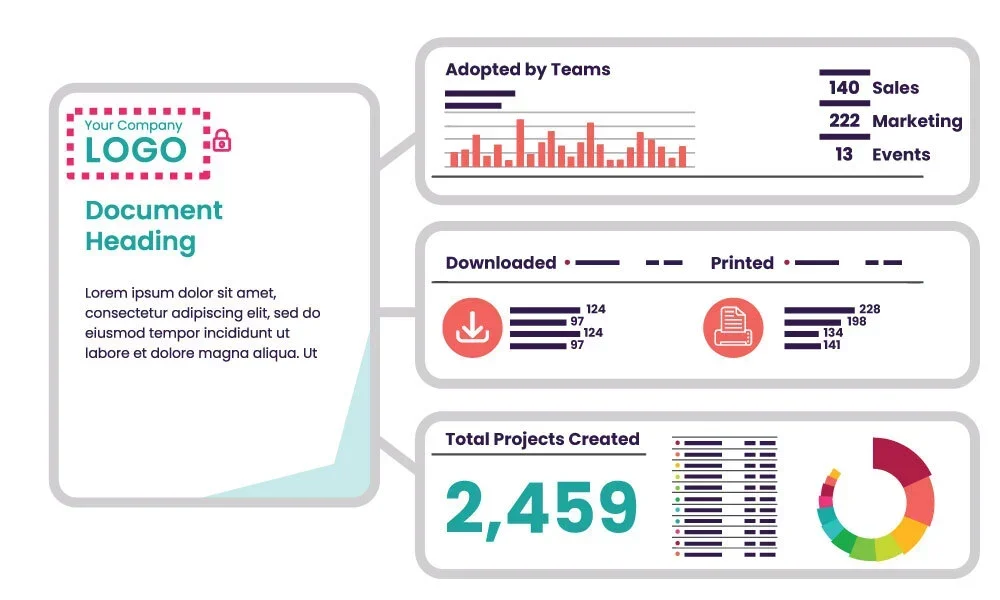
Example: a university communications director can track whether more campus departments are using approved event templates instead of submitting one-off design requests.
Governance challenges across distributed teams
Here are the main governance challenges growing teams face (and how to overcome them):
- Excessive content creation outside the core brand team
In distributed organizations, branded content is often created by sales reps, regional marketers, recruiters, franchisees, campus departments, agents, or partners.
Consistency is harder to manage. Materials get created outside the core team, old versions keep circulating, and brand owners end up fixing mistakes rather than focusing on strategy.
- Lean creative teams get buried in small requests
When your designers spend half their week handling repetitive ‘pebble’ requests like updating phone numbers and swapping headshots on flyers, they’re not doing the work you hired them for…and the backlog still grows. The work doesn’t require design expertise, but it’s consuming design capacity (whether interal or agency).
Over time, that leaves creative teams overloaded, design requests unanswered, and higher-impact work left on the table.
- Balancing flexibility, speed, and control can be difficult
External users often need some level of freedom to tailor content for their audience. At the same time, brand teams need enough control to protect the brand.
Everyone still expects content to move quickly.
The real challenge is building a system that gives people room to move fast, but within clear boundaries.
Marq solves all these challenges by giving organizations a practical middle ground.
With centralized templates, approved assets, locked brand elements, self-serve editing, and automated approvals, teams can create content faster without giving up control.
Govern your brand at scale with Marq
Brand governance works when it makes doing the right thing easier than doing the wrong thing.
Lock what matters, cut friction, and give non-designers a safe way to create on-brand faster.
If you’re ready to centralize templates, control brand use, and scale content creation, book a demo with us to see how Marq can help you put brand governance into practice.
Brand governance FAQs
1. What is brand governance?
Brand governance is the oversight and enforcement of brand consistency across messaging and assets, with a strong focus on compliance, risk management, and avoiding legal or regulatory breaches.
2. What is the difference between brand enablement, management, and governance?
- Brand enablement helps stakeholders access branded assets quickly and independently, empowering them to promote the brand without delays.
- Brand management introduces strategy and structure into branding and marketing workflows, reducing inefficiencies and doubling down on what’s performing.
- Brand governance Brand governance ensures brand consistency and compliance at scale, with the oversight needed to mitigate risk.
3. What does brand governance look like in practice?
Brand governance shows up in how your templates are built and who can change what. A sales rep can update personal details in a pitch deck, while key elements like pricing, disclaimers, and logos stay locked. Content is routed for approval before sending, and audit trails track all changes.
This is critical in regulated industries where unauthorized edits can create compliance risks. Marq’s locking, approval workflows, and audit trails are designed to prevent that.
4. What tools support brand governance?
Some tools that support brand governance include:
- Role-based template access
- Locked elements in branded templates to prevent unauthorized edits
- Approval workflows that gate publishing until sign-off
- Audit trails showing who changed what, and when
- AI-assisted content review for tone, compliance, and branding alignment
5. What industries need brand governance most?
Brand governance becomes critical in regulated industries like healthcare, financial services, insurance, manufacturing, and any product category subject to strict compliance standards. An off-brand message or unauthorized claim can lead to serious consequences in these environments.
6. Can you give an example of brand governance for a sales team?
An example of brand governance could be a regional sales team creating a pitch deck. Key slides like legal disclaimers and pricing tiers are locked, so reps can’t accidentally modify content that must remain compliant and consistent.