Online Brand Management: Step-by-step Framework to Scale Your Brand


Your brand guidelines are not your brand management system.
They are just a reference document. And reference documents do not stop a financial advisor from editing a compliance-sensitive file, or a regional marketer from pulling an asset from a local folder.
Brands break from the inside. Multiple offices, different tools, and no consistent guardrails create inconsistency across every channel. The “online” part makes it worse as search engines index everything a brand posts and users remember and share it across their networks.
Effective online brand management is the answer to this problem.
This article breaks down the framework and best practices for managing your online brand at scale.
The key risks of weak online brand control
Most brand breakdowns are internal failures. They rarely come from intent, but they still carry real consequences.
Here are the biggest risk areas:
| Risk Area | Business Impact |
| Inconsistent messaging across channels | Prospect confusion, delayed deals, lost revenue |
| Non-compliant materials in circulation | Compliance violations, regulatory penalties, legal exposure |
| Off-brand assets reaching customer-facing channels | Lower click-through rates, higher drop-offs, poor campaign ROI |
1. Revenue leakage from inconsistent messaging
When teams describe your product or service in different ways, prospects get confused. And confused prospects do not buy.
A loan officer, for instance, sends a prospect a document they put together themselves. The terms sound different from what’s on the website, and the rate description doesn’t match the compliance-approved language.
The prospect notices and asks about it. Now the conversation shifts from closing the deal to clearing up that confusion.
In financial services, this kind of inconsistency not only slows the sales process, but it makes people question whether the company is reliable. This lost trust shows up in lost revenue.
2. Legal exposure from non-compliant materials in circulation
In regulated industries, like insurance, financial services, and healthcare, unauthorized brand use can carry legal weight.
Depending on your industry, every piece of distributed collateral may need to carry specific license numbers, state-level disclaimers, regulatory language, or broker IDs. When team members create their own versions, they often miss these requirements or write them incorrectly, which can lead to compliance violations or regulatory penalties.
3. Performance decay from off-brand content
Off-brand content hurts performance across marketing channels. When ads, emails, and landing pages don’t match your visual identity, they reduce recognition and trust among prospects, which leads to lower click-through rates and higher drop-off.
Audiences build a mental model of your brand through repeated, consistent signals. Every off-brand asset breaks that pattern and forces the next interaction to work harder to rebuild trust and attention.
Online brand management done right: A real-world example
Purdue University’s Marketing and Communications team serves 11 schools and colleges (campus partners), each with different audiences and content needs.
For years, the MarCom team acted as the central design unit for all of them. When the team shifted focus to university-level brand building, they didn’t want to leave campus partners without a resource or let inconsistent messaging harm the university’s online brand.
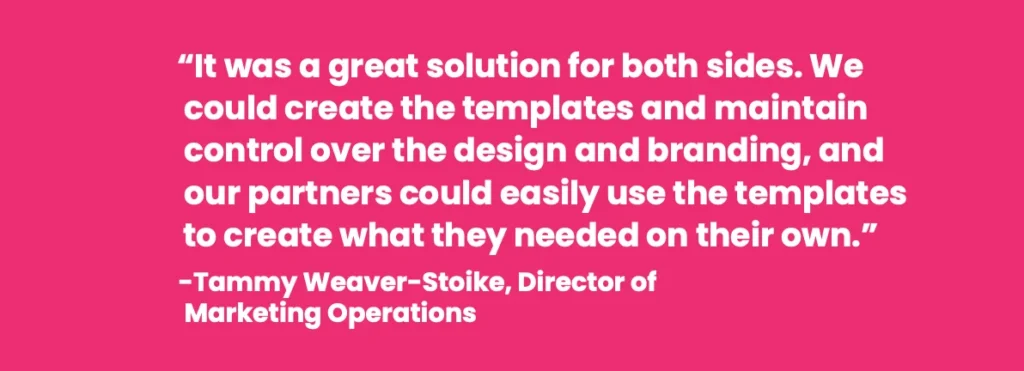
They decided to manage their brand by building guardrails into the design process itself. With a governed template system in Marq, the MarCom team retained full control over critical brand elements while campus partners could only edit predefined sections. As a result, every document campus partners created stayed on-brand by default.
With the help of this infrastructure change, campus partners have created nearly 40,000 brand-compliant documents to date. The MarCom team now manages 129 active university-level brand initiatives, with the confidence that the university’s online brand will stay consistent regardless of who creates the content.
Building an online brand control system: A step-by-step framework
Most organizations already have brand guidelines. What they are missing is the operational infrastructure to enforce these rules at the point of creation.
The following framework gives marketing and creative leaders a clear path from brand exposure to brand control.
Step 1: Map every digital brand exposure point
Before you can manage your brand, you need to map where it appears and who creates content in each of those places.
Your website and social media platforms are easy to identify. Beyond them, your brand also shows up across:
- Pitch decks sent to prospects
- Email campaigns and newsletters
- Co-branded landing pages
- Partner and affiliate portals
- Digital ads
- Webinar and event registration pages
Next, audit which teams produce external-facing content, which tools they use, and which version of your brand assets they currently have access to.
Step 2: Assign brand ownership at every level
Brand management cannot sit only with the Chief Marketing Officer or Head of Brand. In distributed teams, this creates a single point of failure where one team tries to control how the brand appears across online channels.
Effective brand governance distributes ownership across the teams that publish content.
- Assign a brand lead for each region or business unit.
- Assign approvers for key content types such as web, social, paid media, and partner content.
- Assign platform owners for the tools teams use to create and distribute content.
Purdue University did this by appointing senior designer, Cheryl Glotzbach, as their dedicated platform owner for Marq across all campus partners. She led template creation and trained teams to use Marq effectively.
Step 3: Implement guardrails, not just guidelines
For online brand management to work, teams must build standards into the creation process itself, not document them separately and hope people follow them.
Template locking makes this possible. It locks key brand elements like logos and fonts, and allows edits only where teams need variation for audience or location. This keeps every asset on-brand, no matter who creates it.
With Marq, brand admins control this at the element level. They decide what stays fixed and what can change across templates.
On top of that, Marq’s Smart Fields automatically fill editable fields by pulling data from Customer Relationship Management (CRM) tools, Google Sheets, and Multiple Listing Services (MLS).
Non-design teams create relevant content at their own pace this way, while brand leaders maintain brand consistency across every channel.
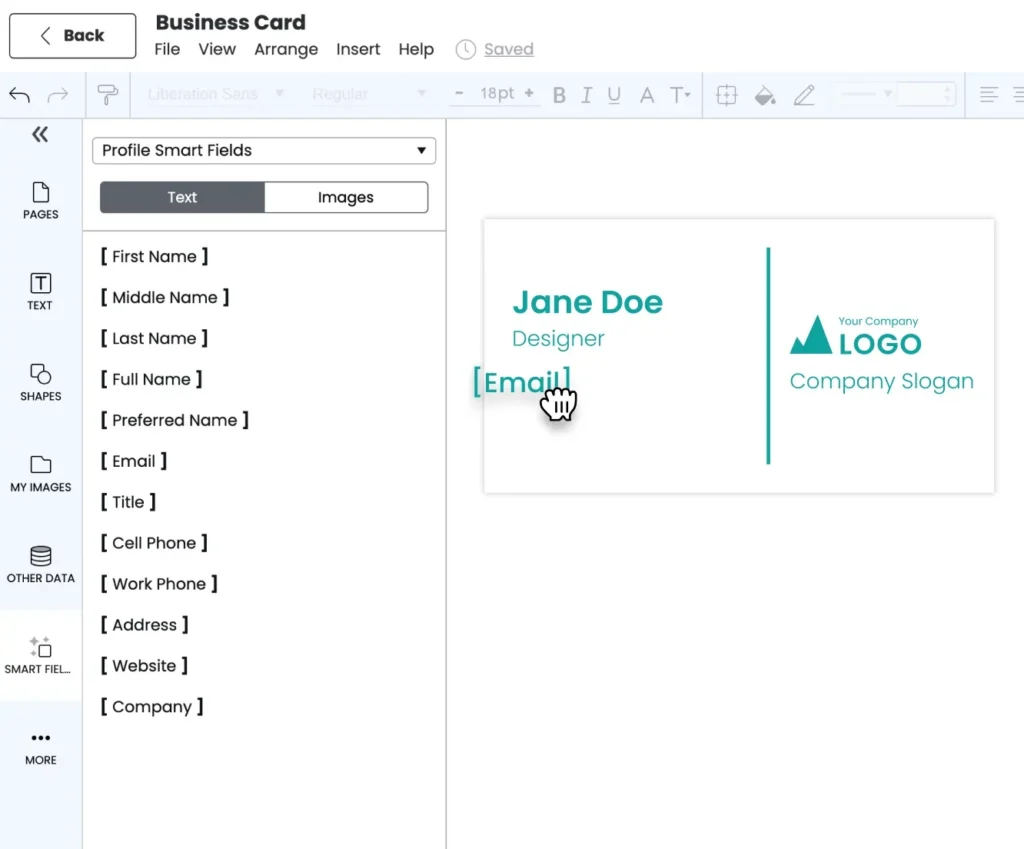
For example, a real estate agent sends an email campaign to prospective buyers. Each recipient receives a version tailored to the property they are viewing.
Marq’s Smart Fields pull in property data like listing details, price, and location for each email automatically. At the same time, the template keeps brand elements like logos, fonts, and layout locked so every email stays consistent with the brokerage’s branding.
Step 4: Build approval gates before distribution
Brand mistakes on digital channels are hard to undo. A co-branded email with the wrong disclaimer or a social post with an outdated logo goes live and spreads fast. Once it’s out, it’s out. That’s why teams need approval checks before they publish content.
But blanket approval processes slow teams down, so they work around them.
To avoid that, teams can use locked templates for low- and mid-risk content and route high-risk content through a required sign-off before publishing.
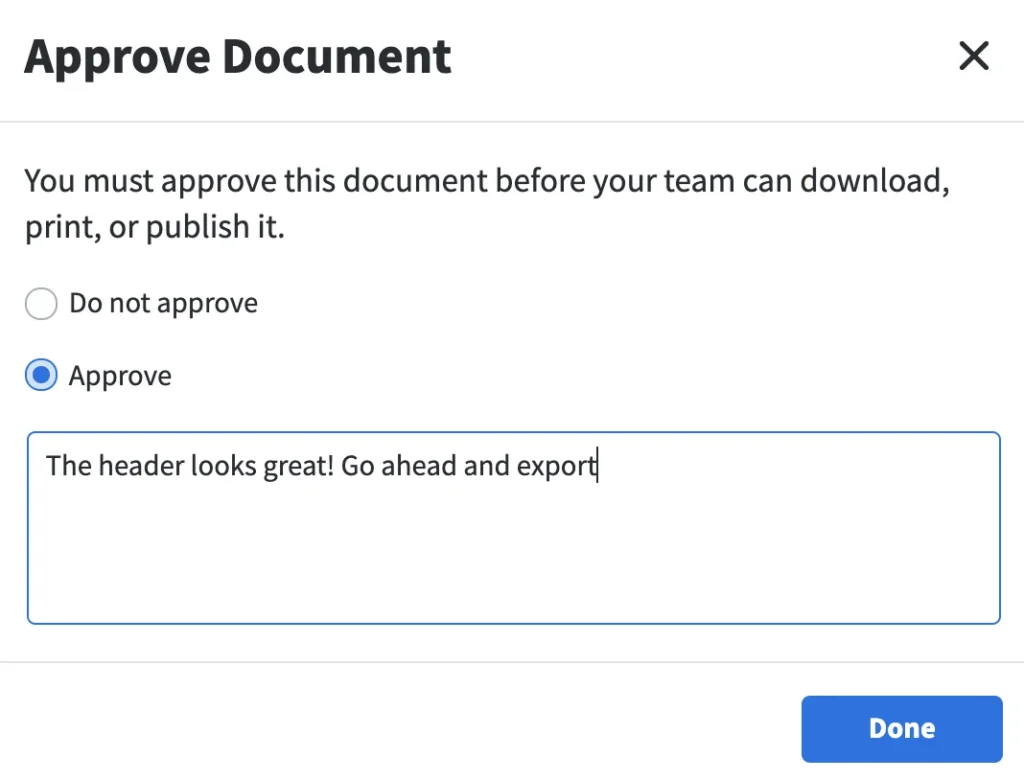
Marq builds this into the workflow. When someone finishes a content piece, they click “Request Approval,” choose the right approver, and add context.
The approver reviews the piece and either approves it or sends it back with feedback. The system blocks downloads, printing, and publishing until the content clears this step.
Step 5: Track usage and measure compliance over time
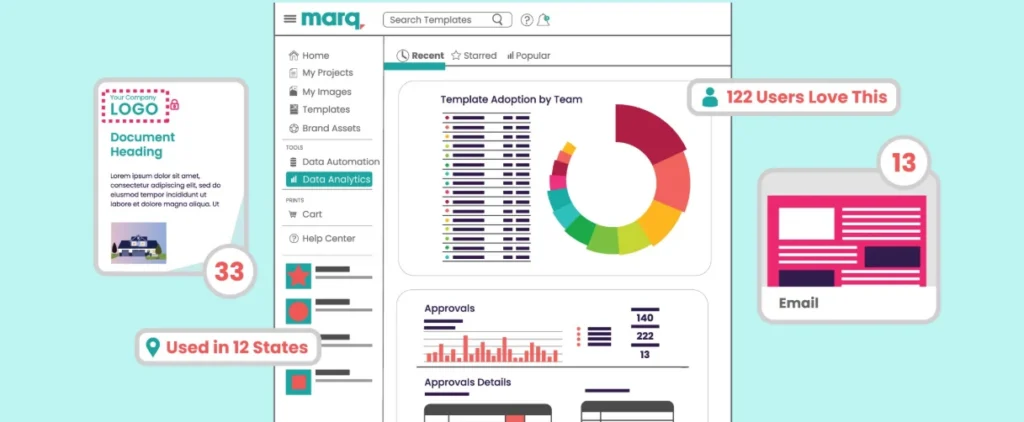
To understand whether a brand control system works, you need insight into how teams create and publish content across channels.
Marq gives brand leaders that insight.
- Template adoption reports show which templates teams use and which they ignore, so content created outside the approved library shows up early.
- Content freshness tracking flags outdated templates that may push old brand elements across channels.
- Approval reports track every project from creation to sign-off, so teams review content before they publish it.
This data also gives brand leaders something concrete to share in board meetings. They can show that on-brand content production is increasing, while the volume of uncontrolled content across digital channels is falling.
Best practices for scaling digital brand management
A brand control system is only as strong as the habits that support it. The below practices are what separate companies that maintain brand consistency at scale from those that do not.
1. Centralize where teams publish content from
One of the most overlooked gaps in online brand management is distribution. Teams approve the content and then publish it from a personal social account or send it from a local inbox. The moment it leaves the platform, brand admins have no visibility into what went out, who published it, or which template it came from.
Marq keeps content distribution inside its governed workflow. Teams publish directly to brand social accounts from within Marq, embed email campaigns into Mailchimp or Constant Contact straight from the approved template, and share web content via a custom URL with configurable access settings.
Brand admins always see what teams publish and how they distribute it.

2. Audit your template library quarterly
A template created at the start of the year can quickly fall out of sync with updated product names, disclaimers, or visual standards. Teams can spot this through quarterly audits that compare active templates against current brand guidelines.
Brand leads should run these audits because they know which templates teams actually use and which have stayed untouched for months. Marq’s template utilization tracking helps admins identify low-adoption templates and clean up the library before inconsistency spreads.
A smaller, well-maintained library with strong search and filtering helps teams find and use the right assets and manage templates faster.
3. Assign brand ownership by team or region
Central brand teams set the guidelines, while local teams execute. When no one owns brand accountability locally, teams apply the standard inconsistently or skip it entirely.
Assign a named brand owner in every major business unit or department. Give them a clear mandate with three responsibilities:
- They review high-risk local content before publishing
- They flag template gaps to the central team
- They act as the first point of escalation when teams want to deviate from the approved library
How to choose the right online brand management platform
The platform your organization uses to manage brand content will either reinforce your governance system or undermine it. Look out for the following features:
- Template locking: Can you define exactly what each user can and cannot edit? Can you lock brand elements while leaving relevant fields open for localization? Platforms that offer only basic locking will break down as your user base grows.
- Role-based access and user group management: Can you segment users by team, region, or role and give each group access to a curated set of templates?
- Creative automation: Can templates pull data from your CRMs to auto-populate personalized fields? For companies producing high volumes of localized content, manual data entry is a bottleneck and the source of most compliance errors.
- Approval workflows: Does the platform include native review and approval workflows, or do teams handle approvals through email or Slack? Built-in approval gates matter for regulated industries and distributed teams because they reduce compliance and brand risk.
- Integration depth: Does the platform connect natively to the tools your team already uses? The more connected the platform is, the less content leaves the governed environment.
Marq: Brand management software built for distributed teams
For companies where multiple teams create and distribute brand content, consistency across online channels is an operational challenge.
Marq gives marketing leaders the infrastructure to govern it. Teams create content using locked templates that enforce brand standards at the point of creation, approval workflows catch issues before content goes live, and distribution features keep publishing inside a single governed system. If your organization wants to manage its online brand at scale, book a demo to see how Marq handles it end to end
FAQs
Online brand management is the intersection between external reputation and internal governance. It defines how a brand appears to the world across digital channels such as websites, social media, ads, email, and partner content, while also controlling how internal teams create, approve, and distribute that content.
Quarterly is the standard for most companies. Audit your active template library, check asset versions, and review compliance incidents every three months to spot inconsistencies in online brand management.
No. A Digital Asset Management (DAM) system stores and organizes approved assets. It does not control how teams use those assets in the content they create.
Effective online brand management adds a governance layer on top of storage. It uses governed templates, approval workflows, and role-based access controls to define what teams create, approve, and distribute.